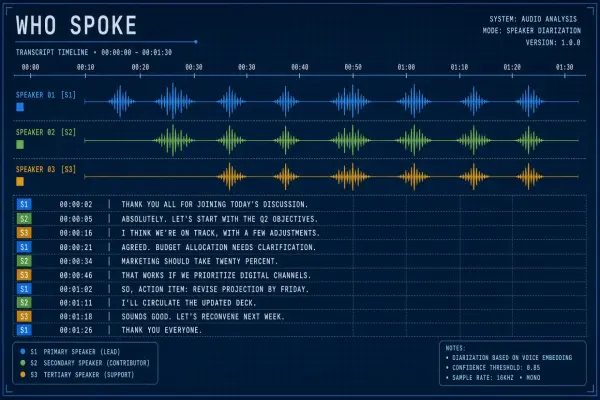
Speaker Diarization Explained: Who Spoke When in Audio and Meetings
Speaker diarization segments audio by voice identity without knowing names upfront. Learn how it pairs with transcription and where accuracy breaks down.
Insights, guides, and latest trends from the world of AI tools
Speaker diarization segments audio by voice identity without knowing names upfront. Learn how it pairs with transcription and where accuracy breaks down.

3D Gaussian splatting builds editable scenes from multi-view images faster than NeRF. Learn how splats work and when creators use them for product and real-estate visuals.

Zero-shot classifiers assign categories using natural language labels alone. See how LLMs score label fit and where human review still matters.
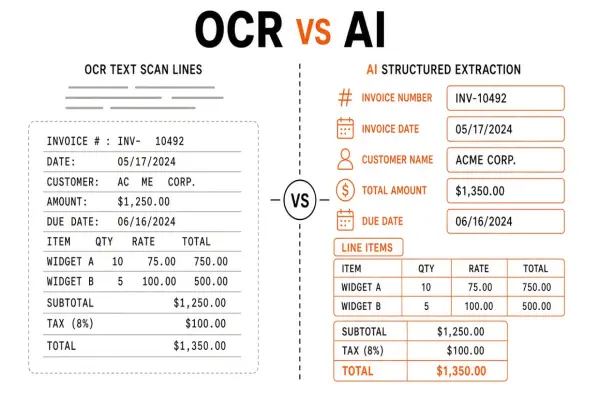
OCR reads characters; document AI understands layout, fields, and context. Learn which approach fits invoices, contracts, and forms before you buy a tool.
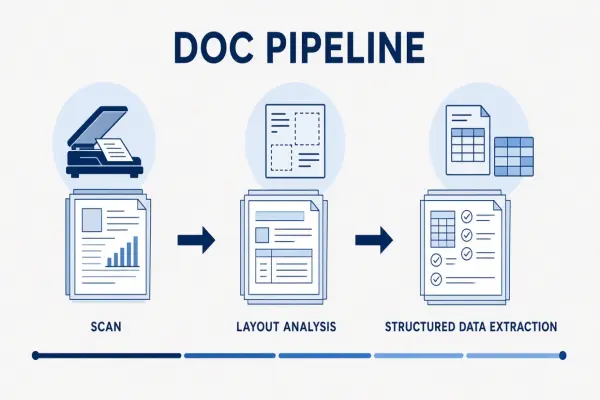
IDP combines OCR, layout understanding, and extraction models to turn unstructured documents into structured data. Learn pipeline stages and where AI tools fit.
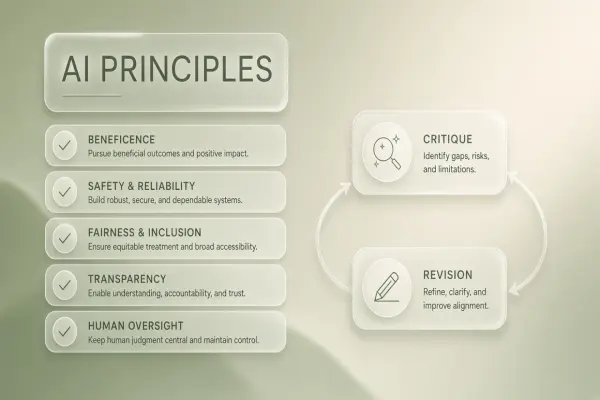
Constitutional AI trains models to revise outputs against written principles. Understand critique-revision loops and what users should expect from constitutionally aligned assistants.
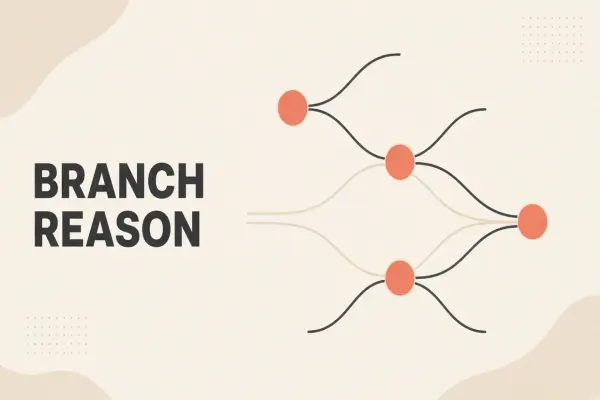
Tree of Thoughts lets models explore multiple reasoning paths before answering. See when branching beats chain-of-thought and how to structure prompts for complex decisions.
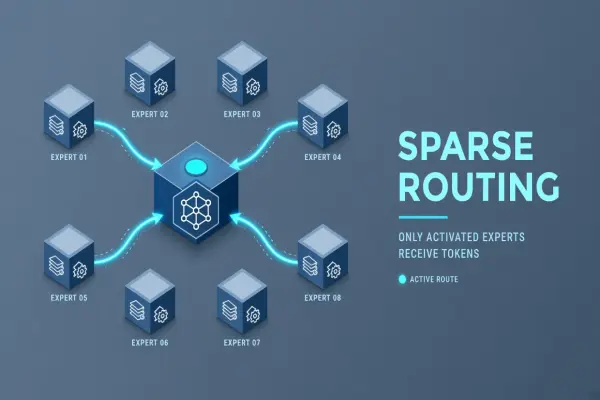
Mixture of Experts models activate only a subset of neural pathways per request. Learn how routing works, why it saves compute, and what it means for latency and quality.
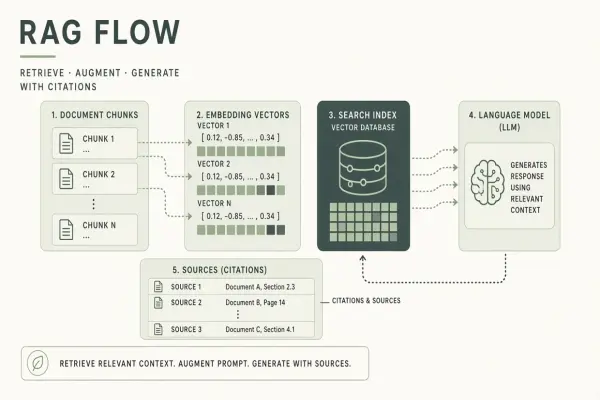
RAG grounds AI answers in your documents via search plus generation. Learn index, retrieve, and synthesize stages and how to evaluate RAG quality.
Didn't find tool you were looking for?