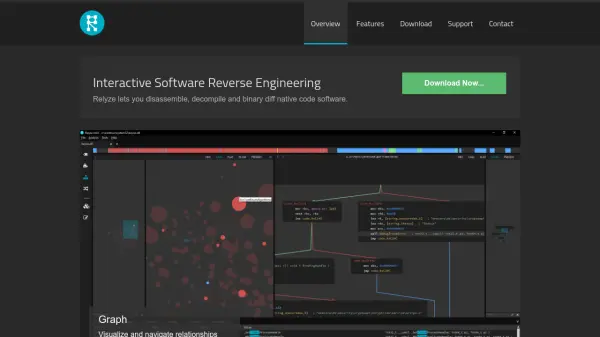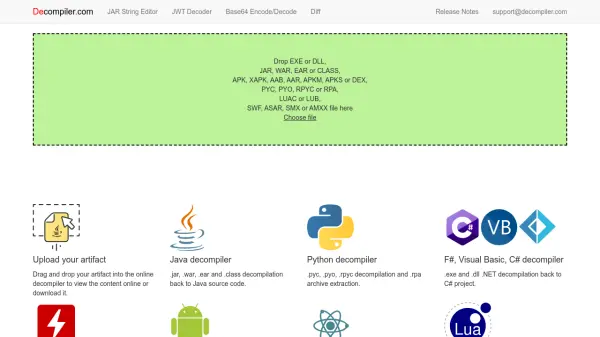

What is JEB Decompiler?
JEB Decompiler is a comprehensive reverse engineering platform designed for professionals to perform disassembly, decompilation, debugging, and analysis of code and document files. It supports a wide range of architectures and formats, including Android apps, Windows malware, embedded code, and PDF documents. The platform offers both static and dynamic analysis capabilities, enabling users to manually inspect or automate analysis pipelines for security auditing, malware research, and software development.
With modules for various processors and file types, JEB Decompiler provides advanced features such as deobfuscation, graphing, and an AI assistant (VIBRE) to streamline complex reverse engineering tasks. It is suitable for enterprise use, helping to reduce man-hours and improve efficiency in analyzing binary code and applications.
Features
- Android Decompiler: Decompiles and debugs Android applications with static and dynamic analysis
- Native Code Decompilers: Supports Intel x86, ARM, MIPS, RISC-V, WebAssembly, Ethereum, and Nvidia SASS
- PDF Analyzer: Reverse engineers and assesses PDF documents manually or automatically
- Deobfuscation Modules: Handles virtualized code and advanced obfuscation with native code emulation
- VIBRE AI Assistant: Provides AI-assisted analysis for reverse engineering tasks
- Multiple Disassemblers: Includes Dalvik, Intel x86, ARM, MIPS, RISC-V, and Atmel AVR disassemblers
- Debuggers: Supports Dalvik, Intel x86, ARM, and MIPS debugging across platforms
- Platform Features: Offers graphing, refactoring, automation, and offline work capabilities
Use Cases
- Analyzing Android applications for security vulnerabilities
- Reverse engineering Windows malware for threat analysis
- Auditing embedded code in IoT devices
- Assessing PDF documents for malicious content
- Decompiling Ethereum smart contracts for blockchain security
- Debugging and analyzing native code for software development
- Automating reverse engineering tasks in analysis pipelines