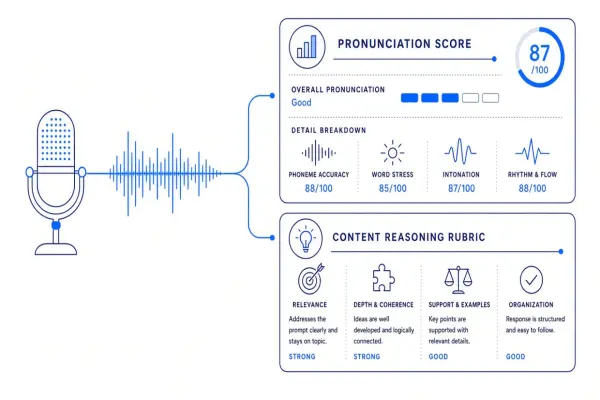
You upload a screenshot of a dashboard, ask "why did revenue drop here?", and the assistant reads the chart axes, correlates labels with your spoken question, and points to the correct series. That cross-media reasoning depends on multimodal fusion in AI: the techniques that combine representations from different input types into a single decision space.
Text-only models dominated early chat products. Modern stacks ingest images, audio clips, PDF pages, and video frames in one session. Buyers comparing AI writing assistants with vision add-ons and AI productivity suites need to understand fusion mechanics because they drive accuracy, latency, and per-request pricing when media mixes get heavy.
What Multimodal Fusion Means
Multimodal fusion is the process of integrating information from two or more modalities (text, image, audio, video, sensor data) so a model can produce a joint output. Without fusion, pipelines run separate models and stitch results in application code, which breaks when modalities disagree or when alignment between a spoken word and a pixel region matters.
Fusion happens inside neural architectures (shared transformers, cross-attention layers) or in orchestration layers that embed each modality into a common vector space before retrieval or generation. The design choice between early and late fusion shapes cost, interpretability, and error modes.
Early Fusion vs Late Fusion
Early fusion combines raw or lightly processed features from multiple modalities at input or low network layers. Late fusion processes each modality with separate encoders first, then merges higher-level representations near the output head.
Early fusion
Early fusion aligns tokens early: image patches converted to visual tokens interleaved with text tokens in one transformer stack, as in many vision-language models. Audio frames may be quantized into discrete tokens beside transcript text. Benefits include fine-grained cross-modal attention (linking a word to a image region) and a single end-to-end training objective. Drawbacks include higher compute per forward pass, sensitivity to misalignment (wrong timestamp on audio), and harder debugging when one modality dominates gradients.
Late fusion
Late fusion runs independent encoders: a speech model transcribes audio, a vision model captions images, then a text LLM reasons over concatenated descriptions. Pipelines are modular and swap-friendly. You can upgrade the OCR engine without retraining the whole stack. Fusion quality caps at how well intermediate text captures non-text nuance (chart trends, sarcasm in tone, spatial layout). Errors compound when the speech model mishears a product name before the text model ever sees the prompt.
| Fusion style | Merge point | Tradeoff |
|---|---|---|
| Early fusion | Shared transformer early layers | Better alignment, higher GPU cost |
| Late fusion | After separate encoders | Modular, risk of transcription loss |
| Hybrid | Cross-attention mid-stack | Balances cost and grounding |
Common Multimodal Tasks
Fusion patterns show up across consumer and enterprise products. Recognizing the task class helps set evaluation criteria before purchase.
- Visual question answering: User supplies an image plus text question; model localizes relevant regions.
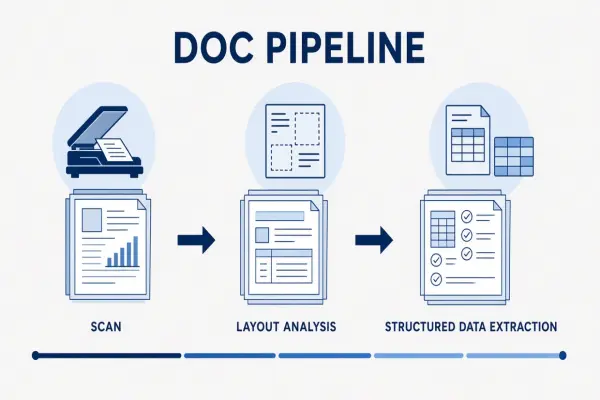
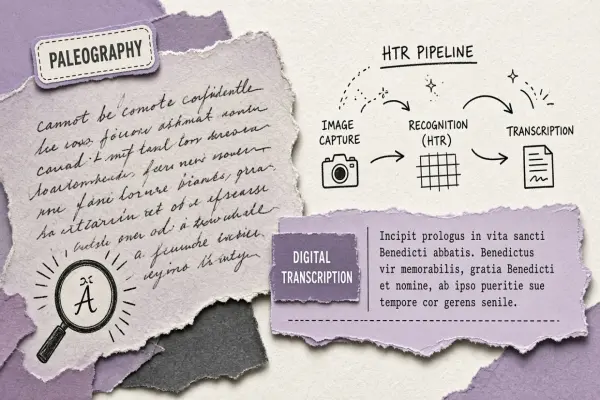
- Document AI: PDFs with tables, stamps, and handwriting parsed via OCR plus layout models fused with LLM summarization.
- Audio-visual assistants: Meeting bots combine diarized speech with shared slides for action items.
- Generative pairing: Text-to-image, image-to-text, and video captioning reverse the fusion direction.
- Robotics and IoT: Camera plus lidar plus telemetry fused for navigation (less common in SaaS directories but relevant to edge AI buyers).
Productivity tools increasingly fuse calendar context (text), attendee video thumbnails (image), and voice notes (audio) into unified task extraction. An AI writing assistant may fuse brand style guides (text) with reference ads (image) when drafting campaigns.
Quality Variance Across Modalities
Multimodal systems rarely perform equally well on every input type. A model strong on natural photos may fail on dense spreadsheet screenshots. Fusion amplifies the weakest modality in the chain.
Text modalities benefit from massive pretraining corpora. Vision quality drops on rare scripts, low light, or UI micro-fonts. Audio struggles with overlapping speakers, accents, and background noise. Video compounds issues across frames: motion blur, compression artifacts, and variable frame rates. Late-fusion pipelines hide vision weakness behind verbose text guesses, producing fluent wrong answers. Early-fusion models may attend to irrelevant image patches when the question is purely textual, wasting tokens.
Evaluation should be per modality and per combination. Test chart QA separately from meme interpretation. Test scanned legal PDFs separately from mobile photos of receipts. Publish internal scorecards by modality before trusting a unified "accuracy" marketing number.
Latency and Pricing When Mixing Media
Each modality adds preprocessing and token volume. Images become hundreds of visual tokens. Audio minutes expand to thousands of speech tokens after transcription or neural codec representation. Video multiplies cost by frame sampling strategy: one frame per second versus dense sampling changes bills by orders of magnitude.
| Input mix | Typical cost driver | Latency note |
|---|---|---|
| Text only | Input plus output tokens | Lowest |
| Text plus single image | High-res vision tokens | Resize images before upload |
| Text plus audio | Audio duration | Transcription step adds seconds |
| Text plus video | Frame count policy | Often batched asynchronously |
Vendors price multimodal requests differently: per image, per minute of audio, per million vision tokens, or bundled credits in productivity subscriptions. Compare effective cost on your real assets, not demo-sized thumbnails. Compression and cropping are legitimate cost controls if they preserve task-relevant detail.
Fusion in Writing and Workflow Tools
Writing assistants historically processed plain text. Fusion upgrades appear as "attach image," slide import, or voice dictation with tone hints. When the product claims to "see your deck," confirm whether early fusion grounds answers in pixels or a late-fusion caption omits chart values. For brand compliance, ask if fusion can reference logo placement in creative files or only textual style rules.
Workflow automation tools fuse triggers across channels: an email attachment (document image) plus CRM field (text) plus call recording (audio) may feed one agent decision. Orchestration platforms should expose which fusion step failed when outcomes are wrong, instead of returning a generic model error.
Architecture Examples in Frontier Multimodal Models
Frontier APIs increasingly ship native multimodal inputs in one request. Image patches tokenized beside text flow through shared transformer blocks with cross-attention, a classic early-fusion pattern. Audio may arrive as parallel streams: discrete speech tokens plus optional text transcript for redundancy. Video APIs sample frames at configurable rates, encoding each frame like an image sequence fused with the user prompt. Understanding these defaults helps you predict token bills when attaching a ten-slide PDF exported as images versus a single compressed screenshot.
Open-source stacks often chain specialist models (Whisper for speech, CLIP-style encoders for images, Llama-class decoders for text) in late fusion. That modularity appeals to teams swapping OCR engines for CJK documents or on-prem air gaps. The integration burden falls on your MLOps team to keep embedding dimensions and context windows compatible across upgrades.
Preprocessing and Alignment Before Fusion
Fusion quality starts before the neural network. Images should be oriented correctly, color-normalized for chart reading, and cropped to relevant regions when the UI allows region-of-interest selection. Audio benefits from noise suppression and diarization when multiple speakers overlap. Documents need layout-aware parsing so tables do not flatten into nonsense sentences. Skipping preprocessing forces the fusion model to waste capacity recovering basics a pipeline stage could fix cheaply.
Temporal alignment matters for video and audio. If subtitles lag two seconds behind frames, early fusion may associate the wrong spoken word with on-screen text. Products should expose sync controls or detect drift automatically. For live meetings, fusion systems buffer short windows to align slide changes with speaker transitions.
Evaluating Multimodal Products on Your Assets
Build an evaluation kit mirroring production media: scanned contracts, phone photos of whiteboards, compressed webinar recordings, and branded slide decks. Score each task type separately. An AI writing assistant that excels at marketing copy may still misread financial tables in attached PDFs. A productivity suite that summarizes email text may garble voicemail attachments if the speech model lacks your industry vocabulary.
Ask vendors whether fusion runs in one model call or multiple billed steps. Hidden chaining inflates latency. Confirm maximum resolution, audio length, and page count per request. Enterprise buyers negotiating volume discounts should tie pricing to modality mix, not text-only baselines.
Frequently Asked Questions
How do video models choose which frames to fuse?
Strategies include uniform sampling (one frame every N seconds), scene-change detection, keyframe selection from compression metadata, and learned saliency models. Aggressive sampling reduces cost but misses brief on-screen evidence. Ask vendors for default sampling rates and whether users can force full-frame analysis for forensic review.
How does document OCR interact with fusion?
Document pipelines often run layout analysis plus OCR to produce text boxes, then fuse spatial coordinates with LLM reasoning for table extraction. Pure OCR without layout fusion misorders columns. High-quality document AI preserves reading order, header hierarchy, and table cell boundaries in the fused representation sent to the language model.
What accessibility considerations apply to multimodal fusion?
Users relying on screen readers depend on accurate alt text and structured outputs, not silent image understanding. Products should expose fused insights as readable text, support keyboard workflows without requiring drag-and-drop uploads, and caption audio outputs for hearing-impaired users. Fusion should not assume all users can see charts; verbal summaries of visual data are essential.
Should buyers prefer early or late fusion products?
Prefer early or hybrid fusion when spatial grounding matters (UI debugging, medical imaging overlays, precise chart reading). Prefer late fusion when modularity, on-prem swapping of OCR engines, or strict air-gapped components matter. Run benchmarks on your documents and recordings; architecture labels are not substitutes for domain scores.
Does multimodal fusion increase privacy risk?
Yes. Images and audio may contain faces, IDs, and background metadata location cues. Fusion pipelines must redact PII before embedding, honor data residency, and clarify retention for uploaded media. Enterprise buyers should confirm whether frames are stored for model improvement or deleted after inference.
Fusion Enables Cross-Media Reasoning
Multimodal fusion in AI combines text, image, audio, and video signals so models answer questions that no single modality solves alone. Early fusion trades compute for alignment; late fusion trades modularity for compounding encoder errors. Quality, latency, and price swing with media mix and preprocessing choices. When evaluating writing assistants and productivity platforms, test real files, inspect fusion architecture honestly, and budget for the heaviest modality you plan to send, not just the text wrapper around it.