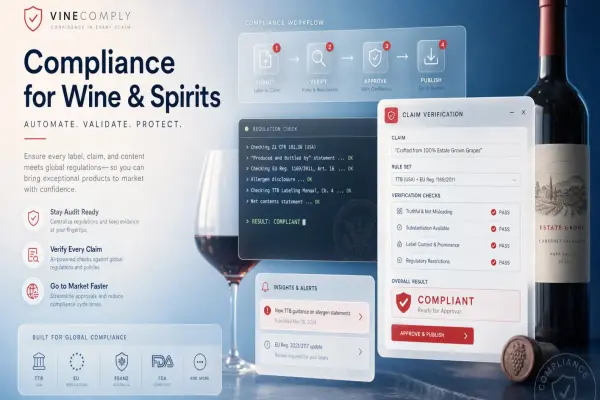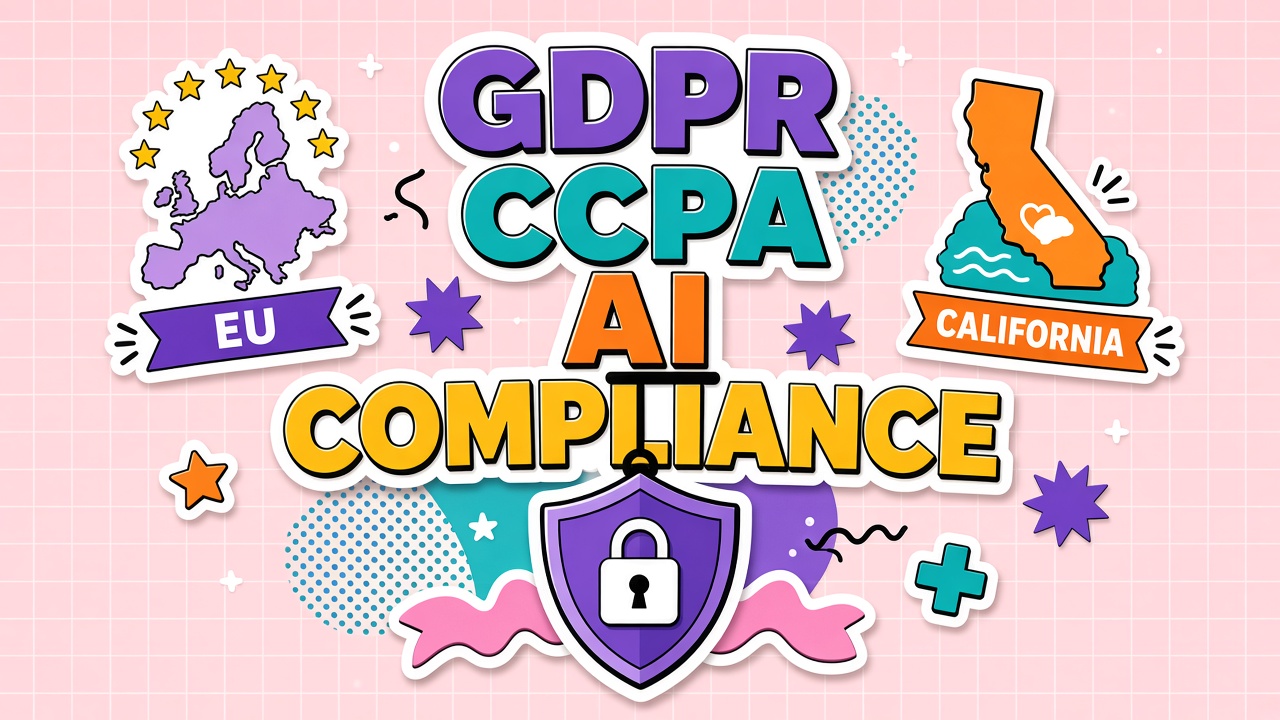
Marketing pages love compliance badges. "GDPR ready" and "CCPA compliant" appear on AI chatbots and AI writing tools alike. Badges describe vendor posture, not your automatic compliance when employees paste customer emails, HR notes, or support tickets into a prompt. AI tools GDPR compliance is a shared responsibility between your organization and the vendor.
This industry guide maps GDPR and CCPA requirements to AI procurement, explains controller vs processor roles, covers DPA essentials, and outlines access and deletion workflows. Use it before signing any vendor that will handle personal data on your behalf.
GDPR Roles: Controller vs Processor for AI Use
Under GDPR, your organization is typically the controller when you decide why and how personal data is processed in AI workflows. The AI vendor is usually a processor (or sub-processor) when it handles that data on your instructions through a contracted service.
Controller obligations include lawful basis, purpose limitation, data minimization, and honoring data subject rights. Processor obligations include processing only on documented instructions, assisting with rights requests, breach notification, and sub-processor transparency. Both parties need accurate Records of Processing Activities (RoPA) entries for production AI tools.
| Role | Typical party | Key AI-specific duty |
|---|---|---|
| Controller | Your company | Classify prompt data; choose lawful basis; approve vendors |
| Processor | AI SaaS vendor | Process per DPA; list sub-processors; support deletion |
| Joint controller | Rare in B2B AI | Shared decisions need explicit arrangement |
CCPA Opt-Out and Disclosure Requirements
CCPA (as amended by CPRA) grants California residents rights over personal information collected by businesses. For AI vendors, relevant themes include disclosure at collection, opt-out of sale or sharing, access and deletion requests, and sensitive personal information limits.
Enterprise B2B use often relies on contractual terms and service-provider designations, but employee and customer data in prompts may still trigger obligations. Evaluate AI tool CCPA compliance alongside your vendor's privacy policy, "do not sell or share" link, and service-provider addendum. A consumer chatbot used for work does not exempt you from noticing what data categories enter the system.
What a DPA Should Cover for AI Vendors
An AI data processing agreement should match the actual product surface: web app, API, extensions, file upload, and fine-tuning if used.
- Subject matter, duration, nature, and purpose of processing
- Categories of data subjects and personal data (including prompt content types)
- Security measures and sub-processor list with notification process
- International transfer mechanisms (SCCs, UK addendum, etc.)
- Assistance with data subject access, deletion, and portability requests
- Breach notification timelines
- Deletion or return of data at contract end
- Prohibition on using personal data for vendor's own marketing or unauthorized training
Data Subject Access and Deletion Workflows
When a customer asks to delete their data, you must trace every AI system that may hold copies. That includes chat logs, uploaded files, embeddings, fine-tuned models (if any), and support tickets quoting their content.
Practical workflow:
- Identify which approved AI tools processed the individual's data
- Submit vendor deletion requests per DPA SLA
- Confirm deletion covers backups and subprocessors within stated windows
- Update your RoPA and incident log if deletion fails or delays
Self-service delete buttons in consumer UIs do not replace organizational DSAR processes. Central IT should own vendor tickets for regulated requests.
Cross-Border Transfer Mechanisms
GDPR AI tools requirements include lawful transfer when data leaves the EEA or UK. Common mechanisms: EU Standard Contractual Clauses, UK International Data Transfer Agreement, adequacy decisions (where applicable), and Binding Corporate Rules for multinational vendors.
Ask whether you can select EU-only processing regions on your plan and whether failover to US regions occurs during outages. Transfer impact assessments may be required for high-risk processing.
Regulation-to-Requirement Mapping
| Requirement theme | GDPR emphasis | CCPA / CPRA emphasis |
|---|---|---|
| Transparency | Privacy notice, lawful basis, RoPA | Notice at collection, privacy policy links |
| Rights | Access, erasure, portability, objection | Know, delete, correct, opt-out of sale/share |
| Vendor contract | Article 28 DPA | Service provider terms, no sale of PI |
| Security | Appropriate technical and organizational measures | Reasonable security procedures |
Frequently Asked Questions
Does GDPR apply to employee data in AI prompts?
Yes, when employee personal data is processed. HR drafts, performance reviews, and internal directories pasted into AI tools can trigger processor obligations and require a lawful basis. Treat employee data as personal data unless anonymized beyond re-identification risk.
What about customer PII in support ticket summarization?
Customer names, emails, and account details in prompts are personal data. Use approved vendors with DPAs, minimize fields sent to the model, and document the processing purpose in your RoPA.
Is a GDPR badge on the website enough?
No. Badges are not contracts. Require a signed DPA, sub-processor list, and evidence that your plan tier disables training and supports deletion within required timelines.
What should a RoPA entry include for an AI tool?
Vendor name, processing purposes, data categories, data subjects, recipients, transfers, retention, and security measures. Note whether prompts may contain special category data and whether human review occurs.
Does B2B exempt us from CCPA?
B2B personal information received solely in a business context had limited exemptions that have evolved under CPRA. Consult counsel for your scenario; do not assume all workplace AI use is exempt.
The Bottom Line
AI tools GDPR compliance and CCPA readiness require documented roles, DPAs, transfer tools, and operational DSAR workflows, not badge collecting. Evaluate AI chatbots and AI writing tools with legal and security before personal data enters any prompt.