An analyst accepts an AI-generated risk summary and forwards it to a regulator. An auditor asks which documents supported each claim. The chat UI showed a confident paragraph with no sources, no step log, and no indication the model guessed on a missing field. Trust breaks not because the model was always wrong, but because nobody could see how the answer was built.
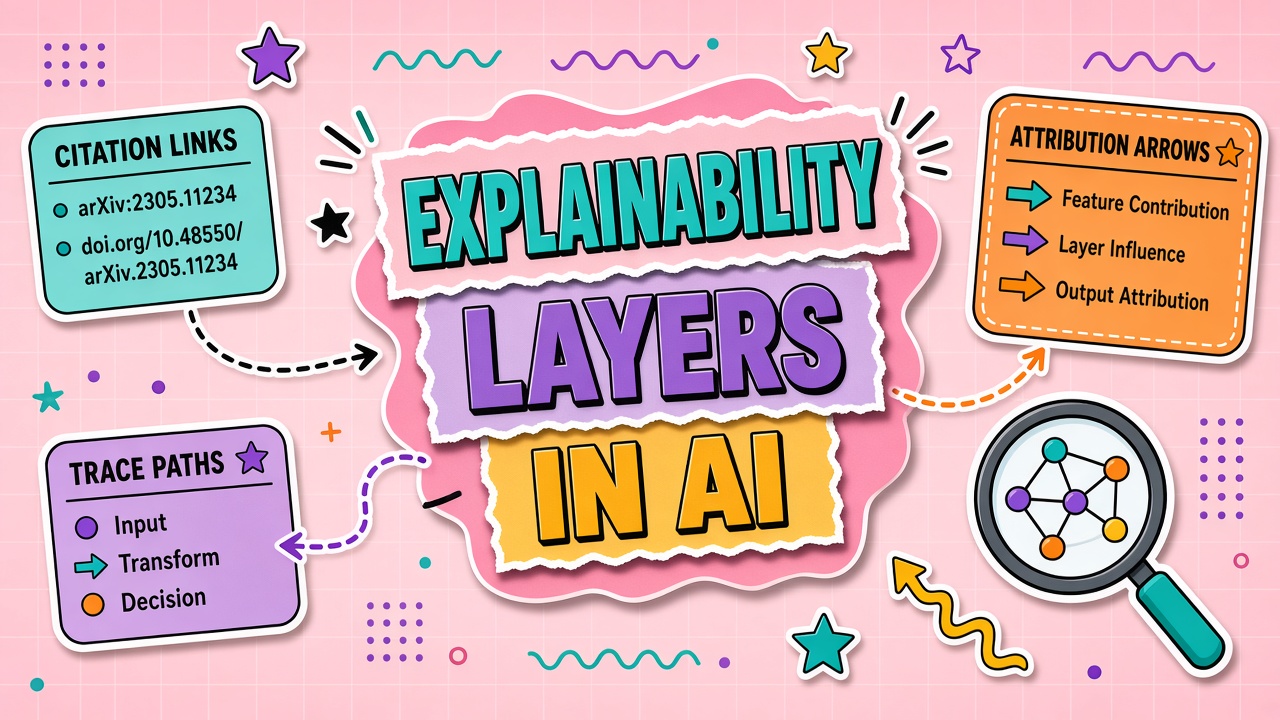
An explainability layer is the product and infrastructure surface that makes AI decisions inspectable: citations, retrieved passages, tool call traces, confidence indicators, feature attributions, and exportable audit logs. Enterprise AI automation platforms and AI research assistants market explainability for compliance, debugging, and user trust. Regulators and internal risk teams increasingly expect more than a black-box reply field. This guide defines explainability layers, what users versus auditors need to see, tradeoffs with latency and IP exposure, and how to evaluate vendor claims before deployment.
Explainability is increasingly a procurement requirement, not a nice-to-have toggle. RFPs ask for citation behavior, audit exports, and human override paths. Products without a credible explainability layer lose enterprise deals even when raw model quality matches competitors.
Pilot explainability features with internal users before external launch. Analysts and support engineers surface missing fields and confusing labels faster than customers stuck with opaque error messages.
Align explainability copy with legal and support teams so surfaced fields match what each role is allowed to see and export. Misaligned labels create more confusion than no labels at all during audits and customer disputes.
What Explainability Layers Show Users and Auditors
Explainability is not one feature. It is a stack of disclosures at different depths. End users need enough context to verify answers. Auditors need durable records tied to model version, data sources, and human overrides.
User-facing explainability surfaces
- Source citations: Links or snippets from retrieved documents with page or section references.
- Confidence or uncertainty hints: Labels when evidence is thin or conflicting sources disagree.
- Scope statements: Explicit limits such as knowledge cutoff dates or missing data fields.
- Editable assumptions: Surfaces intermediate values users can correct before actions execute.
Auditor and operator surfaces
- Session traces: Full prompt, retrieval set, tool calls, and responses with timestamps.
- Model and index versioning: Which LLM, embedding model, and index snapshot served the request.
- Policy decisions: Moderation scores, blocked steps, and human approval gates.
- Export formats: JSON or PDF bundles suitable for legal hold and regulatory inquiry.
| Layer | Primary audience | Example |
|---|---|---|
| Citation UI | End users | Footnotes linking to policy PDF sections |
| Agent trace panel | Power users, support engineers | Ordered list of tool calls with inputs and outputs |
| Attribution heatmaps | Data scientists, risk analysts | Token or feature importance for classification models |
| Compliance export | Auditors, legal teams | Immutable log bundle with retention metadata |
Explainability Differs by RAG, Agents, and Classifiers
The right explainability layer depends on how the product generates answers. One-size UI patterns mislead users when the backend architecture differs.
RAG and retrieval systems
RAG explainability centers on which chunks were retrieved and how they were ranked. Show chunk text, source URI, recency, and similarity score. Hide raw embedding vectors unless the audience is technical. When rerankers reorder results, disclose both retrieval and rerank stages so users understand why a passage appeared.
Agent and automation workflows
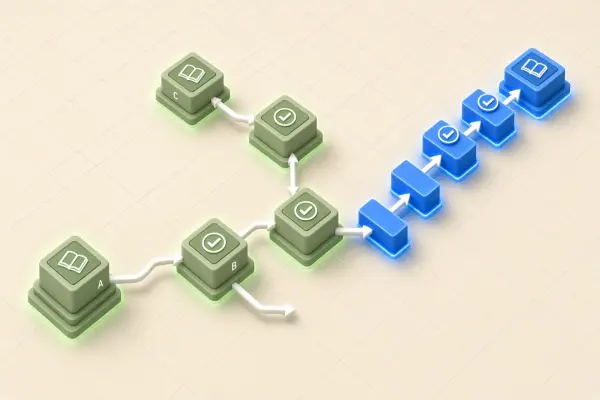
AI automation with multiple tool steps needs a trace graph: plan, actions, observations, final synthesis. Users should see which systems were queried and whether data came from live APIs versus static docs. Redact secrets and PII from traces shown to end users while keeping full detail in secured audit stores.
Research and synthesis tools
AI research assistants should separate quoted material from model paraphrase. Verbatim quotes with DOI or URL reduce hallucination risk. Synthesis sections need explicit labeling when the model connects dots across sources rather than restating one paper.
Search AI explainability tools when comparing enterprise offerings. Marketing terms like "transparent AI" should map to concrete UI and export features.
Tradeoffs: Trust, Latency, Security, and Liability
More explainability helps trust and debugging but costs performance and can expose sensitive internals. Product and legal teams should decide what each audience sees rather than dumping full traces to everyone.
| Tradeoff | Benefit | Cost |
|---|---|---|
| Full tool traces | Fast incident diagnosis | May leak prompt templates or API response shapes |
| Detailed citations | Users verify claims quickly | UI clutter; mobile layouts suffer |
| Confidence scores | Sets expectations on uncertain answers | Poorly calibrated scores erode trust faster than none |
| Long-retention audit logs | Supports regulatory inquiry | Storage cost and privacy retention obligations |
Explainability does not equal correctness
A model can cite real sources and still miscombine them. Citations prove provenance, not truth. Teams should pair explainability with evaluation harnesses and human review for high-stakes decisions rather than treating footnotes as automatic approval.
Role-based explainability views
Standard pattern: simplified citation chips for customers, expanded traces for internal analysts, full exports for compliance officers. Role-based access prevents attackers from using trace panels to map integrations or extract hidden prompts.
Logging Explainability for Debugging and Incidents
Production incidents often start with a user report: "The bot gave the wrong refund policy." Without session traces, engineers reproduce the chat but cannot see which chunks were retrieved or which tool returned stale data. Explainability layers tied to observability backends (OpenTelemetry, structured application logs, vendor trace IDs) shorten mean time to resolution.
Store traces with correlation IDs shared across microservices when agents call multiple internal APIs. When moderation blocks a step, the trace should show classifier scores alongside retrieval results so reviewers do not blame the LLM for a policy gate decision.
Retention, privacy, and legal hold
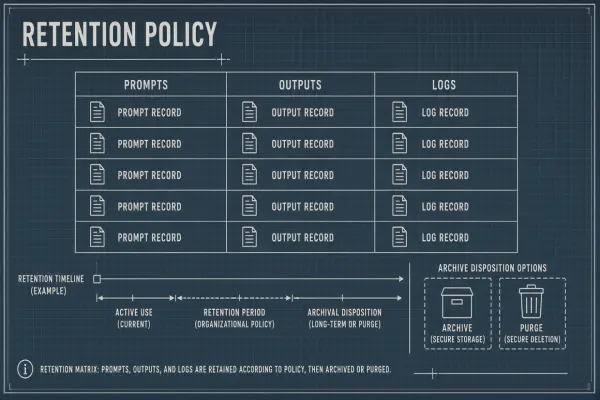
Long audit retention helps regulators but conflicts with data minimization under privacy law. Define retention tiers: short TTL for verbose traces in dev, longer encrypted storage for production sessions involving financial or health data, and legal hold flags that pause deletion during active investigations.
What to Verify Before Buying an Explainability Story
Vendor demos often show citations on cherry-picked queries. Run your own documents and failure cases during evaluation.
- Are citations tied to exact chunk boundaries or only document-level links?
- Can auditors export traces in machine-readable format with retention controls?
- Does the platform log model version, temperature, and retrieval index ID per request?
- Are tool traces redacted appropriately for each user role?
- What happens to explainability data when you delete a user under privacy requests?
- Is confidence calibrated on your domain or generic marketing language?
- Can you disable explainability features that expose trade secrets in customer-facing modes?
Building explainability when vendors fall short
If a vendor hides retrieval details, wrap the API with your own logging at the gateway: log queries, returned chunk IDs, and final prompts sent to the LLM. You may not get token-level attributions, but chunk-level provenance already beats a blank chat bubble for internal investigations and customer disputes.
Pair explainability UI with feedback buttons that link corrections to trace IDs. When a user flags a wrong answer, support staff open the exact retrieval set and tool trace from that session instead of guessing from a screenshot. That closes the loop between transparency and continuous improvement.
Frequently Asked Questions
Is explainability the same as XAI research?
Academic explainable AI (XAI) includes methods like SHAP and LIME for classical models. Product explainability layers borrow those ideas but focus on practical disclosures users and auditors can act on in software, not only research metrics.
Do regulators require AI explainability?
Requirements vary by sector and jurisdiction. Financial, healthcare, and public-sector procurements increasingly ask for traceability, human oversight, and documentation. Treat explainability as a procurement and legal question, not only UX.
Can models hallucinate citations?
Yes, when citations are generated without grounded retrieval or when retrieval returns irrelevant chunks the model mislabels. Ground citations in retrieved text stored server-side, not free-generated URLs.
What is minimum viable explainability for internal tools?
Start with session logs: input, retrieved sources, model ID, output, user feedback. Add user-facing citations when answers influence external communications or automated actions.
Does logging traces slow responses?
Async logging to observability backends adds minimal user-facing latency if designed correctly. Rendering large trace panels in the UI can slow page loads. Separate capture from display.
Can open-source LLMs match vendor explainability?
Self-hosted stacks offer full trace control because you own the gateway and logs. You must build citation UI and export yourself. Vendors bundle UX but may limit trace depth on lower tiers. Choose based on whether your team can operate observability infrastructure for open models.
How much explainability should end users see?
Default to citations and confidence hints. Hide raw tool traces from customers unless your product is explicitly for power users. Offer expandable detail for users who want depth without cluttering first-read answers.
Building Trust With Visible Reasoning, Not Black Boxes
Explainability layers translate complex AI pipelines into evidence users and auditors can inspect. They support trust, faster debugging, and compliance without replacing human judgment on consequential decisions.
Teams deploying AI automation or AI research products should design role-appropriate disclosures, ground citations in retrieval, version every artifact in audit logs, and test explainability on failure cases, not only happy paths. Search AI explainability offerings on EliteAI.tools for citation quality, trace export, and retention controls. Transparent systems earn sustained adoption; opaque ones get disabled after the first serious review.
Treat explainability as a product surface with owners, design reviews, and accessibility checks, not an engineering afterthought appended once sales requests audit features. Trust compounds when users consistently see where answers come from.