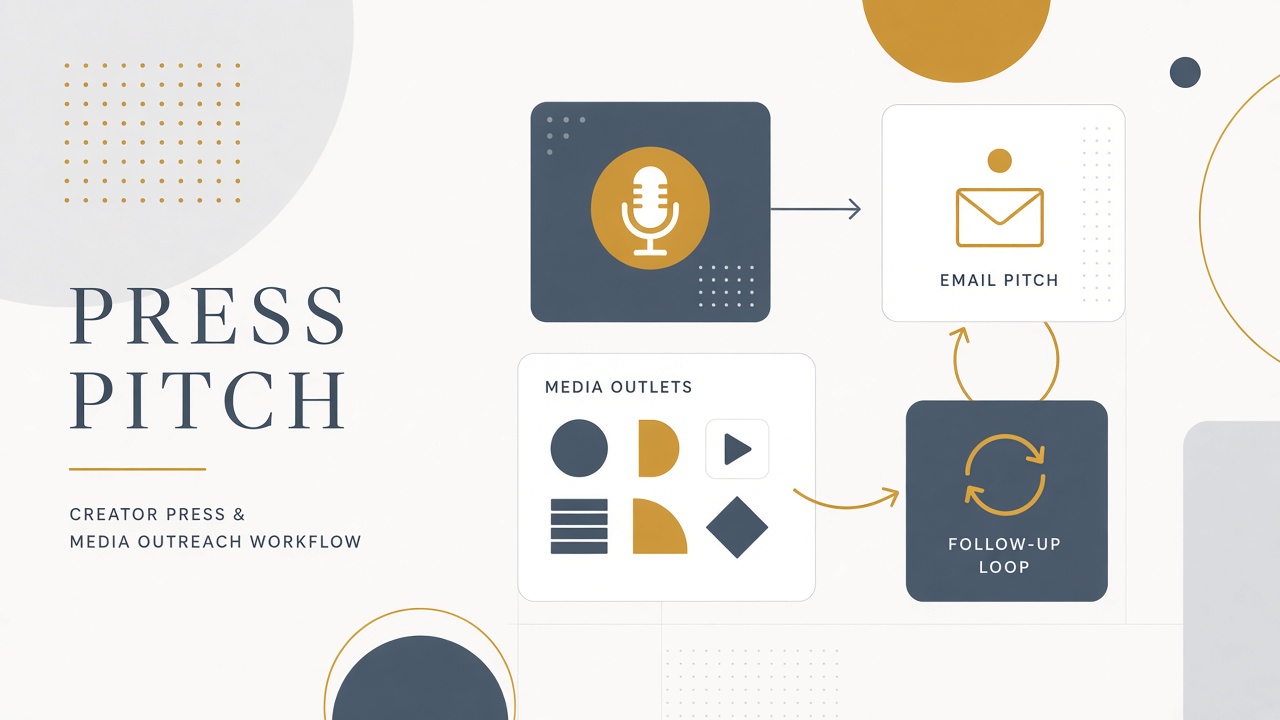
Creators with real expertise still get ignored when pitches read like mass templates with no outlet fit, weak hooks, or missing facts journalists verify in thirty seconds. An ai workflow creator press outreach system builds audience-fit target lists, researches angles per outlet, drafts tailored pitches, tracks follow-ups, and prepares interview-day docs. AI handles research structure and draft speed; you own relationships, exclusives, and every claim a host might quote on air.
This workflow fits podcast guests, newsletter authors, YouTube educators, and indie founders building thought leadership. Research outlets with AI chatbot tools and organize tracking spreadsheets with AI code helpers, then personalize every send before it leaves your inbox.
Build Target List by Audience Fit
Target lists rank outlets by audience overlap, show format, recent episode themes, and realistic tier (dream, reach, warm intro) instead of blasting every podcast in your category. Fit beats fame: a niche show whose listeners match your offer converts better than a huge general interview with mismatched listeners.
- Define ideal listener or reader persona (role, problem, sophistication).
- Search shows and newsletters covering adjacent topics, not only your exact keyword.
- Score fit 1 to 5: audience match, format length, guest style, sponsor density.
- Note contact path: booking form, producer email, Twitter DM policy.
- Cap active outreach batch (10 to 20) to preserve personalization quality.
| Outlet | Audience fit | Tier | Last pitched |
|---|---|---|---|
| Niche SaaS podcast | 5: founders, ops leads | Reach | Never |
| Major tech YouTube | 2: broad consumer | Dream | 2025-11 |
| Industry newsletter | 4: practitioners | Warm intro | Pending |
Angle Research per Outlet
Before writing each pitch, document three recent episodes or issues, recurring host questions, audience comment themes, and one gap your expertise fills that the outlet has not covered recently. Angle research turns generic "I'd love to be on your show" into a specific story proposal hosts can picture.
- Listen to or skim show notes for last 5 to 10 episodes.
- List 3 recurring questions the host asks guests.
- Identify one contrarian or timely angle aligned with your proof (data, case study).
- Note taboo topics or heavy sponsor segments to avoid tone clash.
- Save research block in CRM row linked to outlet name.
| Research field | Source | Pitch use |
|---|---|---|
| Recent episode theme | Episode 412 title and summary | Reference in opening line |
| Audience pain | Review comments, Reddit mentions | Frame your topic as answer |
| Content gap | No episode on X in 12 months | Propose differentiated angle |
Draft Pitches With Specific Hooks
Each pitch email leads with a outlet-specific hook, states one clear episode thesis, lists three talking points with proof, and ends with a low-friction ask (15-minute precall or one-sheet link), kept under 200 words. AI drafts from your research block; you rewrite the opening sentence so it could not apply to any other show.
- Subject line: specific topic plus outlet name or episode callback.
- Paragraph one: hook tied to their recent content.
- Paragraph two: your credential in one line plus unique angle.
- Bullets: three discussion points with data or story promise.
- Close: availability windows, media kit link, no attachments unless requested.
| Element | Strong | Weak |
|---|---|---|
| Hook | "After your episode on churn, I can share..." | "I'm a big fan of the show" |
| Thesis | "Why free trials fail for dev tools" | "Discuss entrepreneurship" |
| Proof | "Surveyed 200 teams, 62%..." | "Years of experience" |
Follow-Up Sequences and Tracking
Track pitch status (sent, opened if available, replied, booked, passed), schedule one polite follow-up at 5 to 7 business days, and stop after two touches unless the host engaged. An ai workflow creator press outreach CRM prevents double-pitching the same producer monthly.
- CRM columns: outlet, contact, date sent, angle, status, next action date.
- Follow-up one: shorter, add one new data point or news hook.
- Follow-up two: ask if topic wrong or timing off; offer alternate angle.
- Log passes graciously; revisit in 6 to 12 months with new proof.
- Never follow up same day; respect booking cycles.
| Status | Meaning | Next step |
|---|---|---|
| Sent | Initial pitch delivered | Wait 5 to 7 days |
| Replied interested | Producer wants details | Send one-sheet within 24h |
| Booked | Date scheduled | Prep doc and tech check |
| Passed | Not a fit now | Note reason, set revisit date |
Prep Doc for Interview Day
Interview prep docs include bio short and long, core talking points, stories with timestamps, landmines to avoid, sponsor disclosure rules if applicable, and tech checklist so you sound crisp under live pressure. Share prep with host only when they request; keep your private cheat sheet for rapid recall.
- Bio 50 words and 150 words versions.
- Five must-land points aligned to pitched angle.
- Three stories: problem, action, result with numbers where honest.
- Bridging phrases if conversation drifts off-topic.
- CTA: one link, one lead magnet, spoken URL practice.
- Tech: mic, backup link, quiet room, phone on silent.
| Prep section | Purpose | Update when |
|---|---|---|
| Bio | Host intro accuracy | Role or product change |
| Stories | Memorable proof on air | New case study ships |
| Landmines | Avoid legal or hot takes | Industry news shifts |
| CTA | Measurable post-interview traffic | Campaign or launch window |
Post-Interview Amplification
After publish, clip three quotable moments, thank the host publicly with specific episode praise, and log referral traffic so warm outlets get priority on your next announcement. Relationships compound when hosts see you promote their work authentically.
Warm Intro and Referral Tracking
Track who can introduce you to which producer, what you owe in return, and intro status so warm paths get priority over cold pitches and you nurture referrers with thank-you updates after bookings. Warm intros convert at higher rates; losing track of them wastes social capital.
- CRM field: intro source, date asked, permission granted yes or no.
- Send introducer a forwardable blurb they can paste without editing.
- After booking, thank introducer with specific outcome (air date, topic).
- Offer reciprocal intro only when fit is genuine for their audience.
- Never mass-request intros in public posts; ask privately.
| Intro type | Best practice | Avoid |
|---|---|---|
| Peer creator | Mutual audience overlap pitch | Generic forward of old pitch |
| Past guest | Reference shared episode | Immediate ask without relationship |
| Agency contact | One-sheet plus calendar link | Attachments over 5 MB |
Exclusives and Embargo Discipline
When offering exclusives or embargoes, document terms in the CRM (what story, until when, which outlets declined) so AI-assisted batch pitching does not accidentally leak news early. Journalists remember broken embargoes; creators lose tier-one opportunities.
- Exclusive offer: one outlet, clear expiry, written confirmation.
- Embargo: datetime in UTC, what can be said pre-publish.
- After exclusive runs, refresh angle for wider outreach wave.
- Never pitch competing outlets the same exclusive story simultaneously.
Crisis and Correction Outreach
When you need to correct a public mistake or respond to news, press workflow still applies: identify outlets that covered the story, draft factual correction angles, and offer interview availability with verified sources only. Speed matters, but accuracy matters more; AI drafts corrections from your fact sheet, legal reviews sensitive lines.
- One-page fact sheet: what happened, what changed, what you are doing now.
- Prioritize outlets that already amplified the original narrative.
- No speculative language; link primary sources where possible.
- Track correction pickup same as booking CRM statuses.
Measuring Outreach ROI
Track booked appearances, referral traffic, email signups, and revenue influenced per outreach wave so you double down on outlet types that convert, not just vanity download counts. ROI discipline keeps press work aligned with business goals instead of endless pitching for logos.
- UTM parameters on every interview CTA link shared on air.
- CRM field: estimated audience size and fit score at booking time.
- 30-day window: signups, sales, or waitlist joins attributed per appearance.
- Compare conversion per outlet tier: niche often beats broad despite smaller reach.
- Retire angles and outlets with zero engagement after two appearances tested.
| Metric | Why it matters | Review cadence |
|---|---|---|
| Booking rate | Pitch quality and fit | Per outreach batch |
| CTR from UTM | Audience action after listen | 7 and 30 days post-air |
| Revenue or leads | Business impact | Quarterly |
Newsletter and Guest Article Pitches
Newsletter and publication pitches follow the same fit research as podcasts but emphasize written angle, proposed headline, and why subscribers benefit now, with word count and deadline respect for editor workflows. Paste newsletter archive links in research block so AI drafts reference actual recent issues.
- Propose headline plus three subheads, not a finished article, in first pitch.
- Offer exclusive data or story for paid newsletters when appropriate.
- Include author bio and headshot link in one line at bottom.
- Track guest post acceptance separately from podcast CRM pipeline.
Frequently Asked Questions
Is it ethical to use AI for press pitches?
Using AI for research structure and draft outlines is common; sending unedited generic AI pitches is not effective and risks factual errors. Personalize hooks, verify claims, and write as yourself before send.
What if nobody responds?
Improve fit scoring and hooks before increasing volume; many passes reflect wrong outlet tier or vague angles, not personal rejection. Ask for feedback on one polite second follow-up when appropriate.
What belongs in a media kit?
Short bio, high-res headshot, topic list, past appearances, social proof metrics you can verify, and contact email. Keep PDF under two pages; link to longer portfolio separately.
How do paid placements differ from outreach?
Paid sponsor slots follow ad policies and contracts; organic outreach pitches value for the audience first. Disclose commercial relationships when interviews are paid per FTC and platform rules.
Pitch With Fit, Not Volume
A disciplined ai workflow creator press outreach practice ranks outlets by audience fit, researches angles per show, drafts hooks with proof, tracks follow-ups without spamming, and prepares interview docs that survive live pressure. AI accelerates research and drafts; your specificity and relationships win bookings. Build ten fit-scored targets and send three personalized pitches this week before you add more names to the list.