AI childcare administration tools help center directors draft parent messages, optimize staff schedules, and document incidents more efficiently. Early education settings handle children's personal information under COPPA, FERPA where applicable, and strict state licensing rules that consumer AI apps rarely satisfy by default.
This guide covers parent messaging templates and tone, photo and video sharing restrictions, staff scheduling and ratio compliance, incident documentation assistance, and FAQ topics. Review AI image generator and AI design tools carefully before they touch children's likenesses or classroom media.
Parent Messaging Templates and Tone
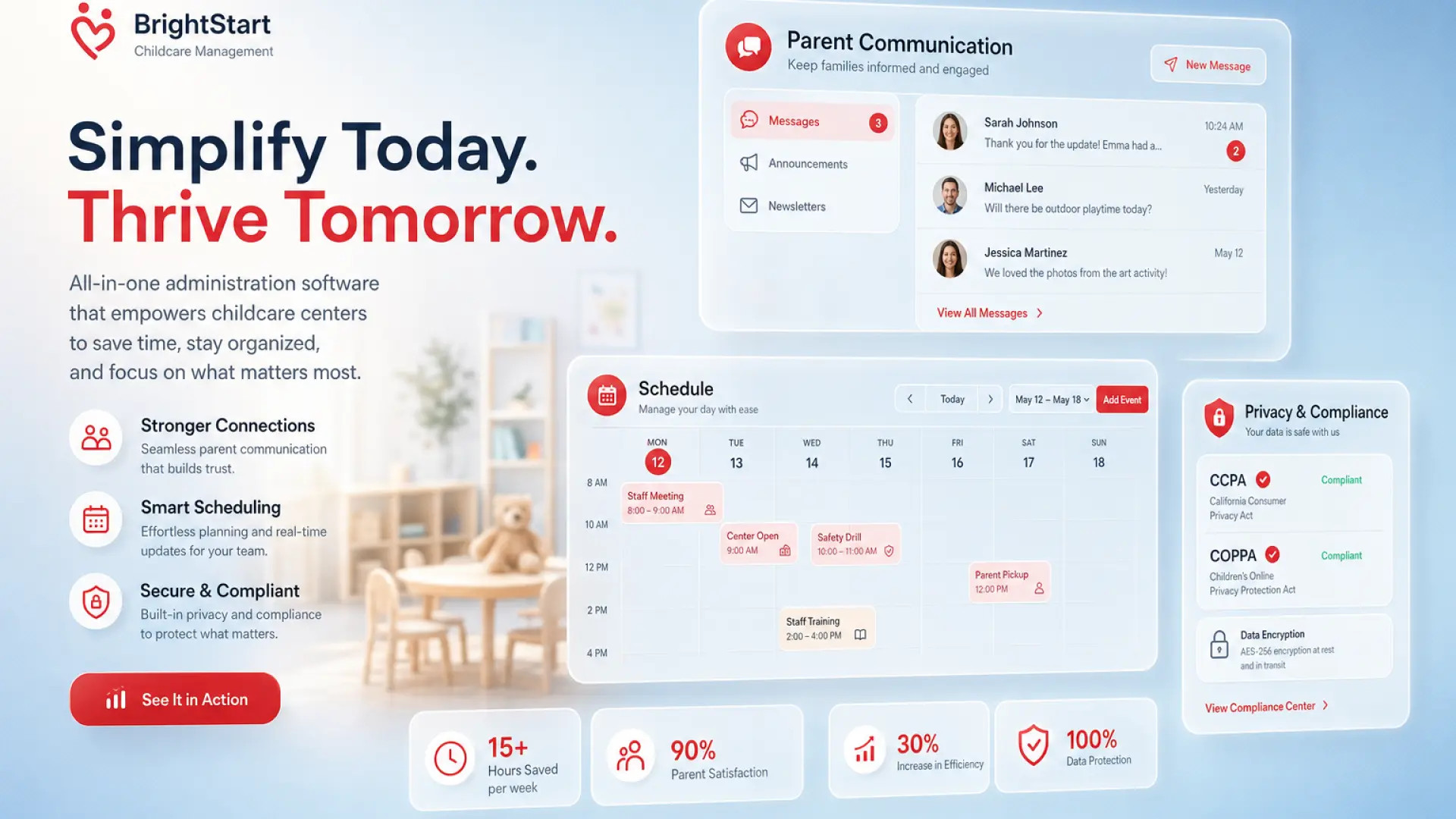
AI can draft daily reports, closure notices, and policy reminders in warm, consistent tone when directors review every send for accuracy and privacy. Automated messages must not disclose one child's health details to other families or include identifiable behavioral labels in group threads.
- Maintain approved tone guides aligned with center philosophy and diversity values.
- Separate templates for individual child updates vs center-wide announcements.
- Block AI from including medical diagnoses without nurse or director approval.
- Log who approved AI-drafted messages for licensing inspection readiness.
- Offer opt-out paths where parents prefer human-only communication on sensitive topics.
| Message type | AI assist level | Director gate |
|---|---|---|
| Daily activity recap | Draft from teacher bullet notes | Teacher verifies facts per child |
| Weather closure | Template fill with schedule data | Director approves before mass send |
| Behavior incident notice | Outline only, no auto-send | Director and parent conference |
| Enrollment marketing | Brochure and web copy drafts | Verify licensing claims and photos |
Photo and Video Sharing Restrictions
Parent consent forms govern whether a child's image may appear in classroom apps, newsletters, or AI-enhanced marketing materials. Face recognition, auto-tagging, and generative image tools create COPPA and state privacy exposure when deployed without explicit policies.
- Prohibit uploading children's photos to public AI image generators.
- Disable facial recognition on center-owned devices unless legally permitted and disclosed.
- Track consent status per child before AI selects photos for yearbook layouts.
- Blur or exclude non-consented children from group shots in automated newsletters.
- Store media in FERPA-aware systems when centers operate in school districts.
Staff Scheduling and Ratio Compliance
AI scheduling assistants optimize shifts against ratio rules, teacher credentials, and break requirements when human directors validate output before publish. Wrong ratios trigger licensing violations and immediate corrective action from state inspectors.
- Encode state-specific ratio tables as hard constraints, not suggestions.
- Flag conflicts when subs lack required training or background check status.
- Integrate time-off requests and avoid discriminatory pattern suggestions.
- Keep human override logs when AI schedules fail during flu outbreaks.
- Review AI recommendations for equitable weekend and closing shift distribution.
Incident Documentation Assistance
AI can structure incident reports from staff voice memos when facts are verified before filing with licensing authorities. Speculative language or minimized severity in AI drafts creates legal and regulatory risk during investigations.
- Use structured forms for injury, biting, and medication error events.
- Require witness statements in staff own words, not AI paraphrase alone.
- Timestamp entries and restrict edit history after regulatory submission.
- Separate internal quality review notes from official incident filings.
- Train staff never to paste incident details into consumer chatbots.
COPPA and FERPA Parent Consent Flows
Centers must map which AI tools touch child data and obtain verifiable parental consent before enabling features like photo tagging, developmental summaries, or personalized chatbots. Consent forms should name vendors, data retention periods, and opt-out paths in plain language.
- Inventory every app that stores child names, photos, or assessment notes.
- Separate admin AI (scheduling) from child-data AI (portfolios, assessments).
- Execute vendor DPAs with COPPA-compliant subprocessors only.
- Renew consent annually and after any vendor model or privacy policy change.
- Train teachers never to paste child identifiers into unapproved AI chat windows.
Frequently Asked Questions
How do state licensing inspectors view AI documentation?
Inspectors expect complete, accurate records regardless of drafting method. Centers should explain AI assist policies during visits and produce audit trails showing human verification of AI-generated entries.
Can AI manage allergy and medication lists?
AI can format lists from nurse-entered data but must not invent allergies or dosages. Medication administration records require licensed staff sign-off on every dose logged.
What COPPA and FERPA rules apply to center AI tools?
COPPA restricts collection and use of personal information from children under 13 without verifiable parental consent. FERPA applies when centers are part of school systems sharing educational records. Choose vendors with compliant data processing agreements.
Should centers deploy parent-facing AI chatbots?
Low-risk FAQs about hours and tuition may suit chatbots with escalation to staff. Never use chatbots for medical advice, discipline disputes, or individualized developmental assessments without human professionals.