Reviewing every AI-generated email would erase the efficiency gain. Reviewing none invites compliance findings and angry customers. Quality teams need a documented sampling plan with defined populations, error tolerance, and corrective actions when failure rates spike.
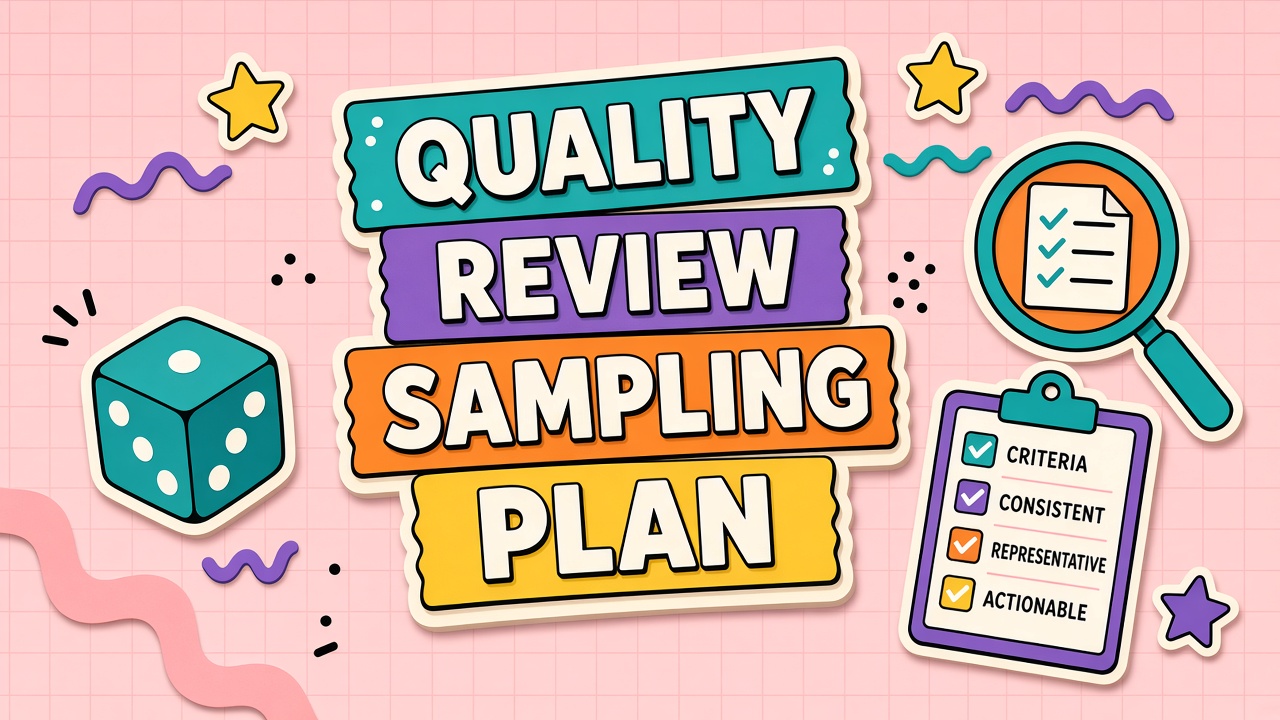
A quality review sampling plan for AI outputs defines how much work to audit, who reviews it, and what happens when samples fail. This guide targets teams using AI customer service and AI writing tools before content reaches customers or regulators.
Define reviewer capacity before setting sample sizes. A plan requiring 350 reviews monthly fails if QA staffing supports 100. Right-size sample math to operational reality; increase automation-assisted triage rather than fantasy sample rates.
Customer complaints and refunds should feed back into sampling weights. A spike in complaints on AI-assisted tickets triggers temporary 100% review regardless of random sample math until root cause closes.
Document sampling plan version, effective date, and approver signature. Plans changed verbally during incidents leave no defensible record for regulators asking what control looked like on a specific date.
Define Population and Error Tolerance
The population is all AI-assisted outputs in scope for a period (for example outbound support replies or marketing drafts). Error tolerance is the maximum defect rate you accept without halting the workflow. Stricter tolerance requires larger samples.
Classify defects: critical (wrong legal or safety advice), major (factual error on product facts), minor (tone or formatting). Sampling plans often track critical and major rates separately with zero tolerance on critical in many regulated contexts.
Define the sampling period (calendar week, rolling 30 days) and stick to it for trend comparison. Ad hoc sampling after a bad headline produces panic overreaction; consistent periods reveal real drift. Document exclusions: test environments, internal dogfood queues, and vendor sandbox traffic should not dilute production quality metrics.
Random vs Risk-Based Sampling
Random sampling gives unbiased estimates of overall quality. Risk-based sampling overweight high-stakes segments: new prompts, new models, VIP customers, or languages with lower eval coverage.
| Monthly volume | Random sample (95% confidence) | Notes |
|---|---|---|
| Up to 500 | ~80 items | Adjust with statistician for exact tolerance |
| 500 to 5,000 | ~200 to 350 items | Add 100% review for first week after model change |
| Above 5,000 | Stratified sample by queue or language | Automate pull from logs with ticket IDs |
Work with your quality or risk team to set numbers; this table is a starting point for discussion, not a universal standard.
Risk-based overlays add mandatory review for VIP accounts, regulated topics, or outputs above confidence thresholds that eval data shows are unreliable. Random sample estimates baseline quality; risk-based sample catches tail risk. Both belong in the published plan.
Reviewer Independence Requirements
Reviewers should not grade their own AI-assisted work. For writing workflows, use a second editor or QA role. For support, use team leads or dedicated QA analysts with rubrics aligned to policy.
- Rubrics cover accuracy, policy compliance, PII leakage, and brand tone
- Reviewers log pass or fail with category and example snippet (redacted)
- Inter-rater reliability checks on 10% of samples quarterly
- Escalation path to legal for edge cases
Corrective Actions on Failure Rates
Predefine triggers: if major defect rate exceeds threshold in a rolling week, pause auto-send and return to 100% human review until root cause is fixed. Document corrective actions in the sampling plan itself.
- Identify cluster (prompt, model version, integration, language)
- Rollback prompt or model if vendor-related
- Retrain staff on rubric gaps if human override failed
- Re-sample at higher rate for two weeks after fix
- Report to steering committee if customer-facing impact occurred
Corrective actions should name owners and dates, not vague "monitor closely." If a customer service AI workflow breaches major defect threshold twice in one quarter, steering should review vendor fit and staffing for review capacity, not only prompt tweaks.
Sampling Workflow in Practice
Weekly job pulls random IDs from production logs. Reviewers complete queue in SLA (for example 48 hours). Dashboard shows defect rate trends. Monthly summary feeds continuous improvement backlog.
Rubric Design and Calibration
Rubrics should be short enough to apply consistently yet specific enough to score. Include examples of pass and fail snippets (redacted) for each defect category. New reviewers shadow ten scored samples before solo queue ownership.
Calibration sessions quarterly align reviewers on borderline cases: tone that is off-brand versus misleading, minor factual drift versus major product error. For writing workflows, separate brand voice from factual accuracy so teams do not conflate stylistic preferences with quality failures.
Reporting Quality Metrics to Leadership
Monthly quality summaries for leadership should show defect rates by category, corrective actions taken, and sampling coverage (percent of population reviewed). Avoid raw defect counts without volume context; rates and trends tell the story.
Link spikes to vendor changes, prompt releases, or staffing gaps. Executives approve continued automation when they see sampling discipline, not when they hear "the model is usually fine."
Store sampled artifacts with reviewer scores in a quality repository searchable by prompt version and model ID. When defects cluster, query the repository before blaming individual operators. Patterns across reviewers indicate rubric gaps, not only training gaps.
Integrating Automated Evals With Sampling
Automated evals can flag high-risk outputs for mandatory human review while random sampling estimates baseline rates. Document how automated flags interact with sample selection to avoid double-counting or blind spots where both systems ignore the same edge case.
External Audit and Customer Due Diligence
Customers and auditors request sampling methodology descriptions during due diligence. Publish a customer-safe summary excluding internal thresholds if confidential, but describe independence, population definition, and corrective action triggers clearly. Ad hoc explanations during audit week contradict what operations actually run.
Retain sampled artifacts for the same period as source communications. Deleting samples while retaining sends creates incomplete evidence chains. Redaction standards for stored samples should match what reviewers saw at scoring time.
Sampling Plan Ownership
Assign a named owner for the sampling plan document with authority to adjust rates within pre-approved bounds. Ad hoc leadership requests for "100% review this week" without plan updates create audit inconsistency. Owner publishes temporary amendments with start and end dates.
Quality, operations, and legal should co-sign annual plan refresh. Co-signaling prevents operations from treating sampling as optional when staffing is tight.
Frequently Asked Questions
How does sampling work for high-volume chat?
Sample conversations, not individual messages, unless messages are independently customer-facing. Include full thread context in review. Increase rate during prompt experiments.
What about multilingual outputs?
Stratify sample by language. Low-resource languages may need 100% review until eval coverage improves. Use native-speaking reviewers or verified translation checks.
Can automation replace human sampling?
Automated evals can pre-filter or augment sampling but rarely replace human judgment on nuanced policy. Use models to flag high-risk items for 100% review while random sample covers the rest.
Does this apply to regulated filings?
Many regulated outputs require 100% human sign-off regardless of sampling math. Treat sampling as supplement, not replacement, where law or firm policy mandates full review.
Sampling for New Model Releases
Define elevated sampling rates for two weeks after vendor model upgrades: often 100% review on external sends or doubled random sample size. Compare defect rates pre and post upgrade before returning to baseline sampling. Model release notes rarely describe tone drift that breaks policy compliance.
Publish sampling plan versions when rates change. Auditors and customers ask what control looked like at the time of an incident, not what you run today after the headline.
Teams using AI writing for external content should stratify samples by channel: email, social, help center. Error profiles differ; blended rates hide channel-specific failures.
Escalation From Sampling to Incident
When sampled defects include critical category failures, open incident process parallel to corrective action. Critical defects may trigger customer notification obligations beyond internal prompt fixes. Legal and comms join the bridge when sampling identifies regulatory or safety language errors.
Sampling queues should prioritize oldest unreviewed items to bound exposure window. SLA breaches on review itself become a metric; backlog age is a risk when AI volume scales faster than QA hiring.
Tooling for Sample Selection
Use reproducible random seeds for sample selection so auditors can verify methodology. Document seed, query, and exclusion filters in the weekly sample record. Reproducibility separates statistical sampling from cherry-picked easy tickets.
Integrate sample queues with reviewer workload tools to balance across QA staff. Uneven assignment creates SLA skew and inconsistent calibration when senior reviewers only see hard cases.
Review sampling plan when entering new markets or languages. Default sample sizes may underpower detection in low-volume locales where 100 percent review is temporarily cheaper than statistical error.
Pair human sampling with customer feedback tags. Complaint themes should increase sample weight for related queues within the same reporting period.
Align sampling plan publication with quality policy version numbers. Auditors match incident dates to plan versions active on those dates.
Steering reviews sampling plan annually and after any customer audit finding related to AI output quality. External findings should update population definitions, tolerances, or reviewer independence rules explicitly.
Sampling plans should define who may temporarily increase sample rates during incidents and how long elevated rates last. Ad hoc 100 percent review without documented authority creates inconsistent audit narratives.
Reviewers should calibrate on golden samples monthly in addition to quarterly full calibration sessions. Short monthly drills keep rubrics aligned when product facts or policies change between quarters.
Sample With a Plan, Not at Random
Statistical sampling makes AI quality governable at scale. Define population and tolerance, mix random and risk-based pulls, enforce independent review, and trigger corrective actions when rates slip. Teams deploying customer service AI and writing assistants should publish the plan before volume makes ad hoc review impossible.