Deploying an AI tool that routes support tickets, drafts employment communications, or scores vendor risk can shift outcomes for thousands of people before anyone documents who might be harmed and how. Privacy impact assessments cover data processing; security reviews cover threats. Neither alone answers whether the algorithm should run at all, under what constraints, and who signs off when residual risk remains.
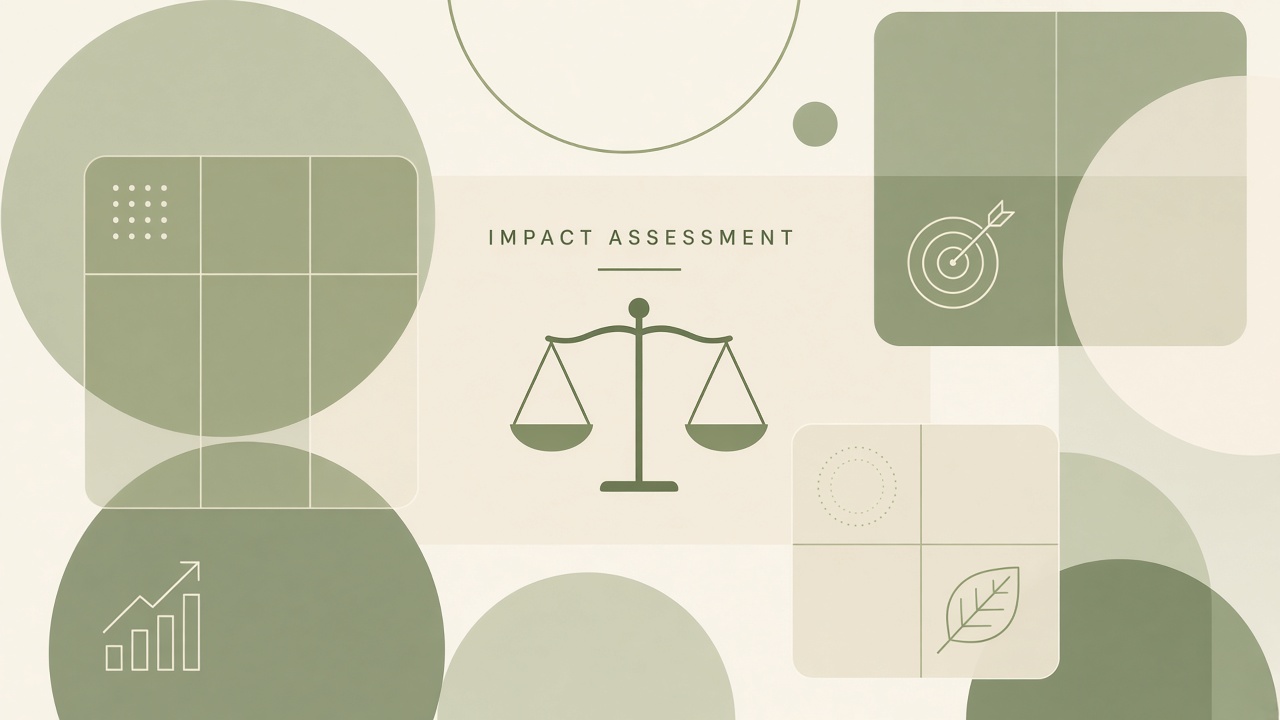
An algorithmic impact assessment (AIA) is a structured evaluation of stakeholder effects, harm scenarios, mitigations, and residual risk acceptance before AI tools enter production. Governments from Canada to New Zealand to the Netherlands mandate AIA-style processes for automated decision systems. Enterprise teams adopt the same rigor for AI customer service tools and AI writing assists that influence customer and employee outcomes. This guide provides template sections with harm taxonomy and control mapping.
When an AIA Is Required vs Lightweight Review
Full algorithmic impact assessment is required when AI tools assist or replace decisions affecting legal rights, economic opportunity, health, safety, or vulnerable populations; lightweight review suffices for low-impact assists on public or de-identified data with human final authority. Canada's Directive on Automated Decision-Making ties AIA impact levels to mitigation requirements. New Zealand's threshold assessment screens whether deeper questionnaire review is needed. Use a triage gate before committing multidisciplinary review hours.
| Signal | Full AIA | Lightweight review |
|---|---|---|
| Decision consequence | Hiring, credit, medical triage, benefits eligibility | Internal meeting notes on public topics |
| Human oversight | AI recommendation drives action without review | Human edits and approves every external output |
| Population scale | Thousands of customers or employees affected | Small pilot with synthetic users |
| Data sensitivity | Special category or protected attributes in scope | No personal data in prompts or outputs |
| Regulatory mapping | EU AI Act high-risk annex categories | Minimal risk transparency-only systems |
Threshold Questionnaire
Publish a ten-question threshold screen based on New Zealand Algorithm Charter practice: any "yes" or "unsure" on harm pathways triggers full AIA. Record triage decisions with reviewer name and date for audit sampling.
Pilot vs Production
Netherlands AI Impact Assessment guidance requires completion before production even for pilots that affect real clients; design pilots to use synthetic scenarios when full AIA is not yet complete. Beta labels do not eliminate impact when outputs reach real users.
Stakeholder and Affected Population Mapping
Map direct users, indirect subjects, oversight roles, and communities who bear harm if the AI tool fails, including groups historically subject to algorithmic bias. A AI customer service chatbot affects customers, support agents, and escalation teams. An AI writing tool for HR communications affects applicants and employees who never touch the software. Include external stakeholders in review when feasible.
| Stakeholder group | Relationship to system | Engagement method |
|---|---|---|
| Direct operators | Configure, prompt, approve outputs | Workflow interviews, task observation |
| Decision subjects | Receive AI-influenced outcomes | Impact workshops, complaint analysis |
| Oversight functions | Legal, compliance, union, ethics board | Structured review sessions |
| Vulnerable populations | Disproportionate harm if biased or wrong | Targeted consultation where appropriate |
Power Imbalances
Document power asymmetries: customers cannot opt out of AI triage; employees face pressure to accept AI drafts as final. Mitigations must address structural coercion, not only technical accuracy.
Geographic and Cultural Context
Note jurisdictions where deployed populations have distinct legal protections or language needs the model may not serve equitably. Cross-border SaaS deployments multiply stakeholder complexity.
Harm Scenarios and Likelihood Scoring
Enumerate concrete harm scenarios with severity and likelihood scores, using a taxonomy covering discrimination, privacy violation, physical or psychological harm, economic loss, democratic or informational harm, and erosion of human agency. Canada's AIA uses 65 risk questions across administrative law, human rights, and technical dimensions. Adapt scoring to your risk appetite but keep scales consistent across tools for portfolio comparison.
| Harm category | Example scenario | Severity (1 to 5) |
|---|---|---|
| Discrimination | Support bot deprioritizes non-English speakers | 4 |
| Misinformation | Writing assist invents policy citations in customer email | 5 |
| Privacy | Model echoes prior customer PII to new session | 5 |
| Economic | Automated refund denial without human appeal path | 4 |
| Psychological | Tone-deaf bot response to distressed customer | 3 |
| Agency erosion | Agents rubber-stamp AI replies under time pressure | 3 |
Likelihood Factors
Score likelihood using exposure volume, automation level, historical incident data, and model limitation disclosures from vendor model cards. High severity with low likelihood may still require controls when exposure is broad.
Compound Scenarios
Model cascade failures where one AI tool feeds another multiply harm; map end-to-end workflows, not isolated components. Document integration points in your AI inventory register.
Mitigation Controls and Residual Risk Acceptance
Map each scored harm to preventive, detective, and corrective controls, then document residual risk after controls with named acceptor for risks above appetite. Controls span human-in-the-loop review, output disclaimers, bias testing, rate limits, escalation paths, monitoring dashboards, and kill switches. Canada's directive appendix lists proportionate mitigations per impact level.
| Harm scenario | Control | Control type | Residual risk |
|---|---|---|---|
| Discriminatory routing | Monthly fairness audit on routing logs | Detective | Low with audit |
| Hallucinated policy claims | Mandatory human review before send | Preventive | Low |
| PII disclosure | DLP on outputs, zero-retention API tier | Preventive | Medium: accept with DPO sign-off |
| Customer distress mishandling | Sentiment trigger to human agent | Corrective | Low |
Control Effectiveness Testing
Test controls before production: run red team scenarios against mitigations, not only against raw model outputs. A human review step that agents skip under load is not an effective control.
Monitoring and KPIs
Define post-deployment metrics: override rate, escalation rate, complaint themes, fairness deltas, and incident counts linked to AIA scenarios. Trigger AIA refresh when metrics breach thresholds.
Sign-Off Roles and Public Transparency Options
Require multi-role sign-off: business owner, technical owner, privacy officer, and for high impact, legal and executive risk acceptance before production. Canada's directive requires publishing AIA results in accessible format on open government portals for federal automated decision systems. Private enterprises may publish summary transparency statements voluntarily or under customer contract obligations.
- Business owner: confirms use case proportionality and benefit case.
- Technical owner: confirms controls implemented and monitored.
- Privacy officer: confirms DPIA alignment and data minimization.
- Legal: confirms regulatory classification and notice obligations.
- Ethics or diversity lead: confirms stakeholder consultation adequacy.
- Executive: accepts residual high risks with expiry date.
Publication Formats
Public transparency options include summary AIA reports, algorithm registers, and customer-facing AI disclosure pages describing automated assistance scope. Balance transparency with security and trade secret constraints; publish harm categories and mitigations without exposing exploit details.
Scheduled Review
Schedule AIA updates when system functionality, scope of use, or affected population changes, per Canada directive subsection 6.1.3. Annual calendar review catches slow drift.
AIA Template Structure
Standard AIA reports include executive summary, system description, stakeholder map, harm and likelihood matrix, control mapping, residual risk register, sign-off page, and appendices linking model cards and DPIAs. Netherlands AIIA Part A covers desirability and proportionality; Part B covers design and implementation. Combine both lenses in enterprise templates.
Integration With GRC
Store AIAs in your GRC platform with immutable versioning; link to inventory register IDs and change management tickets. Sample three AIAs per year for internal audit like other impact assessments.
Multidisciplinary Workshops
Run half-day harm scenario workshops with legal, product, affected operations staff, and external advocates where appropriate before finalizing AIA scores. Workshop notes become appendix evidence demonstrating meaningful consultation beyond checkbox exercises. NIST AI RMF Map function practices support this collaborative risk identification approach.
Frequently Asked Questions
How does AIA overlap with DPIA?
DPIA focuses on personal data processing lawfulness; AIA focuses on broader algorithmic harms including non-data effects like discrimination and agency erosion. Run both in parallel for systems processing personal data with consequential decisions. Cross-reference documents but do not treat DPIA as substitute AIA.
Can we skip AIA for a ten-user pilot?
Skip full AIA only when pilot uses synthetic data, does not affect real legal rights, and has documented lightweight review; real-customer pilots need proportional AIA even at small scale. Pilots often become production without re-assessment; plan accordingly.
Who owns AIA for vendor-hosted SaaS AI?
Your organization owns deployer AIA for how you configure and use vendor AI; vendor documentation informs but does not replace your assessment of your use case. Contractually require vendor cooperation with assessment questionnaires.
What belongs in a lightweight review document?
Lightweight review records triage answers, confirms human-final authority, lists data classes, and names reviewer approval in under two pages. Upgrade to full AIA when any trigger changes.
Implementation Roadmap
Month one: publish threshold questionnaire and template; month two: complete pilot AIA on highest-risk queued deployment; month three: train business owners and integrate sign-off workflow; ongoing: annual portfolio review of AIAs against incident data. Start with tools touching customers before internal-only assists.
Conclusion
Algorithmic impact assessment succeeds when triage separates full AIA from lightweight review, stakeholders and harm scenarios are scored rigorously, controls map to residual risk with named acceptance, and sign-off roles produce auditable decisions. Risk and product teams who run AIAs before production, not after complaints, demonstrate accountable AI deployment aligned with public sector best practice and enterprise customer expectations.