Knowing when to replace an AI tool is harder than choosing one. Sunk cost, team habits, and integration depth make mediocre tools feel cheaper to keep than to swap. But cost drift, quality regression, and support gaps accumulate quietly until the subscription costs more than the workflow delivers.
This guide lists objective replacement signals, urgency scoring, and planning steps that minimize downtime. Teams running automated workflows should review our AI automation and AI productivity categories when evaluating alternatives before canceling a current vendor.
Objective Signals for Replacement
Replacement decisions should rest on measurable signals, not frustration alone. Frustration is a trigger to investigate; data should drive the decision. Use this signal checklist with urgency scoring.
| Signal | How to measure | Urgency |
|---|---|---|
| Review burden increased | Minutes per output vs baseline at purchase | High if over 50% increase |
| Cost per useful output rose | Monthly spend divided by accepted outputs | High if over 30% increase |
| Seat utilization below 40% | Active users vs licensed seats over 90 days | Medium |
| Model update degraded quality | Regression test pass rate on saved prompts | High if vendor cannot pin previous model |
| Support response degraded | Ticket resolution time vs SLA | Medium to high for production tools |
| Better alternative qualified | Scorecard shows alternative wins on weighted criteria | Medium (plan migration) |
Cost Drift and Unused Capacity
AI subscriptions often grow faster than usage. Seat creep, credit overages, and plan upgrades pushed by the vendor inflate cost without proportional value. Track cost per useful output monthly, not just total spend.
Cost drift warning signs:
- Annual renewal quote exceeds 20% without usage growth justification
- Overage charges appear regularly despite workflow volume staying flat
- Licensed seats exceed active users by more than two to one
- Features you pay for (premium models, extra storage) go unused
Quality Regression After Updates
Model and platform updates can silently degrade output quality. If your regression test pass rate drops after a changelog entry and the vendor cannot restore previous behavior, replacement may be cheaper than prompt re-engineering on a platform you no longer trust.
Document quality regression with before-and-after examples saved in a shared folder. This evidence supports internal replacement proposals and vendor escalation conversations.
Support and Roadmap Stagnation
A tool that stops improving while your needs grow creates compounding friction. Review the vendor's changelog, roadmap communications, and your support ticket history quarterly. Stagnation signals include repeated unresolved bugs, missing features competitors shipped months ago, and support responses that reference outdated documentation.
Replacement Planning Without Downtime
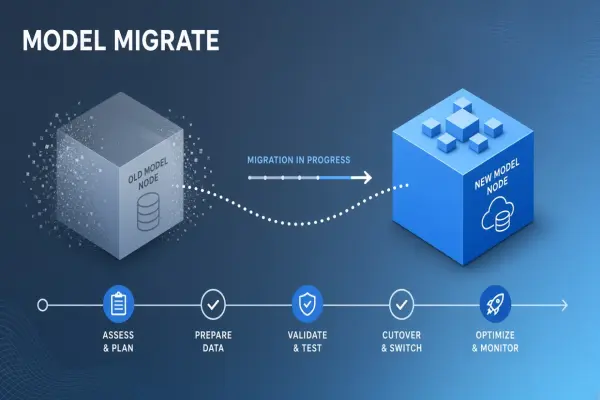
Plan migration before you cancel. Dual-running two tools for two to four weeks costs less than an emergency switch after a failed renewal negotiation or sudden outage.
- Export data: Pull prompts, configurations, logs, and training data before notice period ends.
- Qualify alternative: Run scorecard evaluation on one or two replacements during dual-run.
- Parallel workflows: Route a percentage of production traffic to the new tool.
- Cutover date: Set a firm date to disable the old tool and update integrations.
- Post-migration review: Compare cost and quality metrics 30 days after switch.
Frequently Asked Questions
Should we dual-run two AI tools during migration?
Yes, for production-critical workflows. Dual-running for two to four weeks reveals integration gaps and quality differences that a trial alone misses. Budget for overlapping subscription costs during the transition. The overlap is cheaper than downtime.
Can we negotiate out of a contract when quality regresses?
Depends on contract terms. Some enterprise agreements include performance clauses or termination for material service degradation. Review your order form before assuming you are locked in. Document regression with dated evidence to strengthen negotiation position.
How many signals must trigger before we replace?
One high-urgency signal (major quality regression, security incident) can justify immediate action. Multiple medium signals (cost drift plus low utilization plus support gaps) justify planned replacement within one renewal cycle. No signal at all with general dissatisfaction suggests you need better measurement, not necessarily a new vendor.
What if the team likes the tool but metrics say replace?
Investigate the gap. Teams often like UI familiarity while ignoring rising review burden. Present metrics alongside qualitative feedback in a replacement proposal. If metrics are borderline, run a structured re-evaluation scorecard before deciding.
The Bottom Line
Replace an AI tool when objective signals (cost drift, quality regression, support gaps, unused capacity) outweigh switching cost. Score urgency, plan dual-running migration, and document evidence before renewal conversations. Staying on a bad tool because you already paid is the most expensive decision of all.