A radio telescope records billions of frequency channels per second. Most bright features in the resulting spectrograms are not from distant galaxies or pulsars. They are Wi-Fi routers, satellites, radar, and aircraft transponders: radio frequency interference (RFI) born on Earth. Separating genuine astrophysical emission from RFI is the central bottleneck in modern radio astronomy, and it grows harder as surveys scale to petabytes. Machine learning now classifies, localizes, and prioritizes signals across SETI technosignature searches, pulsar discovery pipelines, and fast radio burst (FRB) hunters. Radio astronomy AI classification treats spectrograms as images, time series as sequences, and candidate lists as ranking problems filtered by direction-of-origin logic and unsupervised anomaly detection.
Breakthrough Listen processes data from the Green Bank Telescope, Parkes, and the Allen Telescope Array. Pulsar surveys like those on CHIME and MeerKAT generate millions of candidates per run. Interferometers such as LOFAR and the SKA pathfinders produce imaging cubes where RFI excision must happen before calibration. Teams evaluating AI chatbot products for observatory operations should understand that classification quality upstream determines every downstream science claim. For broader context on research explainers, browse the EliteAI.tools blog index.
What Radio Astronomy AI Classification Means in Plain Language
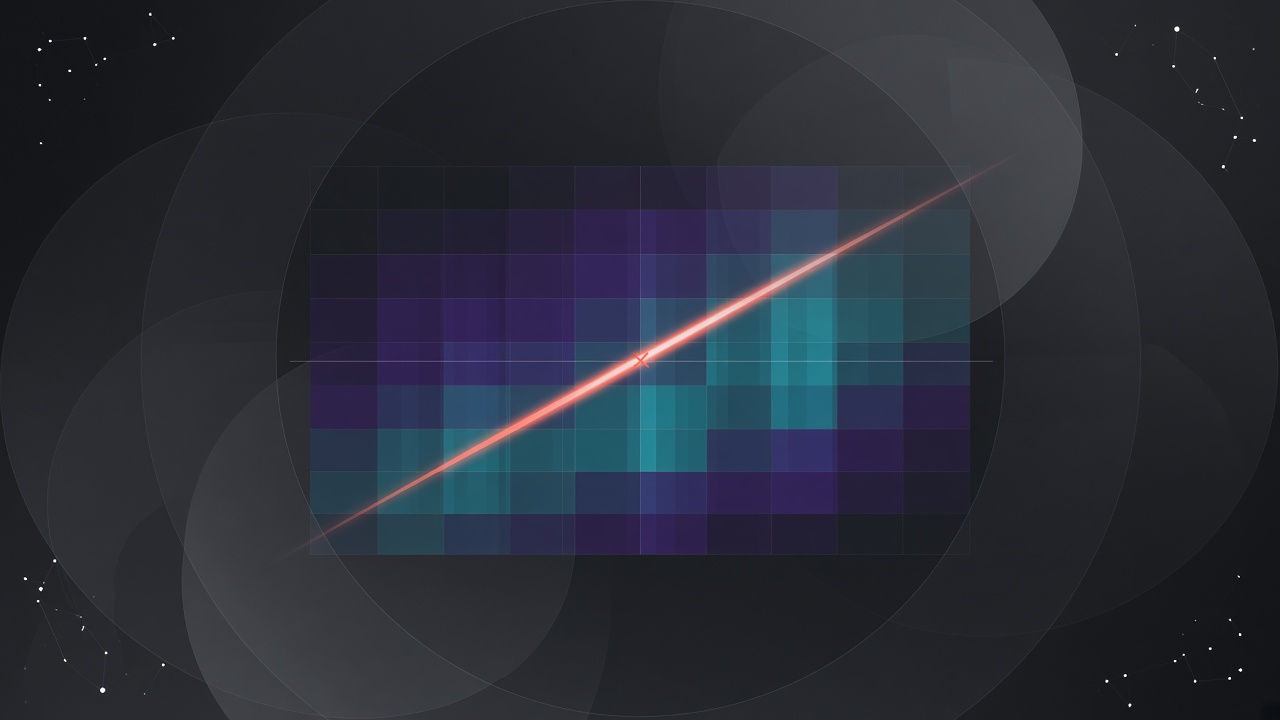
Radio astronomy AI classification is the use of machine learning models to label, rank, or localize signals in radio telescope data as astrophysical, instrumental artifact, or terrestrial RFI. A spectrogram plots signal intensity versus time (horizontal axis) and frequency (vertical axis). Astrophysical signals often appear as diagonal drift lines (dispersed pulses), vertical RFI stripes, or horizontal satellite bands. Human visual inspection cannot scale to modern data volumes, so pipelines automate detection and then apply ML filters to reduce false positives.
Classification tasks differ by science goal. RFI mitigation removes terrestrial contamination before imaging or pulsar folding. Candidate prioritization ranks technosignature hits for follow-up in SETI searches. Transient detection finds FRBs and giant pulses in high-throughput streams. Pulsar discovery classifies periodic candidates from periodicity searches. Each task uses related but not identical features and labels.
| Signal type | Spectrogram appearance | Typical ML task |
|---|---|---|
| Pulsar / FRB | Dispersed bow-tie or curved trail | Detection, dedispersion, classification |
| Narrowband technosignature | Thin vertical or drifting line | Localization, RFI rejection, anomaly scoring |
| Satellite RFI | Horizontal band or repeating pattern | Supervised RFI class, clustering |
| Continuous interference | Fixed frequency stripe | Flagging (AOFLAGGER), autoencoder anomaly |
SETI versus pulsar versus imaging pipelines
SETI narrowband searches assume artificial signals are narrow (1 to 10 Hz) and often continuous; pulsar searches assume dispersed periodic pulses; imaging pipelines flag bad data before beamforming. Breakthrough Listen uses on-off cadence (ABACAD pattern): signals appearing in off-target pointings are rejected as RFI. Pulsar pipelines fold data at trial periods. Interferometric arrays apply ML on visibility data or image domains. The classification model must match the observation strategy or false-positive rates explode.
How the Underlying AI Pipeline Works
Modern radio astronomy ML pipelines convert raw voltage or filterbank data into spectrograms, run classical detection (matched filtering, dedispersion trees), then apply neural networks for refinement, ranking, and RFI rejection. CNNs dominate spectrogram tasks because local time-frequency patterns map naturally to convolutional filters. Unsupervised methods cluster RFI morphologies when labeled libraries are incomplete. Real-time systems on GPU platforms process streaming data without writing full archives first.
CNNs on spectrograms for localization and RFI
Convolutional neural networks classify spectrogram crops as RFI or astrophysical and localize signal centroids in crowded frames. Research on synthetic Breakthrough Listen-style data shows residual CNNs with strided convolutions outperform basic max-pooling architectures for multi-signal frames where dim technosignature candidates sit beside bright RFI. Training on higher signal-to-noise subsets before fine-tuning on faint signals reduces localization error by large factors at 25 dB SNR. Direction-of-origin (DoO) filters use CNNs to compare dynamic spectra from on-target and off-target pointings, achieving precision near 99% and recall near 98% in published technosignature pipelines, reducing manual inspection load by factors of 6 to 16 compared to correlation baselines.
Unsupervised RFI classification and anomaly detection
Breakthrough Listen's GLOBULAR framework applies HDBSCAN density clustering to group RFI with similar morphology, then uses anomaly detection to surface spectrogram features that do not match known interference clusters. Unsupervised approaches matter because new RFI sources appear continuously as constellations and 5G deployments expand. Supervised libraries go stale; clustering adapts to each survey's RFI environment. The trade-off is interpretability: clusters must be validated by astronomers before automatic rejection rules harden.
Real-time FRB and transient detection
Breakthrough Listen collaborators with NVIDIA deployed an end-to-end AI system on the Allen Telescope Array using the Holoscan platform for real-time FRB detection. The system processes 86 gigabits per second, operates hundreds of times faster than traditional dedispersion brute-force searches, and reports roughly 7% better accuracy with nearly tenfold fewer false positives than existing pipelines. It successfully detected giant pulses from the Crab Pulsar in validation runs. This architecture generalizes to technosignature searches that must sift millions of candidates during live observing.
| Approach | Representative use | Strength | Limitation |
|---|---|---|---|
| CNN classifier | RFI vs signal, DoO filter | High precision on labeled morphologies | Needs retraining for new telescopes |
| HDBSCAN + anomaly | Breakthrough Listen GLOBULAR | Adapts to novel RFI without labels | Cluster semantics require human review |
| End-to-end GPU stream | FRB search on ATA (Holoscan) | Real-time at 86 Gbps throughput | Hardware-specific deployment |
| Classical + ML hybrid | TurboSETI then CNN localize | Interpretable stages | Latency stacks across stages |
Interferometry and imaging-domain classification
Interferometers correlate signals across antennas before forming images. RFI classification operates on visibility phases, autocorrelation spectra, and image-plane artifacts. SKA pathfinder projects invest in ML flagging that respects spatial coherence: terrestrial RFI often appears in all baselines simultaneously while celestial sources obey geometric delay patterns. Classification models that ignore baseline structure mis-flag astrophysical emission during calibration. Direction-dependent effects and ionospheric scintillation add noise that ML must not confuse with RFI stripes.
Typical workflow steps
- Record filterbank or voltage data at the telescope backend.
- Generate spectrograms with consistent normalization (multiple normalizations can improve CNN input).
- Run classical detection (dedispersion, periodicity search, or narrowband hit finder).
- Apply ML RFI classifier and direction-of-origin filter on candidate crops.
- Rank survivors by anomaly score or science-priority model; queue top candidates for human review or follow-up observation.
- Archive labels to retrain models as RFI environment evolves.
Real Deployments and Published Evidence
Radio astronomy AI classification runs in production at Breakthrough Listen scale, UCLA SETI group pipelines, and FRB real-time systems on the Allen Telescope Array, with peer-reviewed results in the Astronomical Journal and Astronomy and Astrophysics. Breakthrough Listen has searched thousands of targets from galactic to planetary scales, processing petabytes where RFI filtration determines feasible survey depth. CNN-based DoO filters cut manual inspection burden by an order of magnitude while maintaining high recall for genuine coincident signals.
Pulsar discovery pipelines increasingly embed deep learning re-scorers on candidates from PRESTO and similar tools. CHIME/FRB and MeerKAT use ML to classify burst morphology and distinguish RFI glitches from astrophysical events. The Holoscan FRB system demonstrates that GPU-native end-to-end models can replace multi-stage dedispersion for certain science cases, with direct implications for technosignature surveys that share the same data path.
Open challenges remain in cross-telescope generalization: a model trained on GBT RFI does not automatically transfer to Parkes or ATA without domain adaptation. High spectral resolution in narrowband SETI (fine frequency bins reveal structure invisible to continuum surveys) demands specialized architectures sensitive to sub-Hz features.
Pulsar detection and classification evidence
Pulsar surveys generate ranked lists where the top candidates are overwhelmingly RFI. ML re-ranking uses folded profile shapes, dispersion measure consistency, and spectrogram texture. Deep learning models trained on labeled pulsar and RFI archives achieve high purity at the expense of missing exotic pulsar classes with atypical profiles. Survey teams balance recall (find every pulsar) against operator hours (inspect fewer false alarms).
Limits, Risks, and Ethical Guardrails
Radio astronomy AI classification can silently discard astrophysical signals that resemble RFI, especially faint technosignatures beside bright interference or dispersed bursts with unusual morphology. Over-aggressive filtering optimizes operator convenience at the cost of scientific completeness. Unsupervised clusters may lump rare astrophysical transients with RFI if sample sizes are tiny.
- False negatives: A missed FRB or pulsar is often unrecoverable if the raw voltage buffer expired.
- Dataset bias: Training on bright signals underperforms on faint SETI candidates at low SNR.
- Concept drift: New satellite constellations introduce RFI classes absent from training archives.
- SETI hype risk: Anomaly scores are not evidence of extraterrestrial intelligence; public communication must qualify rankings.
Ethical guardrails include publishing false-positive and false-negative rates per pipeline stage, retaining raw data for reprocessing when models improve, and avoiding sensational claims from unverified anomaly peaks. Radio astronomy is a shared spectrum resource; RFI mitigation intersects with telecommunications policy and indigenous land use for telescope sites.
Who Should Use This and Who Should Wait
Observatory pipeline engineers, Breakthrough Listen collaborators, and pulsar survey teams should deploy validated CNN and clustering RFI filters now, with continuous label feedback loops. Amateur SETI enthusiasts and startups without telescope partnerships should not treat public ML checkpoints as substitutes for calibrated instrument pipelines.
| Audience | Recommendation | Caveat |
|---|---|---|
| Radio observatory pipeline team | Integrate CNN DoO filter plus unsupervised RFI clustering | Validate per receiver and backend |
| SETI research group | Adopt GLOBULAR-style anomaly pipeline on narrowband data | High spectral resolution needs custom features |
| FRB survey team | Evaluate GPU end-to-end dedispersion replacements | Benchmark false-positive rate against classical tree |
| General ML developer | Wait; partner with radio astronomers on labeled data | Synthetic data alone misrepresents RFI diversity |
Frequently Asked Questions
How accurate is radio astronomy AI classification for RFI removal?
Published CNN direction-of-origin filters report precision near 99% and recall near 98% on technosignature search data; accuracy varies by telescope, band, and RFI environment. Unsupervised methods trade labeled accuracy for adaptability. Always report metrics per pipeline stage, not end-to-end survey sensitivity alone.
Does Breakthrough Listen use machine learning?
Yes. Breakthrough Listen applies CNN localization, unsupervised RFI clustering (GLOBULAR), direction-of-origin filters, and real-time GPU pipelines on Allen Telescope Array data. ML reduces manual inspection of petabyte-scale narrowband surveys.
Can AI detect alien signals?
AI ranks and filters candidates; it does not confirm technosignatures. No verified extraterrestrial signal has been confirmed. Anomaly scores prioritize follow-up on signals that differ from known RFI clusters. Confirmation requires independent observation and physical plausibility checks beyond any classifier.
How do pulsar searches use classification differently from SETI?
Pulsar pipelines classify periodic folded profiles and dispersion measure consistency; SETI pipelines classify narrowband drift and on-off pointing coincidence. The same CNN architecture may apply, but labels, features, and observation cadences differ. Do not reuse SETI models on pulsar candidates without retraining.
Does ML work on interferometry data?
Yes, but models must respect baseline coherence and direction-dependent calibration. Image-domain and visibility-domain classifiers are active research areas for SKA-era data volumes. Single-dish spectrogram CNNs do not transfer directly without architectural changes.
How much labeled data is needed for RFI classification?
Supervised CNN DoO filters use thousands to millions of labeled spectrogram pairs; unsupervised clustering reduces label demand but requires astronomer validation of cluster semantics. Active learning from operator review loops is common in operational deployments.
Can classification run in real time?
GPU streaming architectures on Holoscan demonstrate real-time FRB detection at 86 Gbps on ATA; narrowband SETI often processes archives offline due to storage and sensitivity trade-offs. Real-time technosignature search is an active engineering goal, not universal today.
Conclusion
Radio astronomy AI classification addresses the RFI bottleneck that limits SETI, pulsar discovery, FRB searches, and interferometric imaging. CNNs on spectrograms power localization and direction-of-origin filters; unsupervised clustering adapts to novel interference; GPU end-to-end systems deliver real-time transient detection at scale. Breakthrough Listen and major survey pipelines now depend on ML stages to make petabyte science feasible. Success requires per-telescope validation, cautious public communication on SETI candidates, and pipelines that preserve faint astrophysical signals rather than optimizing only for operator convenience. Teams entering this field should partner with observatory experts, archive labeled rejections for retraining, and treat classification as a scientific instrument, not a black-box filter.