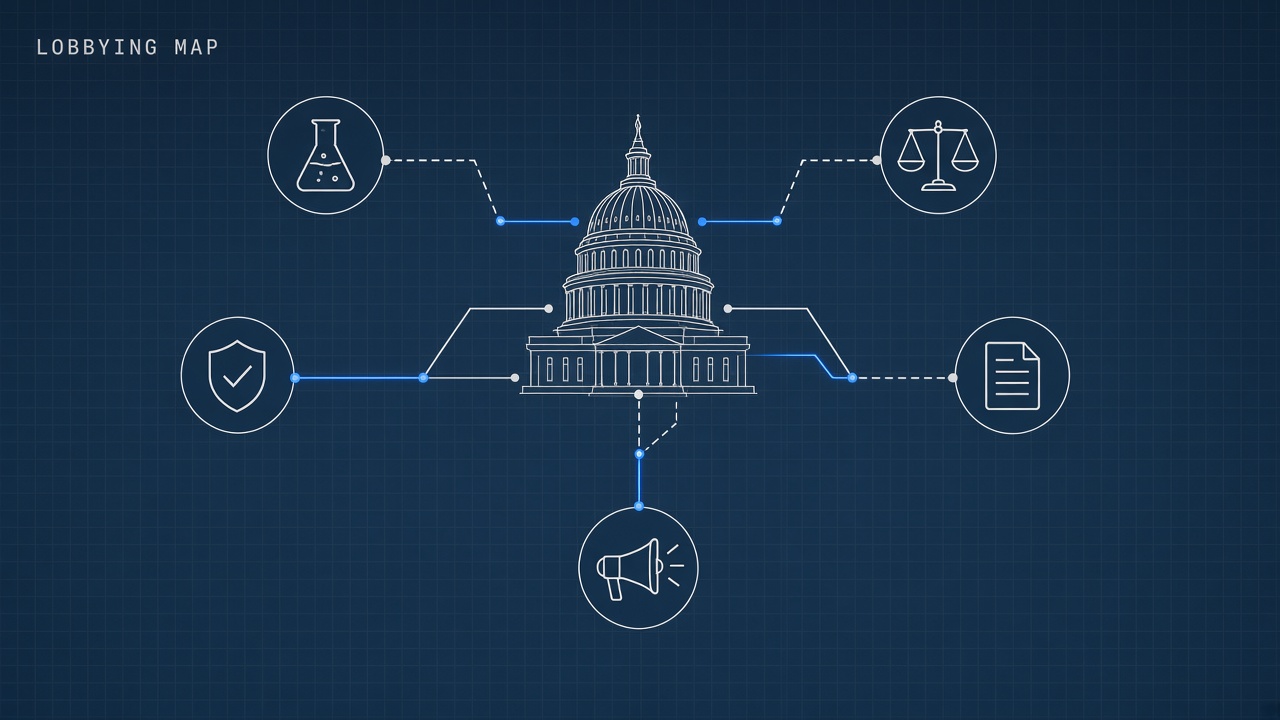
Senate Majority Leader John Thune, Commerce Chair Ted Cruz, and Senator Amy Klobuchar spent September 2026 negotiating a bipartisan frontier AI safety bill while lobbyists from OpenAI, Anthropic, Meta, Google, and trade groups pressed competing priorities. Reuters reported on September 11 that negotiators aim to impose a legal duty of care, grant the federal government power to block unsafe model releases with court review, and limit certain state laws. Punchbowl News described the package as on hold after Anthropic and Senator Maria Cantwell raised objections to Commerce Department injunction authority and testing design.
This analysis maps senate AI bill lobbying positions as of mid-September 2026: where frontier labs, open-model advocates, and trade associations align or split on testing, liability safe harbors, and preemption, and what changed between early August drafts and the current negotiating text. Teams tracking AI regulation and AI chatbot policy should treat public bill text as still pending when this article was published.
Major Stakeholder Positions on Senate AI Legislation
Frontier labs split between OpenAI's push for mandatory national rules and Anthropic's demand for stronger public disclosures and limits on Commerce injunction power, while Meta and Google emphasize liability safe harbors and open-model carve-outs. Trade groups such as the Chamber of Commerce and NetChoice generally oppose broad state preemption paired with weak federal floors, whereas safety nonprofits want national-lab testing mandates.
| Stakeholder | Testing stance | Liability / safe harbor | State preemption |
|---|---|---|---|
| OpenAI | Mandatory capability-based federal testing, independent assessments, incident reporting | Accepts duty of care if thresholds are clear; lobbies for national standards | Supports federal floor; backs California bills as interim "reverse federalism" |
| Anthropic | Wants public risk disclosures; prefers national-lab vetting over company-only tests | Supports strong obligations; objects if disclosures become paperwork without enforcement | Opposes weak federal standard that blocks stronger state rules |
| Meta | Favors scalable self-testing for open models; resists one-size thresholds | Pushes safe harbor for open-weight releases with documentation | Generally supports national uniformity for development rules |
| Google / Alphabet | Aligns with industry-led standards plus federal backstop | Seeks clarity on product liability for deployers vs developers | Mixed; wants deployment rules left to states per House draft themes |
| xAI / startups | Warn that national-lab gates favor incumbents | Oppose broad strict liability without revenue thresholds | Split; some want state flexibility for niche models |
| Safety nonprofits | Mandatory third-party and government testing before deployment | No safe harbor for known catastrophic risks | Oppose preemption unless federal rules match California-class floors |
IAPP reported that OpenAI contacted congressional offices on September 9 urging members to pass foundational AI safety legislation before adjournment. Punchbowl described Hill staff frustration that Anthropic's disclosure requests could burden startups while weakening Commerce's ability to obtain current risk data. Cantwell told allies she will not sign onto a bill that preempts California without pre-deployment testing by national laboratories and security agencies.
Open vs Closed Model Divide on Testing and Liability
Open-weight advocates argue that publishing model weights should not trigger the same release-blocking regime as closed frontier APIs, while closed labs counter that open models can be fine-tuned for misuse at scale. The Washington Post's August 2026 tech brief noted Thune's duty-of-care framework relies on developer self-testing, whereas Cantwell's alternative centers government-led evaluation.
Lobbying themes on the open-closed split include:
- Threshold design: FLOPs, training cost, or capability benchmarks that capture open releases without sweeping research exemptions
- Downstream liability: Whether hosts of open weights share duty-of-care obligations with original trainers
- Export and security: National security voices want weight theft and proliferation treated as release risks
- Research carve-outs: Universities seek explicit academic exemptions from commercial deployment rules
Meta and Hugging Face ecosystem groups have emphasized that overly broad frontier definitions could chill open science. Anthropic and several Senate Democrats counter that biological and cyber misuse cases increasingly involve fine-tuned open models, so exemptions must be narrow and auditable.
Liability and Safe Harbor Debates
The Senate draft would let the government seek court orders to block model releases when developers breach risk-management duties, but industry lobbyists want safe harbors when companies follow approved testing protocols. House discussion drafts from Representatives Obernolte and Trahan proposed three-year preemption of state development rules with catastrophic-risk reporting to a federal AI standards center, signaling where liability and AG enforcement might land if Senate and House bills merge.
Key lobbying fights include:
- Whether following NIST-aligned testing creates a rebuttable presumption of compliance
- If deployers of API wrappers inherit developer duties or face separate consumer-protection liability
- How incident reporting timelines (15-day vs 24-hour imminent risk) interact with litigation holds
- Whether state attorneys general can enforce federal duties or only the Commerce Department can sue
Product liability lawyers note AI companies already face tort suits for alleged duty-of-care breaches. Lobbyists want statutory clarity so voluntary safety investments do not become admissions in civil court. Consumer groups oppose blanket safe harbors after Anthropic's September threat-intelligence report on biological weapon assistance.
What Changed Between Drafts
Between August and September 2026, negotiators moved from abstract duty-of-care language toward explicit release-blocking authority, court appeals, and preemption, while losing momentum on Commerce Committee markup after Anthropic and Cantwell objections. Early August reporting described competing Thune and Cantwell models; by September 11 Reuters confirmed government block authority and federal court review were active negotiating items.
| Topic | August 2026 posture | September 2026 posture |
|---|---|---|
| Release blocking | Discussed as possible injunctive relief | Central; structure of agency power still unsettled |
| Testing model | Self-testing vs national-lab split public | Anthropic push for disclosures slowed markup |
| OpenAI position | Federal preemption emphasis | Mandatory national rules plus state bill support |
| Committee timeline | Markup expected before recess | Delayed; introduction possible within days per Semafor |
| Catalyst events | Cyber and election misuse hearings | Anthropic researcher resignation, Hugging Face jailbreak scrutiny |
Enterprises should monitor whether final text distinguishes development from deployment preemption, a line House drafters drew to preserve state consumer rules. Lobbying may shift again if public bill language drops open-model carve-outs or weakens Cantwell's national-lab testing demands.
Frequently Asked Questions
Which companies lobby most aggressively on the Senate AI bill?
OpenAI escalated congressional outreach in September 2026 with Chris Lehane's public post and staff emails urging passage before adjournment. Anthropic lobbied heavily on testing and Commerce authority per Punchbowl reporting. Meta and Google maintain steady Commerce Committee engagement on liability and open-model definitions.
Why do OpenAI and Anthropic disagree if both want safety rules?
Both support federal action but diverge on enforcement design. OpenAI prioritizes a national floor and capability thresholds. Anthropic wants stronger public risk disclosures and resists ongoing Commerce injunction power without independent testing guardrails.
Would the bill preempt California SB 53 and related laws?
Negotiating aides told Reuters the working draft includes state preemption for certain catastrophic-risk rules, but exact scope is unsettled. Cantwell and California Democrats oppose preemption unless federal standards match or exceed state protections.
How would lobbying outcomes affect AI startups?
Startups far below frontier thresholds would likely face fewer direct duties, but open-model hosts and fine-tuners could inherit obligations if thresholds sweep downstream deployers. Safe harbor and revenue carve-outs remain active lobbying targets.
When might the Senate introduce public bill text?
Semafor sources said introduction could occur within days of September 10, 2026, but Commerce markup slipped. As of September 13, 2026, no public text had been released. Midterm adjournment pressure makes October floor time uncertain.