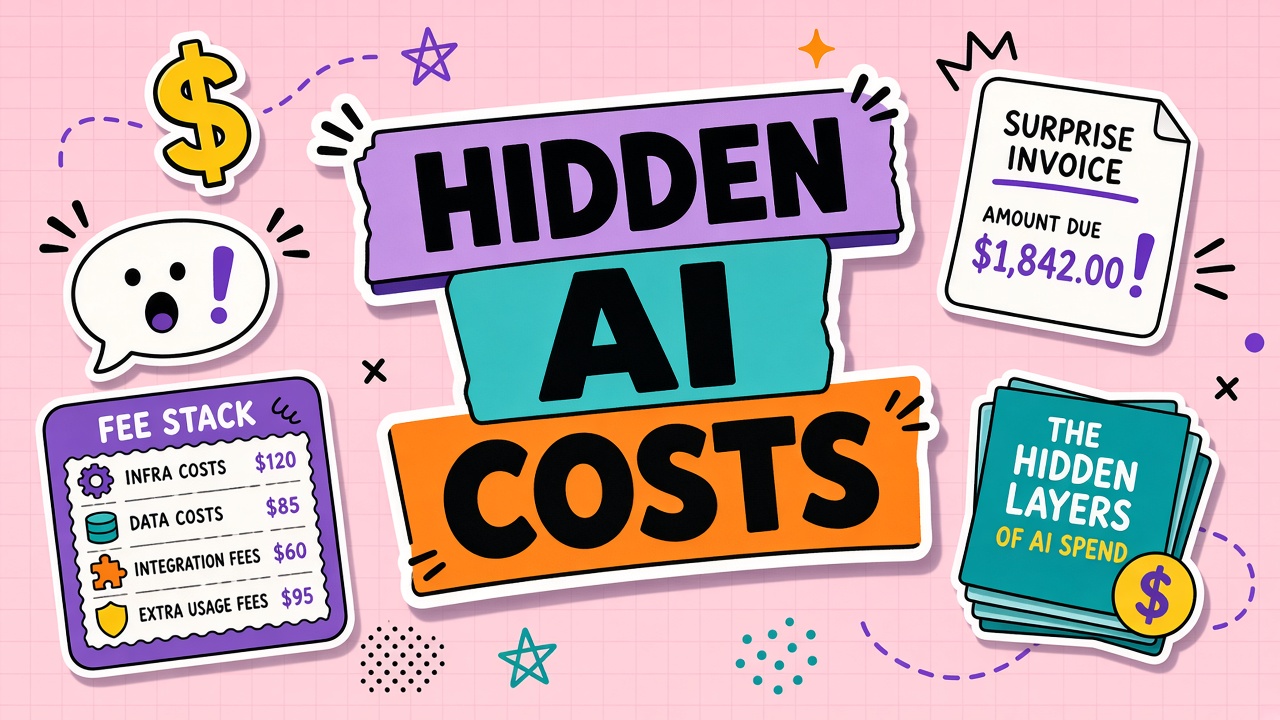
The pricing page shows twenty-nine dollars per seat and a checklist of features. Finance approves the line item. Three months later the invoice includes overage blocks, a middleware connector, and an SSO surcharge nobody modeled in the pilot. That gap between sticker price and landed cost is what people mean when they ask about hidden costs of AI tools. AI vendors price like SaaS, but usage meters like utilities. Both layers can stack on one contract.
This guide lists seven cost types pricing pages often bury, with examples of how they combine across writing and image workflows. Whether you evaluate AI writing tools or AI image generators, the same due diligence applies: build a total-cost checklist before annual commit.
Beyond the Monthly Fee: Seven Hidden Cost Types
True cost of an AI subscription includes every meter, minimum, and gate between signup and renewal. Use this checklist during procurement. If a line is blank on the vendor quote, assume zero only after written confirmation.
- Seat minimums and true-ups: Pay for ten seats while five people log in.
- Usage overages: Credits, tokens, or generations beyond included allowance.
- Premium model surcharges: "Pro" models cost extra even on paid plans.
- Integration and middleware: Zapier tasks, ETL, vector DB hosting, embedding pipelines.
- Storage and retention: Large file uploads, knowledge bases, version history.
- Support and compliance tiers: SSO, SCIM, audit logs, DPAs on higher plans only.
- Exit and contract costs: Annual prepay, early termination, data export fees.
| Hidden cost | Where it appears | Typical trigger |
|---|---|---|
| Seat minimum | Enterprise quote footer | Team below vendor minimum headcount |
| Token overage | API dashboard or invoice appendix | Automation spike, long documents, retries |
| Credit top-up | In-app purchase or auto-recharge | Image or video batch week |
| SSO add-on | Plan comparison matrix | IT requires SAML after pilot succeeds |
Seat Minimums and Inactive User Charges
Per-seat pricing assumes every licensed seat delivers value. Vendors often set minimum seat counts on team and enterprise SKUs. You may pay for twenty licenses while twelve people actively generate content. Quarterly true-ups bill for peak seat usage even if headcount dropped mid-quarter.
Right-size by measuring weekly active users during pilot, not total employees who might try the tool. Ask whether read-only viewers, guests, and contractors consume seats. Some products charge for admin accounts and integration service users you did not count as "people."
Overage and Burst Pricing Patterns
Overage pricing activates when included credits, tokens, or generations exhaust mid-cycle. Patterns include automatic top-up at list price, pay-as-you-go API rates higher than committed tiers, and soft throttling that pushes teams toward the next plan without a hard stop.
Burst workloads (campaign launches, batch localization, video sprints) are where overages hurt. Model the peak week, not average Tuesday usage. Compare overage unit cost to the next plan tier: sometimes upgrading is cheaper than metered spill.
Integration, Middleware, and Storage Add-Ons
AI tools rarely live alone. Connecting CRM, CMS, Slack, or a private knowledge base adds connector subscriptions, embedding storage, and vector database hosting. A fifty-dollar AI seat can sit on two hundred dollars of infrastructure nobody listed on the AI quote.
- Workflow automation platforms bill per task or per operation.
- RAG pipelines charge for document ingestion, chunk storage, and re-indexing.
- Large creative assets inflate egress and archive fees on adjacent storage products.
Support Tier Gates for SSO and Compliance
Features your security team requires may sit on the tier above the one marketing highlighted. Single sign-on, SCIM provisioning, audit logs, data residency, and DPAs frequently gate on "Business" or "Enterprise" SKUs while the homepage promotes a cheaper "Team" plan. Discovery during security review adds surprise uplift and delays rollout.
Send security requirements to sales before pilot budget approval. Map each control to a plan row in writing, not a demo promise.
Real-World Stacking Example
A marketing team buys five writing seats at thirty dollars each (one hundred fifty dollars base). Peak campaign adds two hundred dollars in credit top-ups for long-form variants. SSO lands on the business tier at plus ten dollars per seat. A Zapier bridge for CMS publish adds fifty dollars. True-up bills two seats when contractors join for a month. Effective monthly cost approaches four hundred fifty dollars, triple the headline one hundred fifty dollars. None of this is fraud. It is unmodeled usage and gates.
How hidden costs stack by team type
Engineering teams face API token overages and embedding storage when RAG indexes grow. Creative teams face credit top-ups on image and video tools. Operations teams face automation platform task counts. Finance should request a stacked cost model per squad, not one blended subscription line. Hidden AI tool hidden fees often appear first in the squad that uses the product heaviest, which makes portfolio budgeting look like a single team's problem until renewal consolidates the damage.
True cost of AI subscription worksheet
Before signing, fill one row per cost type: base seats, expected overage, integrations, storage, compliance tier uplift, and implementation services. Add ten to twenty percent contingency for AI pricing surprises in the first quarter. Compare true cost of AI subscription across finalists using the same worksheet so a cheaper seat price with expensive overages loses on total landed cost.
Frequently Asked Questions
Do annual AI contracts hide exit fees?
Many annual plans prepay with limited refund windows. Read cancellation clauses for auto-renewal notice periods and whether unused seats credit forward. Negotiate exit terms before signature if the vendor is unproven in your stack.
Can prepaid credits expire and become sunk cost?
Yes. Credit packs and included allowances often reset monthly without rollover. Annual pools may expire at contract end. Track burn rate monthly and size purchases to expected consumption, not optimistic peaks.
How do we spot hidden fees during a trial?
Run the heaviest realistic week in trial with usage dashboards open. Ask sales for a sample invoice with overage lines. Request the plan matrix row for SSO, API, and premium models. Hidden costs reveal themselves when you simulate production, not demo clicks.
What should finance track monthly?
Track base seats, active users, overage units, top-ups, integration bills, and support tier fees separately. One blended "AI line" hides which product to cut or renegotiate when budgets tighten.
The Bottom Line
AI tool hidden fees live in seat minimums, overages, premium model toggles, integrations, storage, compliance gates, and contract exit terms. Headline subscription price is a starting point. Build a seven-type checklist, stress-test peak usage in trial, and separate finance tracking by cost component. That is how you avoid pricing surprises on writing and image stacks alike.