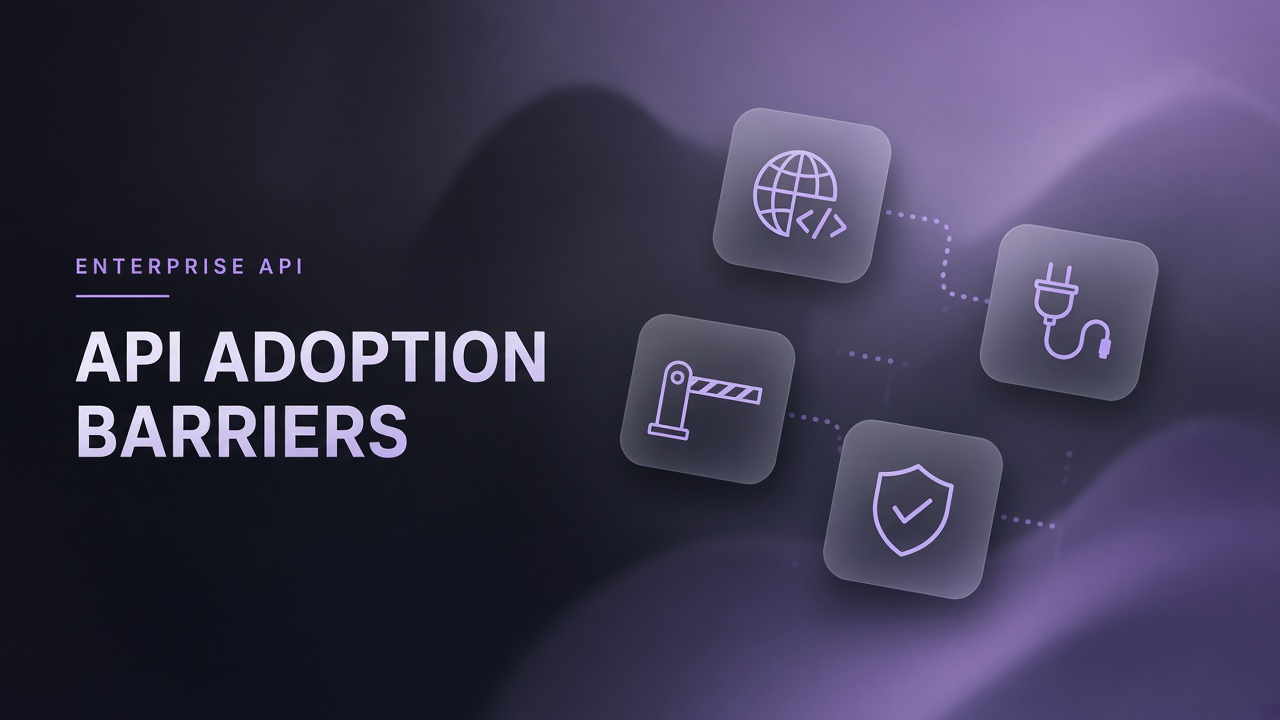
xAI accelerated Grok model releases, Colossus data center expansion, and enterprise tiers with SSO, audit logs, and Google Drive connectors in 2025 and 2026. The Grok API offers competitive token pricing and OpenAI-shaped endpoints that simplify prototyping. Yet enterprise adoption remains uneven compared with ChatGPT and Claude in network analytics and procurement surveys. Buyers cite brand risk tied to public controversies, lighter default moderation, immature SLAs, sparse prebuilt integrations, and nuanced data retention modes that disable stateful API features when zero retention is enabled.
This Grok enterprise API analysis maps adoption barriers and practical integration paths for teams evaluating xAI alongside incumbent providers. Compare offerings through AI chatbot platforms and Grok-related tools before committing production workloads.
Enterprise API Features and Packaging
Grok Enterprise and Business tiers add SSO, SCIM directory sync, audit logs, encrypted data vaults with customer-controlled keys, and Google Drive search with permission-aware citations. API access supports chat completions, streaming, structured outputs, reasoning traces, and client-side tool calling on supported models. Dedicated infrastructure claims separate enterprise data from the consumer Grok stack with encryption in transit and at rest.
Feature highlights relevant to integration planning:
- OpenAI-compatible REST endpoints for drop-in SDK experiments.
- Amazon Bedrock distribution channel with AWS data protection boundaries.
- GSA OneGov pricing for U.S. agencies at low per-organization cost through March 2027.
- Enterprise console controls for team-level API keys and retention settings.
- Reasoning models with configurable effort for latency-sensitive workflows.
Grok Enterprise mirrors baseline controls available from ChatGPT Enterprise and Claude Enterprise but lacks broad plug-in ecosystems and turnkey retrieval-augmented generation across Microsoft 365, Salesforce, and ServiceNow. Teams outside Google's document stack often must build custom connectors, a common failure point even when underlying model quality is strong.
Trust and Brand Risk Factors
Enterprise AI procurement weighs vendor stability, public reputation, and predictable safety behavior as heavily as benchmark scores, areas where Grok faces headwinds despite technical momentum. Documented moderation incidents in 2025 raised questions about default guardrails relative to Anthropic Constitutional AI, OpenAI classifier stacks, or Google Responsible AI tooling. Finance, healthcare, and public sector buyers often require mature safety frameworks before approving customer-facing deployments.
Brand coupling with the X platform introduces structural concerns about training data biases, public controversy spillover, and executive visibility that enterprise committees cannot ignore. SpaceX's 2026 public filing language reportedly referenced reputational and legal risks tied to Grok features such as spicy mode, including misinformation and exploitative imagery scenarios. Standard risk disclosure language still lands differently when the product targets government buyers.
Enterprise SLA maturity also lags hyperscaler-backed competitors. Google Vertex AI publishes 99.9% monthly uptime targets for scalable inference. OpenAI offers dedicated support and provisioning programs for large deployments. xAI continues expanding capacity but has less public track record on enterprise incident communication and latency commitments at peak load.
| Trust factor | Grok challenge | Mitigation path |
|---|---|---|
| Moderation defaults | Lighter filtering may suit internal use but risks external exposure | Add application-layer classifiers and human review for customer channels |
| Vendor reputation | Public controversies affect procurement committees | Document equivalent user policies and incident response plans |
| SLA evidence | Limited public uptime history versus incumbents | Pilot with non-critical workloads and contractual remedies |
| Regulatory alignment | EU AI Act code signing is early stage | Map quarterly reporting commitments to internal governance |
Data Handling Policies and Retention Modes
By default, xAI stores API requests and responses encrypted at rest for 30 days for abuse auditing and does not train on customer API data. Zero Data Retention (ZDR) disables durable storage of prompts and completions but also disables stateful Responses API, Files, Collections, and Batch API features. xAI documentation warns most customers should not enable ZDR because deleted content cannot be recovered and important workflow features stop working.
Enterprise teams must verify retention at the team level, not from a single request flag. ZDR applies team-wide when enabled by an admin in the xAI Console. Negotiated Enterprise Customer Agreements may govern retention separately from self-serve console settings. Contact sales when console options are unavailable.
Amazon Bedrock adds another layer. AWS documentation notes store=false alone does not guarantee zero retention under default modes because safety and abuse prevention may retain data even when responses are not customer-retrievable. Guaranteed zero durable retention requires an effective retention mode of none where the selected model allows it. Provider isolation on Bedrock means AWS model providers do not access customer prompts in deployment accounts, but configuration remains the customer's responsibility.
Competitive Positioning and Integration Paths
Grok competes on inference cost, reasoning speed, and Musk ecosystem adjacency, while incumbents compete on integration depth, safety certification, and procurement familiarity. Practical adoption paths usually start narrow rather than replacing entrenched copilots company-wide.
Integration paths that reduce barrier friction:
- Internal coding and research sandboxes: Low brand exposure, easier ZDR or short retention acceptance.
- Bedrock-hosted Grok for AWS-native shops: Leverage existing IAM, logging, and data perimeter tools.
- Public sector pilots via GSA OneGov: Subsidized access for document drafting and low-risk automation with engineering support.
- Multi-vendor routing: Route only latency-sensitive or cost-sensitive prompts to Grok while keeping customer-facing chat on Claude or GPT.
- Custom RAG with Google Drive connector: Useful when knowledge base already lives in Workspace and permissions are strict.
Gartner and field surveys continue to flag data silos, inconsistent quality, and regulatory constraints as GenAI adoption barriers regardless of vendor. Grok does not automatically solve integration depth. Teams should test guardrails, logging hooks, and failover behavior on Bedrock or direct API before production SLAs depend on xAI capacity during Colossus expansion phases.
xAI signed the EU AI Act code of conduct in July 2025 with quarterly risk reporting starting Q1 2026, a step toward regulated-market expectations. Execution remains in progress. U.S. federal usage reports through 2026 described limited agency adoption focused on low-risk drafting despite attractive pricing, signaling that cost alone rarely overcomes trust deficits in enterprise and government segments.
Adoption Barrier Summary Table
Use this summary when scoring Grok against alternatives in vendor selection committees.
| Barrier | Severity for enterprise | When Grok still fits |
|---|---|---|
| Integration depth | High for M365-heavy enterprises | Google Workspace-centric or custom API shops |
| Brand and moderation | High for regulated external channels | Internal tools with added guardrails |
| Retention versus features | Medium when Batch or Files API needed | Stateless chat with 30-day default acceptable |
| SLA maturity | High for mission-critical automation | Non-critical pilots with fallback vendors |
Frequently Asked Questions
Is Grok Enterprise ready to replace ChatGPT Enterprise?
For some Google-centric internal workflows, Grok Enterprise can complement existing stacks. Full replacement is uncommon where Microsoft 365 integration, mature safety programs, or established procurement relationships dominate. Most enterprises pilot Grok on bounded use cases first.
Does xAI train on enterprise API data?
xAI states it does not train on API customer data. Default 30-day encrypted retention supports abuse auditing unless Zero Data Retention is enabled at the team level with feature tradeoffs documented in xAI security FAQ.
Should we deploy Grok via Bedrock or direct API?
Bedrock suits AWS-native security teams that want IAM integration and provider isolation guarantees. Direct API may offer simpler access to latest models and console retention controls. Test guardrail compatibility on Bedrock because not every surrounding AWS feature maps cleanly to Grok endpoints.
What moderation should we add externally?
Treat Grok like any capable frontier model: implement output filtering, blocklists, human review for high-stakes decisions, and logging aligned with acceptable use policies. Do not assume default vendor moderation meets regulated industry standards.
Where can I compare Grok with other chatbot APIs?
Browse AI chatbot directories and Grok ecosystem listings to benchmark pricing, integrations, and safety posture against alternatives before signing enterprise agreements.