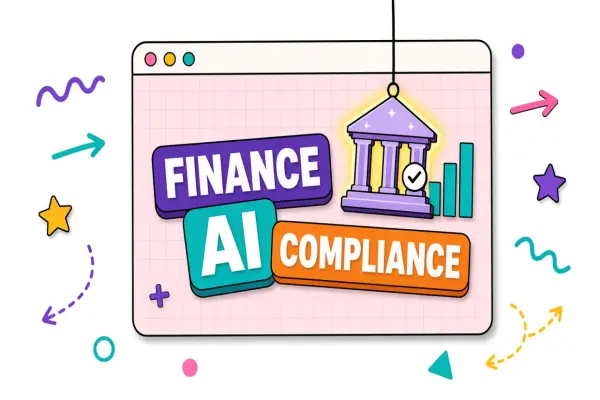
Customers increasingly ask whether AI shaped the report, email, or chat reply they received. Ad hoc disclosures ("we might use AI sometimes") erode trust; missing disclosures erode contracts. A customer-facing AI disclosure workflow defines when to notify, who approves language, which templates to use, and how to prove compliance later. This article is operational guidance, not legal advice. Legal and counsel should approve final wording for your jurisdiction and industry.
The workflow applies to deliverables from AI customer service teams and AI chatbot surfaces alike. Triggers and reviewers change by channel; the approval chain structure stays consistent.
Disclosure Triggers: External Deliverables and Support Bots
Define triggers by customer visibility and decision impact, not by whether AI touched a draft internally. Typical trigger categories:
- Published deliverables: Reports, creative assets, or copy sent to clients where AI generated substantive content
- Automated support: Chatbots or auto-replies that customers may believe are fully human
- Personalization at scale: AI-drafted outreach using customer-specific data
- Decisions assisted by AI: Credit, hiring, or eligibility recommendations shown to end users
- Contractual obligations: Master agreements that mandate transparency when AI is used
Non-triggers often include internal brainstorming, AI-assisted spelling fixes on human-written text, or backend classification customers never see. Document edge cases in a decision tree so account managers do not negotiate disclosure ad hoc per deal.
Review Chain: Legal, Brand, and Account Owner
Disclosure language touches risk, voice, and relationship context. Standard review chain:
- Workflow owner: Flags deliverable as AI-assisted and selects trigger category
- Account owner: Confirms customer expectations and contract clauses
- Brand: Ensures tone matches voice guide and placement is visible not hidden
- Legal or compliance: Approves template variant for regulated or high-liability accounts
Low-risk internal templates may skip legal on every use if counsel pre-approved the master template quarterly. High-risk accounts always get a fresh look when AI scope expands, for example moving from internal summarization to client-visible drafts.
Template Disclosure Snippets
Pre-approved snippets reduce improvisation and speed approvals. Maintain variants by channel (email footer, PDF cover page, chat widget greeting, statement of work clause). Example patterns (customize with counsel):
- Email footer: "This message was drafted with AI assistance and reviewed by [role] before sending."
- Report cover: "Sections marked with [icon] were generated using AI tools trained on [data scope]; human experts verified accuracy for [scope]."
- Chat widget: "You are chatting with an automated assistant. A human agent can join on request."
- SOW clause: "Provider may use AI tools for [tasks]; Client receives disclosure upon request per Section [X]."
Store templates in the same library as chatbot scripts so support engineers cannot invent new disclosure lines during incidents.
Record-Keeping for Audits
Disclosure without records fails audits. Log each customer-facing AI deliverable with:
- Deliverable ID and date sent
- Template version used
- Reviewer names and timestamps
- Tool and model version if contract requires
- Link to human review artifact (ticket, checklist PDF)
Retention period should match your industry rules and customer contracts. Make logs searchable by account so account managers answer transparency questions in one query, not a week of email archaeology.
Channel-Specific Placement Rules
Disclosure fails when it is technically present but practically invisible. Define placement rules per channel: email disclosures above the fold or in preheader policy link; PDF disclosures on cover and section headers for AI-generated blocks; chat disclosures in first bot message and repeating after idle timeout; video disclosures in opening slate and description metadata. Brand team approves placement mockups once per channel, not per campaign.
Test visibility with five non-expert readers. If fewer than four notice disclosure without prompting, revise placement before legal re-review of wording.
Handling Customer Questions About AI
Account owners need a response playbook when customers ask how AI was used. Playbook sections: confirm facts from audit log; avoid vendor marketing language; offer human review path if customer unsatisfied; escalate to legal when question touches liability or regulatory representation. Train account managers on playbook before peak campaign season so disclosure workflow does not stop at template insertion.
Partner and Supplier Disclosure Alignment
Your disclosure workflow must extend to subcontractors who touch client deliverables. Contract riders should require partners to use your approved templates or equivalent counsel-approved language. Procurement checklist includes disclosure artifact before final invoice on AI-assisted SOW lines.
Account owners verify partner compliance during quarterly business reviews with sample audit, not trust alone.
Workflow Automation for Disclosure Requests
Ticket-driven disclosure scales better than Slack approvals. Submission form captures deliverable type, AI tools used, data classification, customer account, desired send date. Routing rules assign brand and legal automatically by tier. Account owner receives notification only when their approval required. SLA timers surface stuck tickets before send deadline.
Integrate form with document storage so approved PDF or email draft carries disclosure footer version ID metadata. Support teams searching by account see disclosure history without asking marketing to reconstruct a campaign from memory.
International and Accessibility Considerations
Disclosure templates need locale variants and accessible formatting. Translate approved snippets with counsel-aware vendors; do not machine-translate legal phrases without review. Chat disclosures must be screen-reader visible, not only gray microtext. Video disclosures may require captions stating AI use where audio alone insufficient.
Disclosure Workflow Rollout
Stage one: legal and brand approve master template set per channel. Stage two: build ticket form with routing rules and SLAs. Stage three: train account owners and support leads on triggers and placement rules. Stage four: pilot on one low-risk external workflow for thirty days; audit sample of outputs for visibility and record completeness. Stage five: expand to all client-tier workflows; add partner rider language in procurement.
Stage six: quarterly audit sample with remediation tickets for missing disclosures. Rollout fails when templates exist but nobody knows which trigger applies to hybrid human-plus-AI deliverables; publish decision tree poster for account teams.
Audit Sampling Method
Quarterly audit pulls random ten external deliverables per high-risk team plus all deliverables tied to accounts with contractual AI clauses. Reviewer checks template version, approval timestamps, and visible placement. Failures become training tickets, not only individual correction. Trend analysis on failure types updates templates or routing rules systematically.
Contract Clause Starter Patterns
Work with counsel to adapt patterns, not copy blindly. Pattern A: AI assistance disclosure on deliverables over threshold word count. Pattern B: client opt-out of AI drafting with timeline impact noted. Pattern C: list of approved AI tools attached as exhibit. Pattern D: audit right for disclosure compliance on sample basis. Account legal review still required; patterns shorten cycle by starting from approved company baseline.
Support and Success Alignment on Disclosure
Customer success and support need read access to disclosure audit log filtered by account. When customer asks "did you use AI on our deck," CSM searches log before improvising answer. Support macros include disclosure footer IDs referencing approved template version. Macro updates without disclosure review follow same ticket routing as marketing external copy.
Alignment meeting quarterly between marketing ops, support ops, and legal prevents channel-specific drift where email discloses but chat widget does not on same account.
Metrics for Disclosure Compliance
Track percentage of external deliverables with complete audit log entry, average approval cycle time by tier, template version drift count, and customer questions about AI use per quarter. Rising questions may mean disclosure visible but unclear, not necessarily missing disclosure. Metrics feed quarterly legal ops review alongside incident tickets.
Escalation When Legal Review Backlogged
Pre-approved templates exist precisely to avoid per-send legal review. When novel deliverable type appears, ticket SLA should name legal delegate and executive escalation if send date at risk. Account owner communicates delay to customer proactively rather than shipping without disclosure because queue long.
Backlog metrics reviewed monthly by legal ops; chronic backlog triggers template expansion project, not quiet skips.
Training Account Teams on Triggers
Run annual thirty-minute refresher on disclosure triggers with account managers using scenario cards: white-label deck, AI-polished human draft, fully generated proposal, support bot on client portal. Score teams on correct trigger identification; retrain teams below eighty percent. Training reduces last-minute ticket panic before major client send.
Record Retention Alignment
Disclosure audit logs retention must match customer contract and regulatory minimums. Legal sets retention period; ops implements automated purge with hold flag for active disputes. Purge without policy alignment creates either bloated storage or missing records during litigation hold.
Disclosure in RFP and Proposal Responses
Proposal teams flag AI-assisted sections in RFP responses when customer asks about methodology. Bid desk uses pre-approved appendix language reviewed by legal quarterly. Ad hoc AI claims in proposals without workflow ticket create liability when delivery differs from promise.
Include disclosure workflow link in creative brief template so producers attach ticket ID before design starts. Early ticket creation beats retroactive disclosure scramble hours before client presentation.
Frequently Asked Questions
Our contract is silent on AI. Do we disclose anyway?
Operational policy should default to transparency for substantive AI-generated client content until legal sets account-specific rules. Silent contracts are not permission to hide material AI use.
White-label work: who owns disclosure?
Clarify in partner agreements which party speaks to end customers. Your internal workflow still records which templates partners were authorized to use.
Human edited AI output heavily. Still disclose?
Follow counsel guidance. Many teams disclose when AI materially accelerated or shaped content even after human edit, especially for regulated industries.
Do support macros need disclosure every time?
Prefer persistent notice in chat or email channel settings plus macro-level tags for AI-drafted snippets. Repeating long footers on every macro fatigues customers; hiding AI entirely violates trust.
The Bottom Line
Run customer-facing AI disclosure as a workflow: clear triggers, multi-role review, approved templates, and audit logs. Consistency protects brand and contracts better than clever one-off sentences invented under deadline pressure.