Two of the most visible figures in artificial intelligence spent 2026 placing large, sometimes competing bets on compute, chips, and policy. Sam Altman, through OpenAI and its partners, deepened ties with Microsoft and Oracle while expanding Stargate-style data center ambitions. Elon Musk, through xAI, pushed Grok updates and infrastructure expansion in parallel. For enterprise buyers, the overlap matters less as celebrity drama and more as signals about model access, vendor concentration, and which safety frameworks may shape regulation.
Altman Musk AI investment news in 2026 centers on infrastructure scale, chip supply strategy, and Washington lobbying on AI safety legislation. This analysis tracks publicly reported moves through September 2026 in timeline form. Dollar figures appear only where widely reported by major outlets. Neutral framing applies throughout: both leaders fund frontier capability; enterprises should read the pattern, not pick sides.
2026 Timeline: Altman-Linked OpenAI Deals and Partnerships
OpenAI's 2026 strategy paired continued Microsoft alignment with new Oracle infrastructure partnerships and Stargate-scale compute commitments, signaling that frontier model training depends on multi-vendor data center capacity rather than a single cloud. Altman-linked announcements emphasized throughput for training runs, enterprise API reliability, and geographic distribution of inference workloads.
| Period | Move | Enterprise signal |
|---|---|---|
| Q1 2026 | OpenAI reaffirmed Microsoft as primary cloud partner; expanded Azure capacity reservations for training clusters | GPT-family APIs remain Azure-anchored for many enterprise contracts |
| Q1–Q2 2026 | Stargate joint venture milestones: new U.S. site announcements, power and cooling procurement updates | Frontier latency and availability may improve as dedicated sites come online |
| Q2 2026 | Oracle infrastructure partnership for additional training and inference regions | Multi-cloud posture reduces single-provider outage risk for large buyers |
| Q3 2026 | OpenAI developer conference: API tier changes, agent tooling previews, safety classifier updates | AI chatbot builders should revisit rate limits and data retention terms |
| Ongoing 2026 | Custom silicon exploration alongside Nvidia GPU procurement (reported co-design discussions) | Long-term inference cost curves may diverge from pure GPU rental models |
Microsoft and Oracle Dual Track
Keeping Microsoft as the anchor while adding Oracle capacity lets OpenAI negotiate power, networking, and geographic sovereignty without abandoning existing enterprise Azure integrations. Procurement teams should map which SKUs and regions their contracts actually use. A headline partnership does not automatically migrate production traffic.
Stargate Compute Scale
Stargate-scale projects aim at dedicated gigawatt-class sites optimized for dense GPU racks, not general-purpose colocation. Reported timelines stretch across multiple years. Enterprises planning 2027–2028 capacity should treat Stargate as one input among hyperscaler, neocloud, and on-prem options rather than a guaranteed slot.
Musk xAI Infrastructure and Grok Platform Updates
xAI in 2026 paired Memphis-area data center expansion with Grok model releases, positioning the stack as vertically integrated from training through consumer and API surfaces tied to X and select enterprise pilots. Musk's investment thesis emphasizes owned infrastructure and rapid iteration on Grok rather than broad third-party cloud dependence.
| Period | xAI move | Competitive note |
|---|---|---|
| Early 2026 | Colossus facility expansion phases; additional Nvidia cluster deployments reported | Competes for same GPU supply chain as OpenAI and hyperscalers |
| Q2 2026 | Grok 3.x family updates: longer context, improved reasoning benchmarks in vendor materials | Alternative to GPT and Claude for teams already on X distribution |
| Q3 2026 | API beta broadening; enterprise inquiry queue for dedicated inference | Younger enterprise compliance story vs established providers |
| 2026 ongoing | Custom accelerator rhetoric; hiring for silicon and systems teams | Mirrors industry-wide push beyond pure Nvidia dependence |
Grok Enterprise Fit
Teams evaluating Grok should separate model capability from platform governance: data handling on X, API terms, incident response maturity, and subprocessors list completeness. A fast-moving AI startup stack can win pilots on speed and price while losing regulated procurements on documentation depth.
Overlap: US Policy Lobbying on AI Safety Legislation
Altman and Musk both engaged Congress and federal agencies in 2026 on AI safety framing, but with different emphases: OpenAI-aligned voices often pushed licensing for frontier labs and third-party eval access; Musk-aligned voices stressed open-source limits, compute reporting, and critiques of incumbent safety narratives. Enterprises feel this indirectly through compliance timelines and procurement questionnaires that reference federal guidance.
| Theme | OpenAI-adjacent position (reported) | xAI-adjacent position (reported) |
|---|---|---|
| Frontier model oversight | Pre-deployment testing, incident reporting to regulators | Skepticism of licensing that favors incumbents |
| Open weights | Tiered release with safety gates for largest models | Arguments for broader publication with misuse mitigations elsewhere |
| Compute transparency | Reporting thresholds for large training runs | Support for transparency while opposing constraints on new entrants |
| Federal preemption | Industry preference for single national framework | Mixed signals; concern about state patchwork vs innovation speed |
Procurement and legal teams should not treat lobbying positions as product roadmaps. Vendor public policy statements can shift faster than contract SLAs. Anchor enterprise risk reviews on signed DPAs, model cards, and incident history rather than keynote rhetoric.
Chip Supply: Nvidia and the Custom Silicon Race
Both OpenAI's orbit and xAI remained heavily Nvidia-dependent in 2026 while publicly exploring custom silicon paths through partnerships or in-house teams. GPU allocation, networking (InfiniBand and alternatives), and power contracts became as strategic as model architecture for frontier labs.
- Nvidia H100/H200 and Blackwell generations: Primary training and inference accelerators; lead times and export rules still shape release calendars.
- AMD and other accelerators: Secondary paths for cost-sensitive inference and some training experiments.
- Custom ASIC efforts: Reported work on inference-optimized chips; multi-year timelines before production impact.
- Networking and storage: Often the bottleneck once GPU racks are installed; Stargate and Colossus narratives include fiber and cooling as first-class problems.
Enterprises rarely buy GPUs directly from these labs, but chip strategy affects API pricing, model deprecation schedules, and which features (long context, multimodal, agents) receive sustained investment.
Power and Permitting Bottlenecks
Data center announcements in 2026 increasingly led with megawatt capacity and grid interconnection timelines rather than GPU counts alone. Stargate sites and xAI Colossus expansion both faced public scrutiny over local power draw and water use for cooling. For enterprises, the lesson is that inference latency improvements from new regions depend on utility infrastructure, not press releases. Capacity planning should include fallback regions where power is already contracted.
Export Controls and Geographic Splits
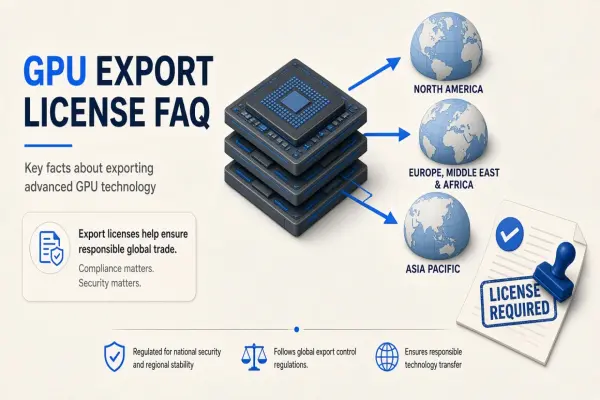
U.S. export rules on advanced accelerators continued to split training capacity by geography, pushing some labs toward Middle East and Southeast Asia partnerships while keeping U.S. and EU customer data paths separate. Altman-linked OpenAI messaging emphasized compliant deployment; Musk-linked xAI emphasized U.S.-based training for Grok. Multinational buyers must verify which model weights were trained where and whether that affects contractual representations on sovereignty.
Competitive Dynamics Beyond Headlines
The Altman–Musk rivalry in 2026 played out less through direct product comparisons and more through infrastructure moats, talent acquisition, and narrative control over what "safe" AI means. OpenAI benefited from entrenched enterprise API adoption and Microsoft distribution. xAI benefited from real-time distribution through X and Musk's ability to ship Grok updates without a lengthy enterprise sales cycle.
Neither dynamic guarantees long-term lock-in. Enterprise teams that standardized on GPT-family APIs in 2024–2025 began parallel Grok and open-weight evaluations in 2026 as pricing and capability gaps narrowed on specific tasks such as coding assistance and social-content summarization. The investment race accelerates iteration on both sides, which is good for capability and risky for stability if your production stack chases every release.
Talent and Acqui-Hire Signals
Both camps recruited systems engineers, power infrastructure specialists, and policy leads at rates that affect the broader market. When two well-funded labs compete for the same chip networking talent, smaller AI vendors face hiring pressure and may delay reliability improvements. Watch vendor engineering blog velocity and open-source contribution patterns as indirect health signals.
What Enterprises Should Watch in 2026
Enterprise AI leaders should monitor four signals from the Altman–Musk investment race: multi-cloud API availability, model deprecation policies, safety incident transparency, and concentration in a small vendor set. The competitive dynamic accelerates product releases but also increases the chance of rushed features that outpace enterprise guardrails.
- Contract portability: Can workloads move if a provider changes terms or suffers outage?
- Data residency: Do new Oracle or regional sites match your GDPR, HIPAA, or sector rules?
- Agent and tool APIs: Autonomous features inherit infrastructure and security posture of the underlying platform.
- Benchmark vs production gap: Vendor-reported evals may not reflect your data distribution or latency needs.
- Policy tail risk: Federal legislation could impose logging, testing, or registration duties on downstream deployers.
Teams building customer-facing AI chatbot experiences should align vendor selection with incident response playbooks. Teams scouting the next AI startup integration should weight financial stability and infrastructure ownership alongside model benchmarks.
Risks of Vendor Concentration
When two high-profile leaders anchor a large share of frontier investment narrative, enterprises risk over-rotating procurement toward their ecosystems and under-investing in diversification. Concentration manifests in shared cloud dependencies, shared chip vendors, shared safety eval vendors, and shared talent pools.
| Concentration type | Example in 2026 | Mitigation |
|---|---|---|
| Model provider | Single GPT or Grok API for all customer-facing features | Abstraction layer, secondary model for failover |
| Cloud region | All inference in one hyperscaler region | Multi-region routing, queue-based degradation |
| Chip generation | Features tied to one GPU generation availability | Cap context windows and batch sizes in product design |
| Policy alignment | Compliance strategy assumes one federal outcome | Scenario planning for state and EU rules independently |
Diversification does not require ignoring OpenAI or xAI. It means documenting why each workload sits on a given stack, what breaks if that stack changes pricing or policy, and which alternatives passed the same security review.
Frequently Asked Questions
Did Altman and Musk invest in each other's companies in 2026?
No public reports describe direct cross-investment between OpenAI and xAI in 2026. Competition plays out through infrastructure, talent, and policy influence rather than shared cap tables.
Which platform is better for enterprises: OpenAI or xAI?
Neither is universally better; fit depends on compliance maturity, existing cloud contracts, latency needs, and tolerance for newer vendor documentation. OpenAI typically leads on enterprise integration depth; xAI may appeal to teams prioritizing specific distribution channels or pricing experiments. Run parallel pilots on your data before standardizing.
How does Stargate affect API customers?
Stargate aims to add dedicated training and inference capacity over time, which may improve availability and enable larger models, but near-term API contracts still depend on existing Azure and partner regions. Treat Stargate as a long-horizon capacity signal, not an immediate SKU change.
Will US AI safety bills pick a winner between Altman and Musk?
Legislation under debate in 2026 focuses on obligations for frontier developers and deployers, not on endorsing a single corporate champion. Both camps lobby for rules that favor their release and infrastructure models. Enterprises should track compliance duties that apply regardless of vendor.
Should we delay AI projects because of chip shortages?
Most enterprise workloads consume inference APIs, not bare-metal GPU purchases, so lab-level chip competition affects you mainly through pricing and feature release timing. Plan for quota limits and model version churn; avoid tying product launches to a single vendor's hardware roadmap.
How often should we revisit vendor strategy given 2026 investment news?
Quarterly reviews are reasonable for teams with production AI dependencies: check API changelogs, pricing updates, incident disclosures, and new region availability. The Altman and Musk investment race will continue generating headlines; separate structural signals (new data centers, policy drafts) from weekly product marketing noise.