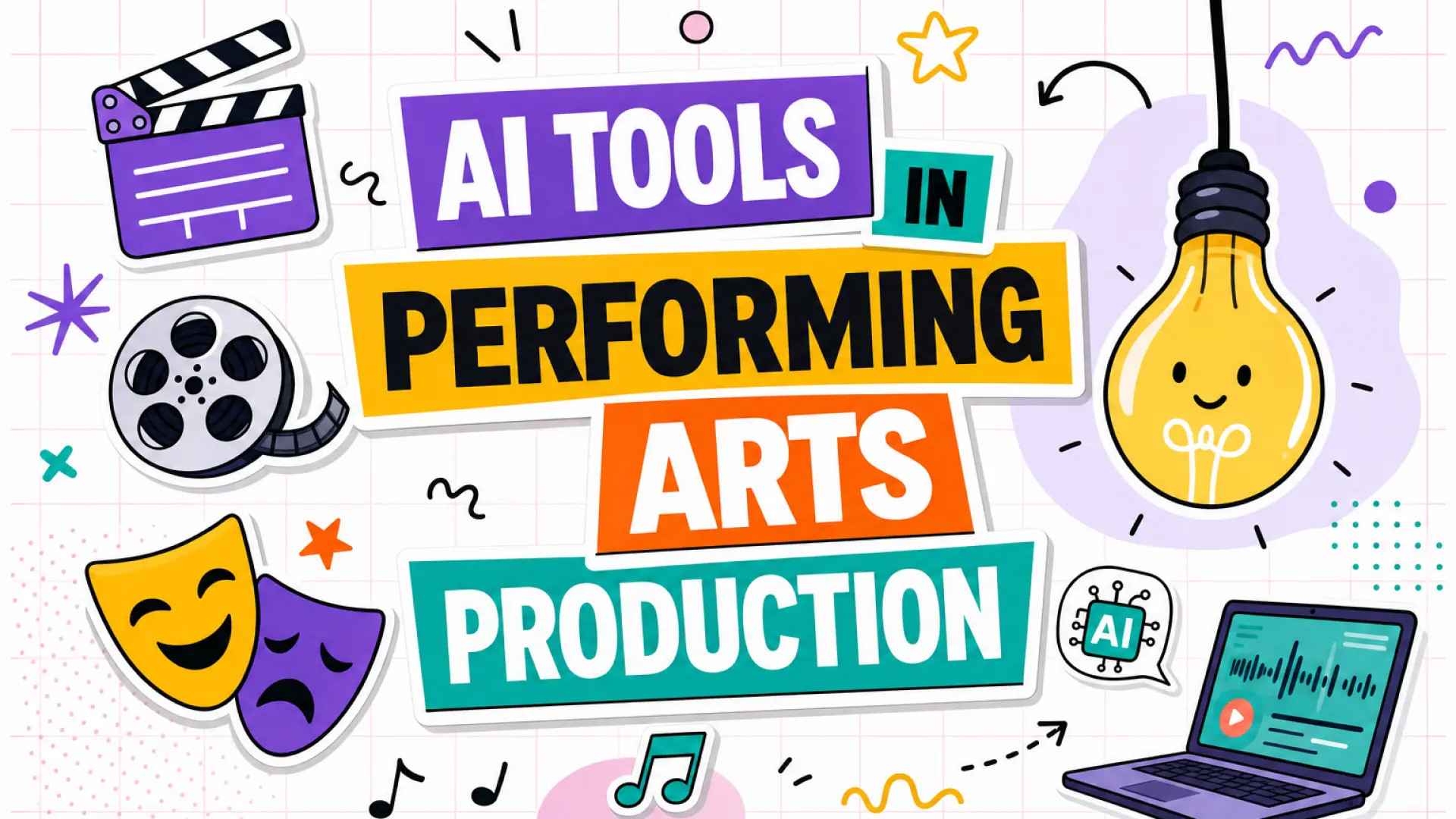
AI performing arts production workflows support season planning, donor communications, accessibility captioning, marketing copy, and rehearsal logistics. Artistic integrity, copyright on scripts, and union rules for actors and stage crews constrain how aggressively companies automate creative work.
This guide covers season planning and donor comms, captioning and audio description AI, marketing copy brand voice, rehearsal scheduling logistics, and FAQ topics. Pair AI video tools with AI transcription platforms under guild-reviewed accessibility and marketing policies.
Season Planning and Donor Communications
AI analyzes past ticket sales, donor giving patterns, and community demographics to draft season announcement language when artistic directors retain final repertoire authority. Fundraising appeals generated by AI still need development staff review for accuracy and donor relationship tone.
- Feed AI only anonymized aggregate sales data unless donors consented to personalization.
- Artistic director approves repertoire before AI drafts public season marketing.
- Segment donor letters by giving level with human relationship manager review.
- Avoid AI inventing performer names or co-production partners not under contract.
- Track which appeal language variants AI suggested for future A/B testing analysis.
| Production task | AI assist fit | Creative gate |
|---|---|---|
| Season brochure copy | Draft from artistic brief | Marketing and AD approval |
| Grant narratives | Structure from past wins | Development director sign-off |
| Program notes | Research summaries only | Dramaturg verification |
| Rehearsal reports | Format stage manager notes | SM attests daily accuracy |
Captioning and Audio Description AI
Automated captioning and audio description expand access for Deaf and blind patrons when accessibility coordinators review timing, tone, and artistic nuance before performance. Live theater improvisation breaks ASR models trained on broadcast sports or news.
- Human captioners or reviewers required for opening nights and press performances.
- Train models on script vocabulary including character names and invented terms.
- Sync caption delivery with lighting cues and rapid dialogue sequences.
- Offer patrons notice when performances use AI-assisted vs human access services.
- Budget union-compliant rates when AI augments rather than replaces access workers.
Marketing Copy Brand Voice
Each company cultivates distinctive voice across email, social, and poster copy; AI accelerates drafts when style guides constrain vocabulary and claims. Over-generated superlatives dilute brand trust with longtime subscribers.
- Encode voice pillars: playful vs classical, community-focused vs touring star-driven.
- Prohibit AI from guaranteeing celebrity attendance before contracts execute.
- Review accessibility statements in marketing for WCAG-aligned web companion pages.
- Localize copy for touring markets with human cultural sensitivity review.
- Archive approved campaign copy to prevent off-brand AI fine-tunes later.
Rehearsal Scheduling Logistics
AI scheduling tools balance union call times, space conflicts, child performer limits, and musician availability when production managers validate every publish. Wrong call times trigger grievances and overtime costs faster than any marketing typo.
- Hard-code equity and IATSE rule sets applicable to your contracts.
- Integrate room bookings with load-in constraints and tech rehearsal priorities.
- Notify stage management when AI shuffles understudy rehearsals.
- Provide mobile-friendly schedules with offline PDF fallbacks for backstage.
- Log manual overrides to improve future constraint modeling honestly.
Creative Rights and Union Consultation
Producers should consult artistic staff and union representatives before AI changes rehearsal schedules, access services staffing, or marketing that uses performer likeness. Transparency builds trust; surprise automation during contract negotiations creates grievances that delay seasons.
- Share AI pilot scope with artistic director and stage management before vendor demos.
- Document which creative tasks remain human-only in collective bargaining appendices where required.
- Credit accessibility workers when AI assists captioning rather than implying full automation.
- Obtain actor consent for any AI-generated promotional likeness or synthetic voice clip.
Frequently Asked Questions
Can AI rewrite or adapt copyrighted scripts?
Adaptation rights belong to playwrights and estates; AI does not bypass licensing. Obtain dramaturg and legal clearance before AI generates cuts, translations, or modernized dialogue for production.
What rules apply to AI and actor likeness?
Union agreements increasingly restrict synthetic voice, deepfake promotion, and training on rehearsal recordings. Consult actor equity policies before AI marketing uses performer likeness without consent.
When must companies consult unions on AI?
Collective bargaining agreements may require notice before AI affects hiring, access services, or surveillance in workplaces. Engage union reps during pilot design for scheduling, captioning, and marketing tools.
Can AI clip streaming archives for social promotion?
Archive clips need separate clearances for music, union reuse fees, and co-producer revenue share. AI highlight reels still require rights review identical to manual editing workflows.