Logistics control towers monitor thousands of shipments daily through transportation management systems. Exceptions stack up as missed appointments, customs holds, temperature deviations, and carrier capacity shortfalls. Customer success teams field calls while operations chases root cause; inconsistent updates erode trust when ETAs slip again without explanation.
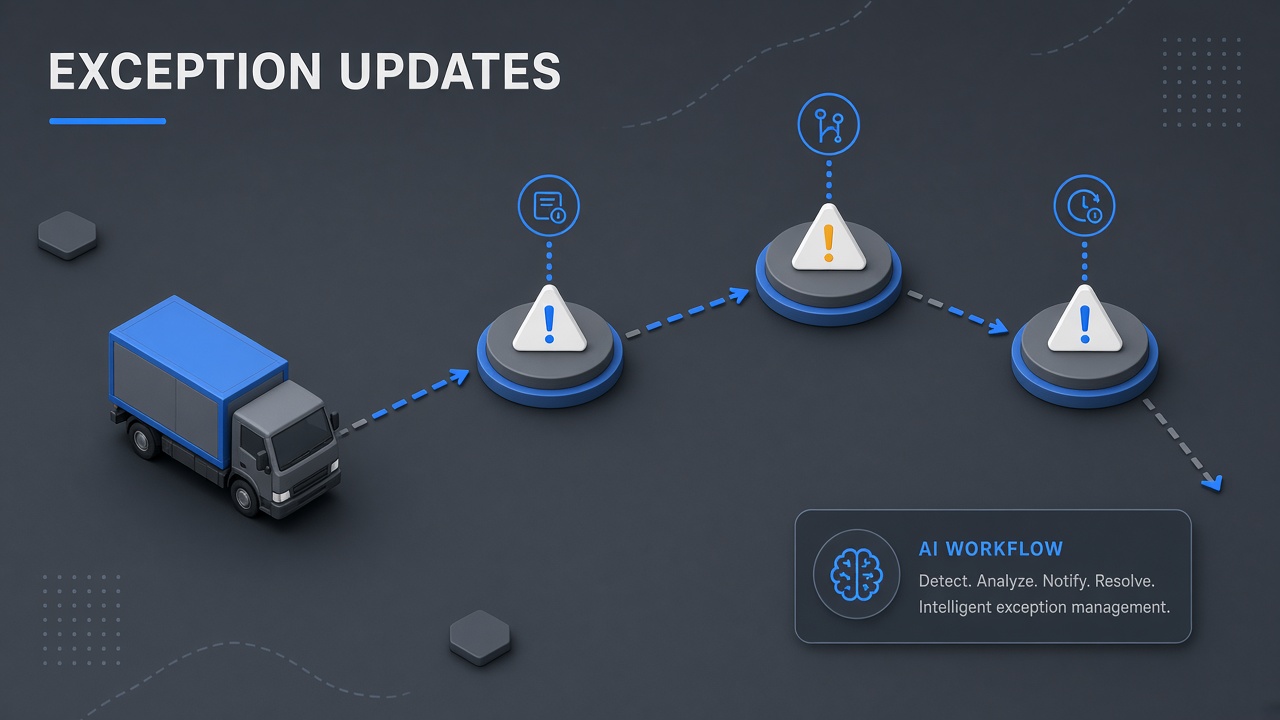
An ai workflow logistics exception updates classifies exceptions by category and severity, pulls events from TMS automatically, drafts customer-facing messages with revised ETAs, requires operations confirmation before send, and escalates high-value or perishable loads through defined paths. AI writes status prose; dispatch and customs brokers confirm facts. Teams often automate extracts with AI code tooling and research exception playbooks using AI research assistants for carrier and lane intelligence that informs escalation briefs.
Exception Categories and Severity
Define exception categories with severity tiers so AI routes messages to the right template, approver, and customer channel before drafting text. Categories typically include pickup failure, in-transit delay, customs hold, delivery attempt miss, damage suspicion, and documentation gap. Severity ties to revenue at risk, SLA penalties, and product perishability.
| Category | Severity 1 signal | Default owner |
|---|---|---|
| Customs hold | Critical SKU or contractual deadline miss | Trade compliance lead |
| In-transit delay | ETA beyond SLA buffer | Mode owner |
| Temperature excursion | Cold chain logger alert | Quality and ops joint |
| Documentation gap | Export hold until resolved | Documentation specialist |
Severity Matrix Maintenance
Review severity rules quarterly with sales and operations so AI classification matches current customer tiers and lane SLAs. Static matrices mislabel strategic accounts when contract terms change. Document overrides when humans reclassify exceptions so the next model prompt cycle learns institutional nuance.
Pull Events From TMS Automatically
Integrate TMS webhooks or scheduled API pulls that land exception events in a staging table with shipment ID, milestone, reason code, location, timestamp, and customer account fields. Manual CSV exports delay customer updates during peak exception volume. Automation scripts maintained with code AI assistance should log pull status and row counts analysts verify each morning.
- Ingest open exceptions and those closed within 24 hours for continuity messaging.
- Join order value, commodity class, and SLA clock from ERP or OMS.
- Deduplicate carrier duplicate scans before AI drafts multiple messages.
- Flag rows missing customer contact preferences for manual routing.
- Preserve immutable event payload for dispute audits.
Draft Customer-Facing Updates With ETA
AI drafts customer messages that state what happened, current shipment status, revised ETA with confidence language, and next update timing without admitting liability beyond confirmed facts. Templates vary by severity: brief portal notes for low impact, structured emails for SLA breaches. Never include carrier blame statements operations has not verified.
- Lead with customer PO or reference number and destination.
- Describe exception in plain language mapped from TMS reason codes.
- Present revised ETA as estimate when carrier confidence is low.
- List actions in progress: alternate routing, customs broker engaged, repack scheduled.
- Provide tracking link and support contact with hours.
Multimodal ETA Logic
For ocean-air-truck legs, AI composes ETAs from the active leg milestone plus buffered handoff times operations configured per lane. Do not sum best-case segments; use historical dwell at transshipment ports from analytics your team validates. When legs conflict, drafts should say which milestone drives the customer-facing date.
Ops Confirmation Before Send
Customer-facing drafts stay queued until a named operations or customer service approver confirms facts, ETA, and tone against TMS and broker updates. Confirmation captures approver ID, timestamp, and any edits. High-severity templates require dual approval when message admits service failure or offers remediation credit.
- Match draft shipment ID to live TMS status screen.
- Verify ETA against carrier portal or broker confirmation, not AI inference alone.
- Remove speculative root causes unless investigation notes support them.
- Check customer notification preferences: email, portal, EDI status, phone.
- Send through integrated channels; log message ID back to TMS activity feed.
| Approval tier | Required approver | Typical SLA to send |
|---|---|---|
| Severity 3 informational | Customer service lead | Within 4 business hours |
| Severity 2 SLA risk | Operations supervisor | Within 2 business hours |
| Severity 1 critical | Ops plus account manager | Within 1 hour when feasible |
Escalation for High-Value or Perishable Loads
Route high-value, cold chain, and hazardous shipments into parallel escalation workflows with executive visibility while standard drafts queue for ops confirmation. Escalation packs include shipment value, insurance status, substitute inventory options, and regulatory constraints. AI assembles the pack from structured fields; humans decide commercial concessions.
Perishable loads trigger temperature logger summaries and quality hold language approved by your quality team. Use research AI to compile carrier performance history for escalation calls, not to replace live broker confirmation on active exceptions.
Executive Customer Bridge Calls
For top-tier accounts, pair approved written updates with scheduled bridge calls documented in CRM so messaging stays consistent across voice and email channels. Call talking points derive from the same confirmed draft customers receive; ad-libbed ETAs on calls undermine the workflow.
Metrics and Exception Retrospectives
Track time from TMS exception creation to confirmed customer send, ETA accuracy, and repeat exception rate by lane and carrier. Monthly retrospectives compare AI draft quality to human edits and adjust templates. Success is measured in fewer surprise customer contacts, not fastest auto-send volume.
Carrier and Broker Communication Loop
Before customer drafts queue, operations should capture carrier or broker acknowledgment in TMS notes so approvers distinguish confirmed delays from assumptions. AI pulls broker note fields into internal draft context but strips vendor names from customer text when contracts require neutral phrasing. When brokers contradict TMS milestones, workflows flag drafts for hold rather than sending optimistic ETAs.
Customer Portal Status Templates
Portal status cards use shorter templates than email but must share ETR and exception category codes with approved long-form messages. Clients who read portal updates and later receive email should not see conflicting dates. Portal publish waits on the same ops confirmation record as email send.
Proactive Milestone Updates Without Exceptions
Define when on-time milestones still warrant proactive messages for strategic accounts, separate from exception workflows, so AI templates do not conflate good news with failure communications. Positive arrival notices use a different approval tier with shorter ops review because they carry lower liability risk when facts match TMS delivery scans.
Internal War Room Briefs
During severe weather or port congestion events, generate internal-only briefs for leadership with unredacted carrier names, commercial terms, and margin impact while customer drafts stay neutral. Internal briefs use the same TMS extract IDs but separate prompt templates marked not for external send. War room cadence may be hourly while customer updates follow tier approval SLAs.
Customer service macros should not copy internal brief language into tickets. Train agents to insert only confirmed customer message IDs into CRM cases so audit trails link public commitments to approver records.
Root Cause Documentation After Close
After exceptions close, operations documents root cause categories in TMS so retrospective analytics and AI templates improve without blaming carriers in customer text retroactively. Closed-loop fields feed monthly carrier scorecards distinct from customer-facing narratives.
Cross-Border Customer Expectations
International lanes require timezone-aware update windows and customs-aware ETA language in drafts so customers in multiple regions receive messages during local business hours when policy allows. Approvers verify holiday calendars on both origin and destination sides before AI states clearance timelines. Cross-border templates avoid promising duty payment outcomes operations cannot confirm.
Enterprise customers with global control towers may ingest confirmed updates via API; API payloads should mirror email fact fields from the same approval record to prevent integration drift from prose edits made after API generation unless a second approval cycle runs.
Training Approvers on Template Limits
New customer service and operations approvers train on what AI templates can and cannot claim about carrier liability, compensation, and product condition before they gain publish permissions. Quarterly refreshers use real anonymized incidents where drafts overreached and approvers caught issues. Training completion logs satisfy internal audit when customers dispute exception message wording months later.
Frequently Asked Questions
How should customs holds appear in customer updates?
State hold type in general terms customs counsel approved, expected documentation actions, and revised clearance ETA only after broker confirmation. Avoid sharing sensitive commodity details in email that customs has not cleared for client disclosure. Separate internal broker threads from customer-visible portal notes.
What multimodal complexity breaks auto-drafts?
Split bookings, rolled containers, and mode changes mid-lane require human-authored exception context before AI drafts customer text. Configure TMS rules to flag these patterns for manual intake rather than low-confidence auto messages that misstate active leg status.
How do contractual SLAs interact with update timing?
Map customer SLA notification windows into severity rules so drafts queue with deadlines visible to approvers. Missing internal approval SLAs may still breach customer contracts; dashboard alerts should fire when drafts sit unconfirmed beyond tier thresholds.
Can EDI status replace email for some accounts?
When customers require EDI 214 or API status, generate structured status from the same confirmed fact set as prose emails to avoid channel conflict. AI email drafts and EDI payloads should share one approval record.
Exception Updates Customers Can Trust
Logistics teams reduce chaos when exceptions classify consistently, TMS feeds stay automated, AI drafts clear ETAs, operations confirms every send, and high-value loads escalate on a separate track. The workflow succeeds when customers receive fewer surprises, not when message volume increases.