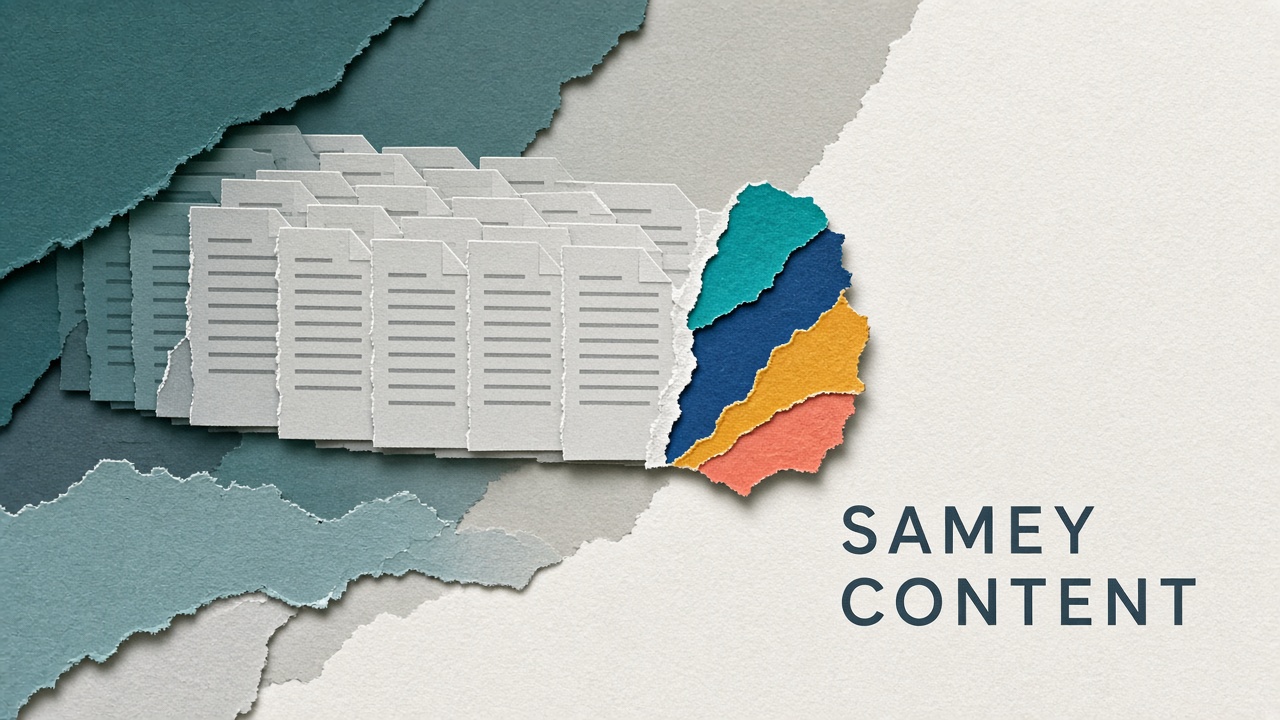
Algorithmic mediocrity in AI content describes the convergence of large language model prose, stock aesthetics, and template-driven video toward a bland middle that reads fluent but feels interchangeable. Peer-reviewed studies across more than 880,000 texts link widespread LLM use to statistically significant declines in linguistic diversity, with writing-complexity variance falling 21 to 50 percent when models polish drafts. Creative idea pools show similar homogenization at scale. The problem is not that AI writes badly. The problem is that AI writes safely, and platforms reward safety. Creators who browse AI chatbot tools or compare options on popular AI tools should understand why output feels samey and which editorial choices push back.
What Is Algorithmic Mediocrity in AI Content?
Algorithmic mediocrity is the statistical flattening of style, voice, and visual language when creators rely on default model outputs without distinctive editing, curation, or first-hand reporting. Researchers in Nature Human Behaviour and Computers in Human Behavior: Artificial Humans document homogenization across Reddit posts, academic abstracts, marketing copy, and brainstorming essays. Models preserve core meaning while suppressing idiosyncratic syntax, regional phrasing, and complexity spikes that signal human authorship. Parallel trends appear in AI thumbnails, Midjourney-style illustration palettes, and short-form video templates that reuse identical pacing hooks.
Mediocrity differs from low quality. Slop is lazy or misleading. Mediocrity is competent but forgettable. A LinkedIn post that opens with "In today's fast-paced world" and closes with "Let's dive in" may be grammatically clean yet indistinguishable from ten thousand others published the same hour. That sameness erodes trust signals readers once inferred from word choice alone.
Observable Sameness in Text and Media
You can spot algorithmic mediocrity by repeated rhetorical scaffolding, uniform paragraph rhythm, emoji-free corporate optimism, and image sets that share lighting, composition, and color grading without reference to subject matter. Text markers include listicle intros that never cite primary sources, hedged conclusions that avoid any claim, and transitions like "Furthermore" and "Moreover" stacked in predictable order. Visual feeds show porcelain skin tones, centered subjects, and depth-of-field blur applied to unrelated topics from finance to fitness.
| Signal | Typical AI-default pattern | Human differentiator |
|---|---|---|
| Opening hook | Generic context paragraph | Specific scene, date, or named source |
| Sentence length | Narrow mid-range band | Deliberate short punches or long asides |
| Opinion stance | Both-sides balance without cost | Named trade-off with evidence |
| Visual style | Stock gradient hero art | Original photo, scan, or bespoke illustration |
| Citation behavior | Vague "studies show" phrasing | Linked primary research or interview |
CHI 2025 research on AI writing suggestions also finds homogenization toward Western stylistic norms, which matters for global brands targeting multilingual audiences. When every localized page reads like the same English draft translated backward, geographic nuance disappears.
Platform Incentives That Reward the Middle
Search, social, and ad platforms optimize for engagement predictability, which pushes creators toward formats models generate quickly and algorithms already know how to rank. Google's January 2025 Search Quality Rater Guidelines mention generative AI fourteen times, warning that scaled content abuse and pages with little effort, originality, or added value earn Lowest quality ratings. Using an AI tool alone does not determine quality, but mass-producing paraphrased articles without expertise does. TikTok requires labels on realistic AI-generated content, uses C2PA Content Credentials, and in late 2025 added Manage Topics sliders so users can dial AI-generated volume up or down in For You feeds.
Recommendation systems favor watch time and click-through rate over literary merit. A mediocre hook that matches training-data clichés can outperform a sharper opening that breaks pattern. Creators respond rationally by publishing more, faster, with fewer editorial passes. Volume incentives compound homogenization: when everyone uses the same AI chatbot defaults, feeds feel cloned even when accounts compete for attention.
Brand Risk on Autopilot Voice
Marketing teams that delegate full drafts to models without brand voice guardrails publish copy that violates tone guides while remaining grammatically perfect. Legal disclaimers, regulated claims, and regional compliance language still require human sign-off. Mediocrity becomes liability when every competitor's newsletter shares the same structural bones and only the logo differs.
Performance marketers feel pressure first. Paid social creative built from the same prompt templates rotates identical hook structures across verticals. Creative fatigue arrives faster because audiences subconsciously recognize template rhythm even before reading the offer. Organic teams mirror paid defaults to save production cost, doubling homogenization across channels. Breaking the cycle requires separate prompt libraries per channel with banned phrase lists enforced in pre-publish linting tools.
Visual Homogenization in Thumbnails and Short Video
Generative image and video tools amplify sameness when creators reuse default aspect ratios, LUT packs, and caption fonts supplied by platform editors. TikTok AI Editor Pro outputs and third-party avatar apps produce faces with identical skin smoothing and blink cadence. YouTube thumbnails converge on yellow arrows and shocked expressions whether the topic is finance or fishing. Algorithmic mediocrity spans modalities, not just paragraphs.
Creator Differentiation Strategies
Creators counter algorithmic mediocrity by anchoring every piece in non-synthetic source material: interviews, measurements, field notes, proprietary datasets, or documented failures models cannot invent. Effective workflows treat LLM output as raw clay, not finished work. Concrete tactics include banning default intros in style guides, requiring one verifiable statistic per section, recording voice notes before drafting, and publishing process artifacts such as redlined edits or benchmark screenshots.
- Start from primary research or first-hand observation, then use AI for structure only.
- Maintain a "never paste" list of phrases the brand rejects after one audit.
- Rotate authors and bylines so voice diversity survives editing pipelines.
- Commission original photography or scan assets instead of generative hero images.
- Publish correction logs when AI-assisted drafts err, building trust through transparency.
Moon, Green, and Kushlev's diversity growth rate metric shows each additional human essay contributes more novel ideas than another GPT-generated essay, and the gap widens with volume. Teams planning content calendars should budget human ideation hours as a first-class cost, not an optional polish step.
Editorial Curation as a Moat
Editorial curation selects, sequences, and contextualizes information in ways models cannot replicate without access to tacit newsroom judgment and audience history. Curators answer why this story now, why this source, and why this framing for this reader. Aggregation without judgment produces slop. Curation with standards produces trust. Newsletter operators, niche directory owners, and B2B analysts win when they filter the AI flood rather than join it.
Strong curation layers include explicit inclusion criteria, conflict-of-interest disclosures, dated update policies, and human-written summaries above any AI-expanded detail sections. Publications that label AI assistance while keeping headlines and ledes human-written often retain reader loyalty even when body paragraphs use assisted research.
Recognizing Synthetic Slop
Synthetic slop is low-effort AI output published without fact-checking, original reporting, or meaningful revision, often at scale across affiliate or SEO farms. Slop adds noise. Mediocrity adds sameness. Both hurt ecosystems but require different responses. Slop should be reported, blocked, or downranked. Mediocrity requires taste and editing investment.
Reader heuristics for slop include hallucinated citations, impossible product combinations, mismatched image captions, and pages that restate the query without answering it. Google's scaled content abuse guidance targets exactly this pattern. TikTok's integrity policies address misleading AI impersonation separately from labeled creative uses.
| Category | Primary harm | Response |
|---|---|---|
| Synthetic slop | Misinformation, spam, fraud | Remove, report, refuse ad spend |
| Algorithmic mediocrity | Indistinguishable brand voice | Edit, curate, invest in primary sources |
| Assisted excellence | Minimal if disclosed and verified | Label, maintain human accountability |
Frequently Asked Questions
Does Google penalize all AI content?
Google does not ban AI-assisted content outright; it penalizes scaled abuse, copied or paraphrased pages with little originality, and material that lacks expertise or value for readers. The Search Quality Rater Guidelines state that generative AI tools may produce high or low quality pages depending on effort and originality. Focus on helpfulness, accurate metadata, and evidence rather than hiding tool use.
How is TikTok handling AI-generated feeds?
TikTok labels realistic AI-generated video and audio, reads C2PA Content Credentials on uploads, tests invisible watermarks on platform-made AI, and lets users reduce AI-generated volume via Manage Topics sliders. Creators should label significant AI edits honestly. Mislabeling real footage as AI or the reverse violates platform terms.
What should brands do about samey copy?
Brands should publish voice guidelines, require human-led headlines and claims review, and restrict AI drafts to internal brainstorming unless an editor adds verifiable facts and distinct phrasing. Compare your last ten posts against competitors. If structure and diction overlap, reinvest in interviews, customer quotes, and proprietary data visualizations before increasing publish frequency.
Can prompt engineering fix homogenization?
Prompt engineering reduces but does not eliminate homogenization because models share training distributions and alignment preferences that favor safe averages. Research shows parameter and prompt tweaks fail to close the creative diversity gap at scale. Human selection after generation remains essential.
Is algorithmic mediocrity permanent?
Mediocrity persists as long as default model outputs stay optimized for broad acceptability and platforms reward volume; curation, primary reporting, and stylistic discipline remain durable differentiators. Readers still pay for specificity. Tools listed on popular AI tools directories help teams choose assistants, but no directory replaces editorial taste.
Algorithmic mediocrity in AI content is a measurable convergence phenomenon, not a moral panic about grammar. Treat models as accelerators bound by human judgment, and the bland middle becomes an opportunity for anyone willing to do work machines skip.