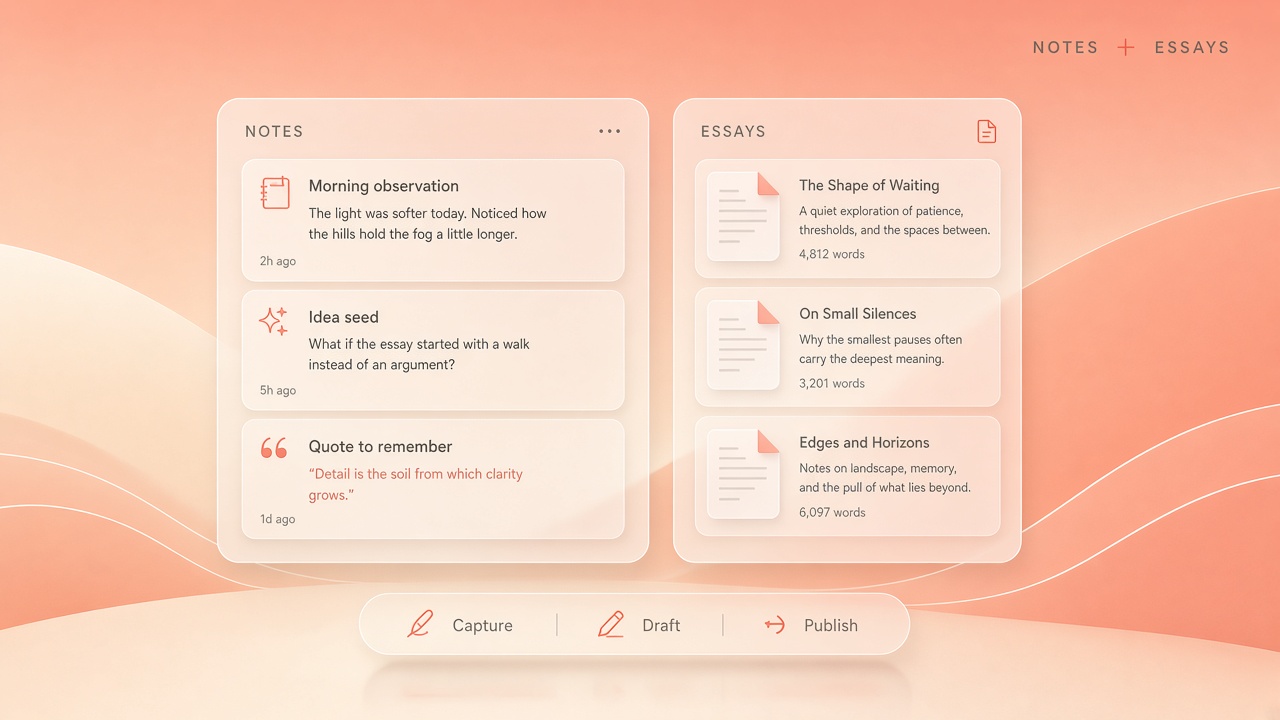
Substack rewards two speeds at once: quick Notes that stay visible in the network tab, and essays that justify paid subscriptions. Without a system, writers either over-publish thin Notes or disappear for weeks while drafting long pieces. An ai workflow substack writing pipeline maps Notes, essays, and podcast episodes on one calendar, synthesizes research with cited sources, structures essays around a single thesis, repurposes Notes from longer work, and applies subscriber-only sensitivity rules before anything goes live. AI handles outlines and synthesis; the author owns voice, paywall boundaries, and comment tone.
This workflow fits independent journalists, niche analysts, and creator-operators building audience on Substack first. Use AI chatbot tools for iterative outline chat and AI translation when you adapt essays for multilingual Notes or quote foreign-language primary sources with verified glosses.
Content Calendar: Notes, Essays, Podcasts
A Substack calendar assigns fixed slots for Notes, essays, and podcast posts so each format has a job: Notes for discovery and conversation, essays for depth and conversion, podcasts for voice and retention. Random posting trains subscribers to ignore you. AI helps batch-plan four weeks when you feed it past performance themes and upcoming research backlog, but humans set realistic cadence caps.
- Define weekly minimums: for example two Notes, one essay or essay draft milestone, optional podcast clip.
- Color-code calendar entries by funnel stage (free discovery, paid depth, re-engagement).
- Block research days separate from publish days to avoid same-day rushed essays.
- Link each essay to two planned Notes that tease one insight without spoiling the thesis.
- Review calendar every Monday; shift slots, do not stack three essays in one week unless intentional.
| Format | Primary goal | Typical length |
|---|---|---|
| Notes | Network reach, replies, restacks | Under 500 words, often shorter |
| Essays | Authority, paid conversion | 1,200 to 3,500 words |
| Podcast posts | Habit, audio-first subscribers | Show notes plus embed |
| Threads (imported) | Cross-platform capture | Varies; edit for Substack tone |
Podcast workflows add transcript intake: upload audio to your transcription stack, tag timestamps for clip Notes, and draft show notes with chapter headings. An ai workflow substack writing calendar treats transcript files as source material tagged like any PDF clip, with speaker labels corrected before AI summarizes.
Seasonal Themes and Series
Series arcs (three to five connected essays) belong on the calendar as named seasons so Notes reference the same through-line without repeating full arguments. AI can propose season titles and episode one hooks from your research pile; you pick the narrative that matches subscriber questions from recent comments.
Research Synthesis With Cited Sources
Research synthesis for Substack means one working doc per essay with quoted excerpts, URLs, publication dates, and your margin notes, then AI-assisted clustering by theme, not AI-generated facts without citations. Notes and essays both fail when writers paste vague "studies show" language. Build a source table first; let AI reorganize and suggest gaps, not invent references.
- Collect PDFs, web clips, and interview notes in a folder named for the essay slug.
- Require inline citation placeholders [S1], [S2] in every AI-generated summary paragraph.
- Cross-check AI summaries against source text; models misquote statistics and names.
- Separate primary sources (reports, filings) from commentary you disagree with.
- Export a bibliography block for essay footers or Substack footnote links.
| Source type | Citation minimum | AI use |
|---|---|---|
| Academic paper | Author, year, DOI or link | Thematic grouping only |
| News article | Outlet, date, headline link | Neutral summary draft |
| Interview | Name, role, date, permission | Quote extraction with review |
| Dataset | Publisher, access date, methodology note | Chart description draft |
Essay Structure: Thesis, Sections, Conclusion
Long Substack essays stay readable when structure is fixed upfront: one-sentence thesis, three to five sections each with a sub-claim and evidence, and a conclusion that names what changed for the reader, not a generic summary. AI expands approved outlines into prose; authors reject outlines that hedge with three competing theses. Substack readers tolerate length when every section earns its heading.
- Write the thesis as a comment you would defend in a live Q&A.
- Outline section headers as claims, not topics ("Why X failed in 2024" beats "Background").
- Assign one primary source cluster per section from the synthesis doc.
- Draft the introduction last or rewrite it after the body is stable.
- End with one actionable implication or honest open question.
Paywall placement decisions happen at outline stage: tease the problem in the free preview, place the novel framework or data table after the break. AI can suggest break points; you choose based on what free readers need to trust you versus what paid readers pay for. Avoid cutting mid-sentence; preview sections should feel complete yet incomplete in the right way.
Section Transitions and Rhythm
Transitions between sections should state why the next claim follows logically; AI often produces stacked headers with no connective tissue. Run a dedicated pass asking the model to add one bridging sentence per section opening, then edit for your voice. Vary paragraph length: long analysis, short punchy verdict lines.
Notes Repurposing From Essays and Threads
Notes repurposing extracts one atomic insight per Note from essays, podcast clips, or X threads, rewrites the hook for Substack network tone, and links to the full piece without paste-duplicating the essay intro. Repurposing is not truncation. Each Note should stand alone while pointing depth readers to the essay URL.
- After essay draft, list five standalone sentences that surprised you during research.
- Turn each into a Note with a question or contrarian opener.
- From threads: import text, strip platform-specific @ handles, rewrite for Substack readability.
- Schedule Notes before and after essay publish for maximum restack window.
- Track which Note angles drive essay clicks in Substack stats monthly.
| Repurpose source | Note angle | Avoid |
|---|---|---|
| Essay section 2 | One stat with source link in reply | Pasting 800 words of the essay |
| Podcast minute 12 | Quote plus audio timestamp link | Unedited filler speech |
| Reader comment | Answer as Note with permission | Naming private paid subscribers |
Subscriber-Only Sensitivity Rules
Subscriber-only posts need explicit sensitivity rules: no identifiable private messages without consent, no unreleased metrics from day jobs, and clear labeling when paid sections include affiliate or sponsor relationships. AI drafts do not know your confidentiality boundaries unless you paste rules into every prompt for paid-tier content.
- Maintain a "never include" list: employer name details, LP names, unpublished product roadmaps.
- Scrub paid drafts with the same redaction pass used for public Notes.
- When quoting paid subscribers, use pseudonyms by default.
- Archive deleted paid posts if they contained time-sensitive advice that aged badly.
- Separate prompts for free vs paid drafts so free prompts never leak paid-only research files.
Paid community trust compounds slowly. One leaked private thread screenshot in an essay destroys more value than AI saves in drafting time. Store paid research in access-controlled folders; do not sync them to public cloud links shared with general-purpose chatbots.
Comment Moderation Prep
Before publishing controversial essays, draft three comment responses and one moderation rule (what gets hidden or banned) so AI-assisted replies stay consistent with your published standards. Substack comments can spiral on paywalled pieces where free readers see only the preview. Pin a clarifying Note if misreadings repeat.
ESP Segmentation in the Workflow
Segmentation rules belong in the pre-send checklist: free vs paid, geographic filters, and engagement cohorts each get explicit approve/deny lines before schedule. AI can draft segment-specific intro sentences when you maintain a matrix of segments and tone tweaks, but never auto-select segments from vague prompts. Mis-sent paid content to free lists damages trust faster than a typo in the footer. Document which sections vary by segment so partial HTML merges do not break template conditionals in Beehiiv, ConvertKit, or Mailchimp.
Metrics After Send
Seven days after send, log open rate, click map, unsubscribes, and replies into the edition archive row. AI summarizes click patterns ("curated links beat essay when subject was question-led") when you paste ESP stats. Use that summary to adjust next week's intake tags, not to rewrite the entire voice guide overnight. Reply threads are capture inbox gold: promote reader questions to next edition sections with permission when quoting.
Audio Newsletter Clips
Substack audio posts and podcast feeds reuse essay research docs when you record after essay fact-check completes. AI generates episode titles and chapter markers from essay H2s; you record in one session to avoid re-explaining uncited claims. Notes can promote audio with a single quote and timestamp without duplicating the full essay argument. Keep audio-only subscriber expectations clear in free Notes so paid readers know where depth lives.
Free vs Paid Prompt Templates
Maintain separate AI prompt templates for free Notes and paid essays so file paths with subscriber interviews never attach to free-draft prompts by mistake. Template headers should list allowed source folders and forbidden phrases per tier. Quarterly audit prompts when Substack adds features or you change paywall strategy. Translation workflows for global audiences load glossary terms into paid templates when essays cite localized regulation.
Restack and Network Mechanics
Notes that earn restacks usually combine a sharp single claim with a reply-thread source link readers can verify. Draft Notes with one inline link maximum when testing network reach; essay CTAs can live in second Note same day. AI should not fabricate restack counts or name creators who never engaged. Study which essay theses produced the most restacks last quarter and bias calendar toward those themes without repeating identical claims.
Newsletter Import Hygiene
Importing email subscribers to Substack requires clean lists and expectation-setting Notes so new followers know what Notes versus essays deliver. AI welcome copy should match voice guide used in essays within first week. Cross-post essay excerpts as Notes only after adjusting hook for Substack readers who never saw your old ESP template. Chatbot-assisted FAQ replies for import questions should link to your published about page, not invent perks.
Essay Revision Pass
After AI expands an outline, run a dedicated revision pass for redundancy, hedge words, and citation placeholders before Notes repurposing begins. Cut duplicate paragraphs across sections; Substack readers notice when teach blocks repeat the thesis without new evidence. Keep a changelog line in the doc when paid sections move across the paywall break so restacked Notes do not quote paragraphs that shifted tiers.
Frequently Asked Questions
When should I move the paywall break in an essay?
Place the paywall after you establish credibility with a concrete free section and before your most original analysis, dataset, or step-by-step method. Free readers should understand the problem; paid readers should receive the solution or exclusive evidence. Test break placement on one essay by surveying paid subscribers if clicks stall. AI-suggested breaks often land too early (thin free preview) or too late (no conversion).
How much comment engagement should be AI-assisted?
Use AI to draft reply skeletons for factual questions and link requests; write personally on emotional or disputed threads. Disclose nothing mandatory in most jurisdictions, but authenticity matters on Substack. Never auto-post AI replies. Readers notice repetitive phrasing faster in small communities than on open social feeds.
Can I cross-post Substack essays to Medium or my blog?
Cross-post with canonical URLs pointing to Substack if search traffic matters to your growth model, or publish abbreviated versions elsewhere with explicit links to the full Substack piece. AI can rewrite intros per platform while keeping citations intact. Paid-only body content should not appear in full on free mirrors. Check Substack terms and any employer conflicts before duplicating.
What ratio of Notes to essays should I target?
Start with two to four Notes per essay publish window so the network tab stays active without cannibalizing deep work time. Adjust from Substack analytics: if Notes drive subs but essays retain them, protect essay blocks on calendar even when Notes perform well. AI batching helps Notes; protect human time for thesis development.
One Calendar, Two Speeds, Human Voice
An ai workflow substack writing system wins when Notes, essays, and podcasts share one research base, essays follow thesis-led structure, repurposing stays atomic, and subscriber sensitivity rules sit in every paid-tier prompt. AI accelerates synthesis and outlines; cited sources and paywall judgment stay human. Consistency on the calendar beats sporadic viral Notes followed by silence.
Map next month today: two essay theses, six Note slots, one podcast clip plan. Build the source doc for essay one before prompting any draft. Ship one Note from that research this week to test repurposing flow before the long piece goes live. Substack growth compounds when Notes and essays reinforce the same thesis without repeating the same paragraphs verbatim.