First notice of loss intake arrives through phone calls, mobile apps, agent portals, and email with uneven detail. Adjusters and intake specialists need a consistent narrative before coverage review, reserving, and assignment to field or desk adjusters. Manual retyping from scratch notes slows cycle time and introduces gaps between what the policyholder said and what downstream systems record.
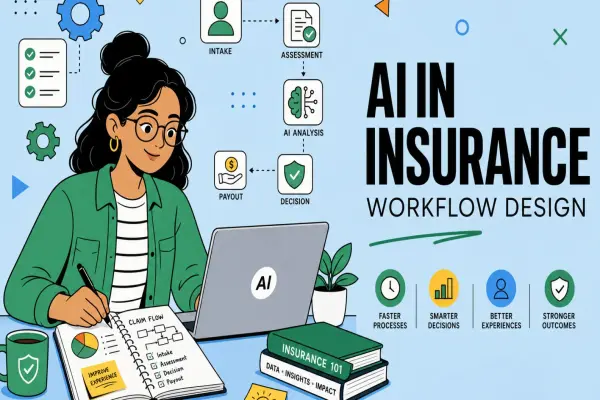
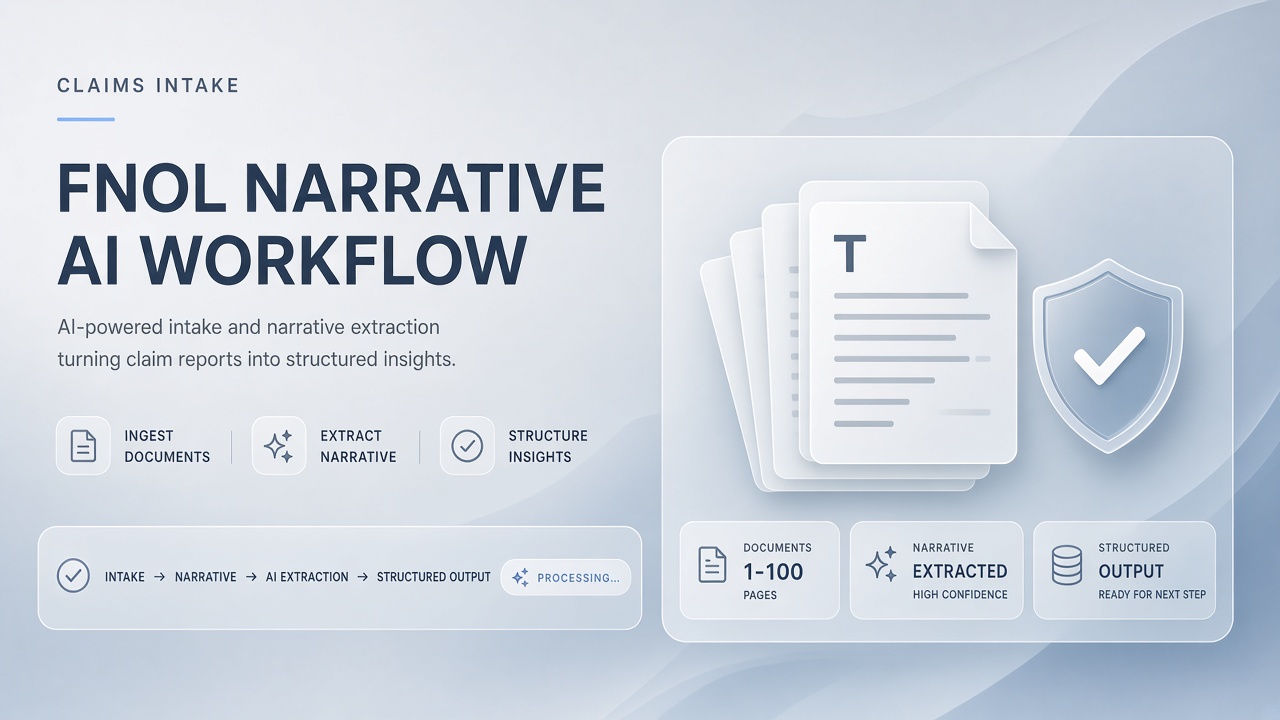
An ai workflow insurance fnol narrative routine captures structured FNOL fields, drafts a chronological narrative from notes and photos, runs consistency checks against policy terms, and routes output through adjuster review before claims platforms update. AI organizes and flags; licensed staff decide coverage, reserves, and investigation paths. Intake teams often pair narrative drafting with AI chatbot tools for policyholder self-service capture and AI productivity assistants for same-day backlog clearance once narratives pass review.
FNOL Data Capture Fields
Structured FNOL capture starts with a fixed field set aligned to your policy administration and claims system schemas before any narrative generation runs. AI performs best when dates, locations, parties, and loss types arrive as validated data rather than buried in free text. Intake staff confirm mandatory fields at the point of contact so downstream automation does not invent missing values.
Standard FNOL fields typically include policy number, named insured, loss date and time, loss location, peril or cause of loss, involved parties, injury indicators, property damage descriptions, police or fire report numbers, and initial contact channel. Carrier-specific extensions may cover rental coverage questions, lienholder details, or catastrophe event codes when a storm or regional event is active.
- Validate policy number and status against core systems before narrative work begins.
- Capture loss datetime in policy time zone with explicit offset for multi-state books.
- Record involved vehicle or property identifiers when applicable, including VIN or schedule references.
- Tag initial injury and total loss indicators for routing priority, not for medical conclusions.
- Attach channel metadata: phone, app, agent, or third-party administrator source.
| Field group | Examples | Validation owner |
|---|---|---|
| Policy identity | Policy number, insured name, effective dates | Intake specialist |
| Loss facts | Date, location, peril, parties | Intake specialist |
| Damage and injury flags | Injury reported, total loss indicator | Intake specialist |
| External references | Police report, prior claim cross-ref | Adjuster on review |
Mobile and Chat Capture Integration
Policyholder-facing chat and mobile flows should write into the same FNOL schema intake staff use on desktop so AI narrative steps see one canonical record. Photo uploads, geolocation, and guided peril questions reduce back-and-forth calls. Intake still verifies identity and policy status before treating self-service submissions as complete.
Narrative Structuring From Notes and Photos
AI turns raw adjuster notes, call transcripts, and photo metadata into a chronological FNOL narrative with labeled sections for facts, statements, and unknowns pending investigation. The draft separates what the policyholder reported from what intake staff observed and marks speculative language for removal. Photos inform damage descriptions only when timestamps and angles support the text.
A practical narrative template includes incident summary, timeline of events, parties and roles, property or vehicle damage description, injury and medical treatment reported, emergency services involvement, and open questions for field investigation. AI should not assert fault, coverage conclusions, or medical diagnoses in the intake narrative.
- Map each sentence to a source note, transcript segment, or photo ID for audit traceability.
- Flag contradictions between caller statements and uploaded images for adjuster attention.
- Use neutral verbs: reported, stated, observed, photographed, not concluded or determined.
- Preserve direct quotes in quotation marks when legally relevant for later statements comparison.
- Omit PII beyond what claims systems already store when exporting drafts to external AI tools.
Photo and Document Ingest
Image ingest should extract visible damage cues and document types without replacing adjuster inspection. AI can note apparent water staining, deployed airbags, or missing shingles as observations tied to file metadata. Estimates of repair cost or total loss belong in later appraisal workflows, not FNOL narrative drafts.
Consistency Checks Against Policy Terms
Automated consistency checks compare FNOL facts and draft narrative language against policy terms, endorsements, and known exclusions to surface questions for adjuster review, not automatic denials. Rules engines or retrieval over policy text highlight mismatches such as loss date outside the policy period, peril not listed on declarations, or location outside covered territory.
| Check type | Example signal | Typical outcome |
|---|---|---|
| Period of insurance | Loss date before effective or after expiration | Escalate to coverage reviewer |
| Peril alignment | Flood loss on policy without flood coverage | Flag for adjuster question list |
| Endorsement match | Rental reimbursement requested without endorsement | Note in narrative, no auto promise |
| Prior claim overlap | Same VIN or address open elsewhere | Link files, SIU awareness only |
Consistency output should read as a checklist with plain-language questions, not legal conclusions. Adjusters document responses before reserving or denying. When policy wording is ambiguous, route to coverage counsel rather than letting AI paraphrase binding interpretation.
Adjuster Review Before Downstream Systems
No FNOL narrative or structured update should post to claims administration, reserving, or vendor assignment until a licensed adjuster or designated supervisor approves the intake package. Review covers factual accuracy, neutral tone, completeness of open questions, and resolution of consistency flags. Approved narratives become the system of record for the claim file opening event.
- Intake completes structured fields and AI draft; status moves to pending adjuster review.
- Adjuster edits narrative, confirms or dismisses policy consistency flags with rationale.
- Supervisor spot-checks high-severity or high-complexity files per carrier sampling policy.
- On approval, narrative and fields sync to claims platform with version ID and reviewer ID.
- Rejected drafts return to intake with specific edit instructions, not generic rework.
Downstream Handoffs
Approved FNOL packages should trigger only the workflows adjusters explicitly authorize: rental, towing, emergency services, or field inspection. AI-suggested next steps remain suggestions until an adjuster selects them. Audit logs should show who approved each automated handoff.
Fraud and SIU Escalation Triggers
Fraud and special investigation unit escalation relies on rule-based and model-based triggers applied to structured FNOL data and narrative patterns, with SIU analysts making referral decisions. AI may score files for review priority; it should not label claims fraudulent in intake text visible to policyholders or external partners without investigation closure.
Common trigger categories include prior claim frequency on related parties, loss timing near policy inception or cancellation, inconsistent injury reporting across channels, staged accident indicators from photos, and vendor or body shop patterns flagged in historical SIU cases. Each trigger maps to a referral tier: awareness only, enhanced validation, or formal SIU assignment.
- Document trigger hits in an internal SIU queue separate from the policyholder-facing narrative.
- Never include fraud scores or trigger names in letters or portal messages to insureds.
- Retrain or recalibrate models on labeled outcomes, not adjuster hunches alone.
- Align triggers with state fair claims practice expectations and documented referral criteria.
- Review false positive rates quarterly so intake does not over-refer low-risk files.
Governance and Retention
Retain FNOL drafts, adjuster edits, model versions, and trigger logs per claims retention schedules and litigation hold requirements. Enterprise AI with appropriate data processing terms is preferable when narratives contain health information, financial account details, or minors. Redact before any external model training use.
Intake Team Training and Metrics
Intake teams need recurring training on neutral narrative standards, FNOL field completeness, and when to escalate AI drafts versus rework structured capture at the source. Productivity metrics should balance cycle time with rework rate and adjuster rejection reasons, not raw drafts generated per hour. Productivity-oriented AI tools help clear backlogs only after quality gates show stable approval rates week over week.
Sample monthly audits compare opening narratives to recorded statements and field inspection findings on closed files. Patterns of missing peril detail or inconsistent party naming feed prompt and template updates rather than one-off criticizing individual intake specialists.
Frequently Asked Questions
How does FNOL narrative work with recorded statements?
Recorded statements taken after intake should append as new sections or linked exhibits rather than silently overwriting the opening FNOL narrative. AI can diff statement transcripts against the original FNOL to flag new facts or contradictions for the adjuster. The opening narrative remains the historical record of first contact unless a formal correction is documented.
When should subrogation teams see the FNOL package?
Route FNOL narratives with third-party involvement indicators to subrogation awareness queues after adjuster approval, not at raw intake. Early subrogation interest fields in structured capture help, but liability conclusions belong in investigation phases. AI can tag third-party vehicle or property mentions for later subrogation analyst review.
How do catastrophe events change the workflow?
During catastrophe events, FNOL volume spikes and narrative templates should switch to event-specific sections while keeping adjuster review gates intact. Bulk intake from mobile and IVR may defer full narrative polish for triage tiers defined by severity. CAT playbooks should specify when abbreviated narratives are acceptable and when full review resumes after the surge period.
Can intake use public AI tools on claim notes?
Public AI tools without carrier data agreements are a poor fit for FNOL content that includes PII and health information. Use enterprise deployments with logging, redaction, and retention controls. Intake staff training should cover minimum necessary paste practices.
Narratives That Open Claims Correctly
Insurance FNOL intake improves when structured fields are complete, AI drafts chronological neutral narratives from notes and photos, policy consistency checks surface questions early, adjusters approve before downstream updates, and fraud triggers route to SIU without premature labels. The workflow succeeds when the claim file opens with accurate facts and clear open questions, not when the narrative merely reads smoothly.