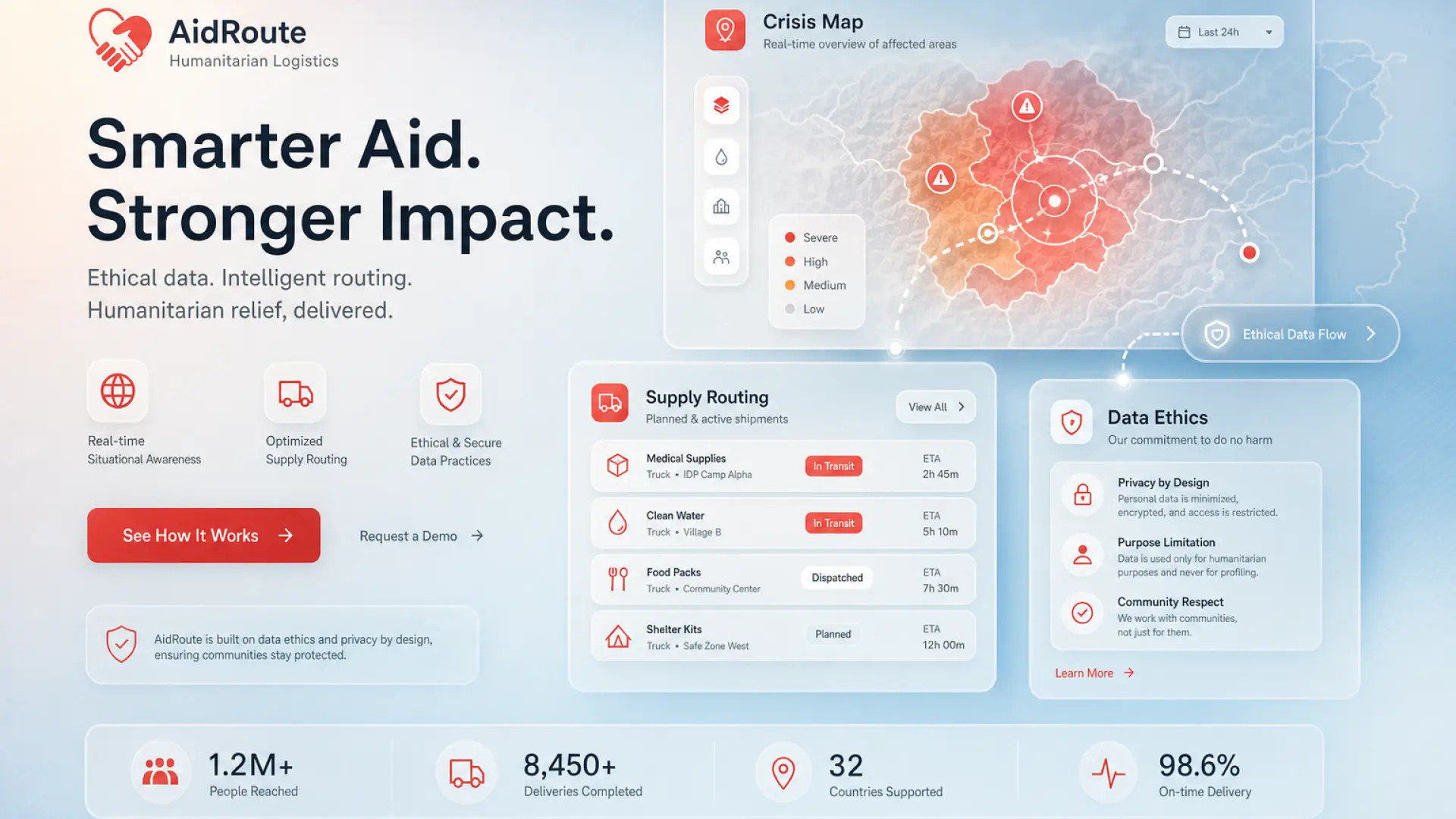
AI humanitarian aid logistics supports needs assessment summarization, supply routing with incomplete data, and coordination across NGOs and military actors in crisis zones. Data ethics, beneficiary privacy, and misinformation risks demand tighter governance than commercial supply chain AI deployments.
This guide covers needs assessment summarization, routing with incomplete data, protecting beneficiary PII, coordination with NGOs and military, and FAQ topics on offline operation. Apply AI automation and AI research tools only within humanitarian data responsibility frameworks such as OCHA and ICRC guidance.
Needs Assessment Summarization
AI consolidates field reports, cluster updates, and satellite imagery notes into operational summaries when humanitarian analysts verify sources and flag uncertainty explicitly. Over-confident summaries misallocate tents, medical kits, and food tonnage to the wrong governorate or camp.
- Tag every claim with source type: verified survey, social media, partner report, model inference.
- Separate population estimates from verified registration data in dashboard views.
- Humanitarian coordinators approve daily situational reports before donor circulation.
- Redact beneficiary identifiers before prompts enter any cloud AI service.
- Refresh models when conflict lines shift rather than trusting stale geospatial layers.
| Assessment input | AI assist value | Analyst gate |
|---|---|---|
| 5W field sitreps | Cluster by sector and geography | Verify with cluster lead |
| Nutrition survey CSV | Flag outlier districts | Statistician confirms methodology |
| Social media crisis signals | Triage for investigation | Never treat as verified needs data |
| Warehouse stock reports | Match supply to priority lists | Logistics chief approves movements |
Routing With Incomplete Data
Last-mile routing models trained on commercial logistics fail when bridges collapse, curfews change, and road security status lags reality by hours. Human convoy leaders override AI routes using local knowledge and security briefings.
- Encode security no-go zones from UN security and NGO risk desks as hard constraints.
- Plan multi-scenario routes when checkpoint status is unconfirmed.
- Never optimize solely for distance when cold chain or escort requirements apply.
- Log override reasons to improve situational data for the next convoy.
- Test offline route packages when connectivity drops in remote corridors.
Protecting Beneficiary PII
Registration databases for cash assistance and medical aid contain highly sensitive PII that hostile actors target during conflicts. Uploading beneficiary lists to public AI APIs may violate donor data agreements and endanger recipients.
- Use on-prem or humanitarian-certified cloud enclaves with data processing agreements.
- Apply k-anonymity and aggregation before any AI analytics on registration data.
- Train staff on phishing risks when AI tools request bulk spreadsheet uploads.
- Separate identity verification systems from generative chat interfaces.
- Plan secure deletion when programs close or populations relocate.
Coordination With NGOs and Military
Cluster coordination requires shared situational awareness without leaking militarily sensitive movement details or NGO staff locations to unauthorized parties. AI summaries crossing civil-military boundaries need classification labels and release authority.
- Align AI outputs with OCHA cluster terminology and reporting cycles.
- Restrict military logistics AI feeds from public humanitarian dashboards.
- Document memoranda of understanding on data sharing before joint model deployment.
- Respect NGO neutrality principles when AI platforms host multiple actor data.
- Conduct after-action reviews on AI-assisted coordination during major surges.
Humanitarian Data Ethics Framework
Operations should adopt explicit data ethics principles before crisis deployment: do no harm, minimize data collection, protect dignity, and maintain accountability to affected populations. Frameworks from OCHA, ICRC, and major NGOs provide starting templates adaptable to each mission mandate.
- Name a data protection focal point for every surge with authority to halt AI exports.
- Conduct DPIA-style reviews when new AI tools process registration or biometric data.
- Include affected community representatives in decisions on AI targeting or messaging.
- Plan secure deletion and beneficiary notification when programs sunset.
- Document misinformation response protocols separate from needs assessment AI.
Frequently Asked Questions
How do humanitarian AI tools work offline?
Edge devices store lightweight models and queued prompts for sync when satellite links return. Critical routing and registration functions need tested offline fallbacks, not cloud-only dependencies.
How should teams handle AI and misinformation?
AI can flag rumor spikes for analyst review but must not autonomously debunk or amplify unverified claims. Coordinate with UN agencies and local media literacy partners before automated rumor response.
Can AI select cash assistance recipients?
Targeting algorithms require community validation, appeal processes, and protection monitoring. Never deploy opaque AI scoring for beneficiary selection without humanitarian ethics board review.
Does AI draft donor reports on crisis operations?
AI accelerates narrative drafts from verified cluster data when fundraisers label uncertainty and protect beneficiary stories. Obtain consent before AI personalizes appeals with identifiable survivor narratives.