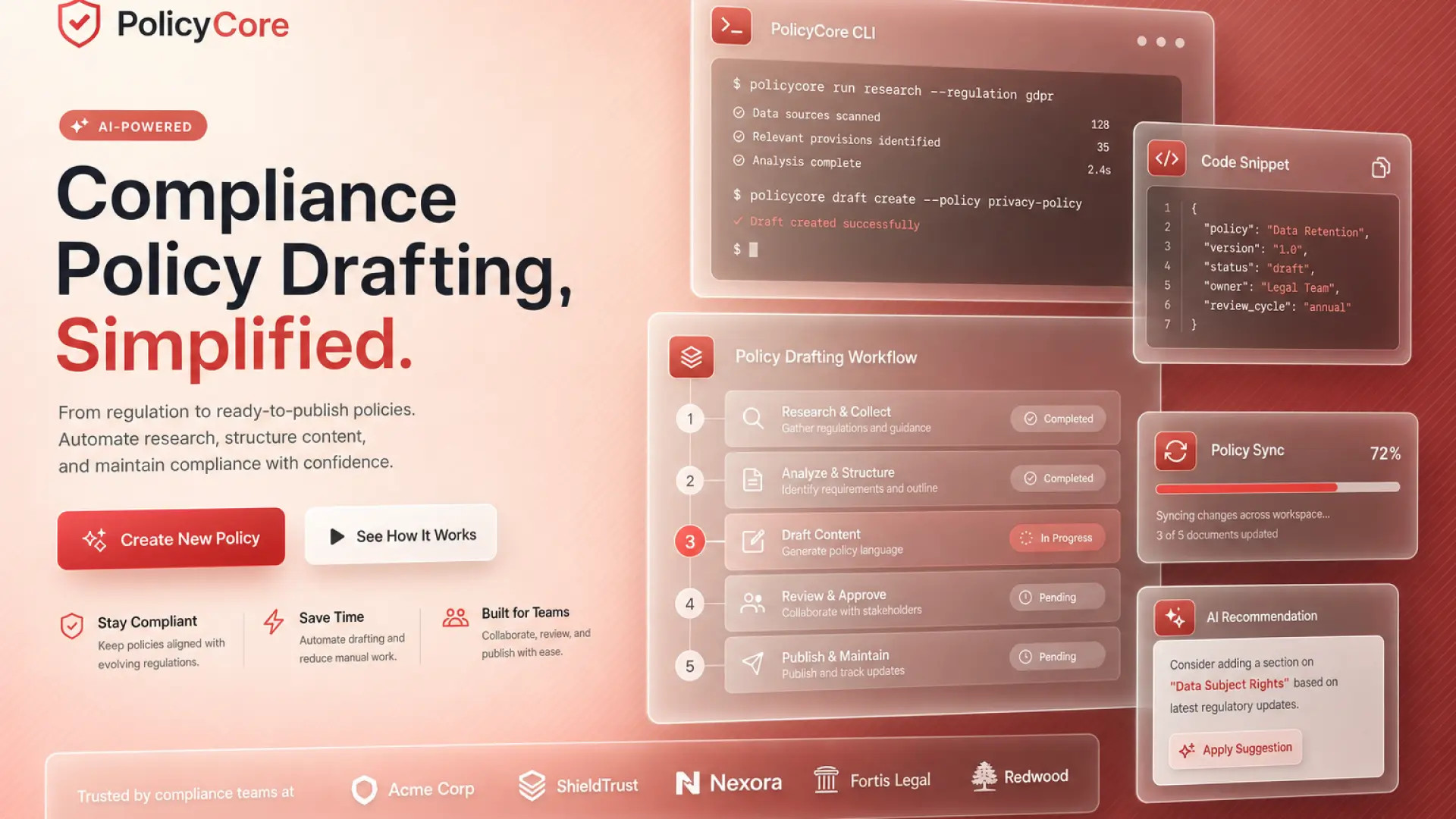
Regulatory change arrives faster than policy committees can meet. Compliance officers paste old PDFs into chat tools and ship drafts that miss jurisdiction-specific obligations or contradict the employee handbook.
An AI workflow for compliance officers policy drafting connects regulatory monitoring, gap analysis, redline drafts, and training communications with a fixed legal approval chain. This guide maps each step. Use AI automation for feed monitoring and AI research tools for preliminary regulatory summaries that counsel verifies.
Monitor Regulatory Change Feeds
Centralize regulatory alerts before AI summarizes them. Feeds without ownership become noise; tagged alerts become policy work items.
- Source list: Regulator RSS, legal vendor alerts, industry associations, internal audit findings
- Tagging schema: Jurisdiction, topic (privacy, AML, AI), effective date, urgency
- AI triage: Summarize each alert; map to policy inventory IDs
- Human triage: Compliance officer marks "no action," "monitor," or "project" within 5 business days
- Ticket creation: Projects get owner, legal liaison, and target publish date
| Feed type | AI role | Officer role |
|---|---|---|
| New rule text | Extract obligations bullet list | Confirm against official publication |
| Enforcement action | Compare facts to current policy | Decide if precedent applies to firm |
| Consultation paper | Draft comment themes | Legal approves submission |
Gap Analysis Against Current Policies
Gap analysis compares regulatory obligations to your policy library section by section. AI accelerates diffing; compliance owns the gap register.
- Policy inventory: Master list with version, owner, last review date, applicable entities
- Obligation matrix: Regulation article mapped to policy section or "gap"
- AI draft matrix: Suggested mappings with confidence flags for low certainty
- Workshop: Legal and business lines validate gaps; no silent assumptions
- Prioritization: Effective date and exam cycle drive sequencing
Before: Spreadsheet gaps tracked informally; updates ship unevenly across regions.
After: Single gap register with status, owner, and link to redline PR in policy repo.
Draft Redlines for Legal Review
AI produces redline drafts against current policy text; legal counsel approves every change before publication. Never publish AI-only policy updates.
Policy template sections
- Purpose and scope
- Definitions
- Roles and responsibilities
- Requirements and procedures
- Monitoring and reporting
- Exceptions and escalations
- References and related policies
- Revision history
Prompt AI with the template, current section text, and obligation bullets from gap analysis. Output track-changes format for counsel review. Use research assistants only on public regulatory text, not privileged legal memos.
Approval chain
- Compliance officer drafts redline
- Legal counsel reviews and edits
- Business owner confirms operational feasibility
- Compliance committee or delegate approves
- Version published to policy portal with effective date
Training Comms for Affected Staff
Policy updates fail when staff never hear about them. AI drafts training emails and quiz questions; compliance verifies accuracy and assigns LMS modules.
- Audience map: Which roles must read, attest, or complete training
- What changed summary: Plain language, 3 bullets max in email
- Behavior examples: Do and don't scenarios tied to new clauses
- Attestation: LMS record with policy version ID
- Office hours: Q&A session for high-impact changes
Automate reminders with workflow automation tied to HRIS groups. Escalate non-completion to managers before exam periods.
Frequently Asked Questions
How do we handle multi-jurisdiction policies?
Maintain a global baseline plus regional addenda. AI drafts addenda from jurisdiction tags; legal reviews each region separately. Never merge conflicting obligations into one paragraph.
How should exam cycles affect timing?
Freeze non-critical policy edits 60 days before major exams unless regulator-mandated. Prioritize gap closure that examiners flagged in prior findings.
Should our AI use policy mention internal AI tools?
Yes if employees use AI on company data. Align acceptable use, retention, and approval requirements with IT and legal. Cross-reference vendor DPAs.
How do we version policies?
Semantic versioning or date stamps in policy portal. AI drafts must reference parent version ID. Archive superseded PDFs with read-only access for audits.
Policy Drafting With Legal Guardrails
Compliance officers scale policy updates when regulatory feeds feed gap analysis, AI drafts redlines, and legal approval chains never skip. Training comms close the loop so published policy matches frontline behavior.