Talent acquisition teams drown in applications while hiring managers want better signal per interview hour. AI promises speed but automated rejection without oversight creates legal and reputational risk.
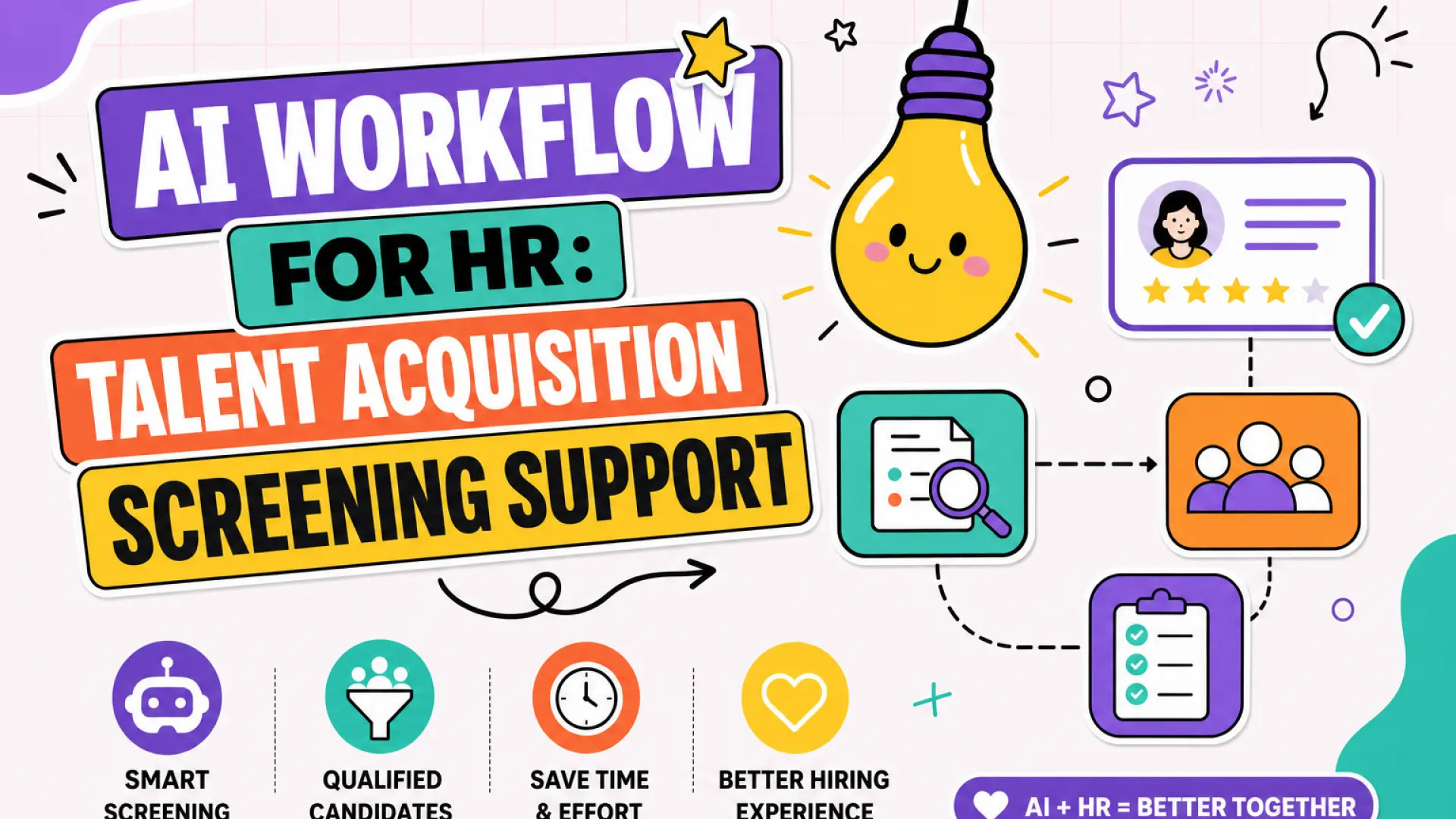
An AI workflow for HR talent acquisition screening supports inclusive job posts, resume summarization, and interview prep while requiring human approval at every stage. This guide covers fair hiring guardrails and bias awareness. Pair scheduling automation with AI video interview tools and AI transcription for structured debriefs.
Job Description Inclusive Language Check
Run inclusive language checks on job descriptions before posting. AI flags gendered, age-coded, or unnecessary credential inflation that shrinks the applicant pool.
- Draft JD: Hiring manager provides role requirements and team context
- AI scan: Flag exclusionary terms, "rockstar" language, unrealistic year counts
- HR edit: Replace with skills-based criteria and essential vs nice-to-have split
- Legal review: Required for regulated roles or multi-state postings
- Publish: ATS receives final version only; no shadow JDs in email
| Before AI check | After HR refinement |
|---|---|
| "Native English speaker required" | "Strong written and verbal communication in English" |
| "Digital native, recent grad" | "Comfortable learning new SaaS tools quickly" |
| 10+ years for mid-level scope | 3-5 years plus demonstrated outcomes |
Resume Summarization for Recruiters
AI summarizes resumes against the rubric you provide; recruiters score fit and advance candidates. Never auto-reject from model scores alone.
Workflow steps:
- Rubric first: Must-have skills, nice-to-haves, knockout questions defined before batch upload
- Structured summary: AI outputs bullets mapped to rubric categories with evidence quotes
- Recruiter review: 2-minute scan per summary; flag summaries that miss non-traditional paths
- Blind spot check: Weekly sample of rejected summaries reviewed by second recruiter
- Audit log: Which model version and prompt produced each summary
Use transcription tools to summarize phone screens into the same rubric format for consistent handoffs to hiring managers.
Structured Interview Question Drafts
AI drafts behavioral and situational questions aligned to competencies. Interviewers must use the same core questions across candidates for the same role.
- Define competencies (e.g., stakeholder management, technical depth)
- AI proposes 2-3 questions per competency with follow-up probes
- Hiring panel approves question set before interviews start
- Scorecard links each question to competency rating
- Debrief uses notes only; AI does not score candidates post-interview
Bias audit note
Quarterly, HR audits a sample of AI summaries and screening notes for disparate impact by source school, career gap, or name proxy signals. Document vendor bias testing if using ATS-native AI scoring. Adjust rubrics when patterns appear.
Human Decision on Every Stage Advance
Every move from applied to phone screen to onsite requires a named human approver in the ATS. AI suggests; humans decide.
| Stage | AI allowed | Human required |
|---|---|---|
| Application review | Summary against rubric | Advance or reject click |
| Interview | Question drafts, scheduling | Ratings and hire/no-hire |
| Offer | Comp band lookup assist | Approver signature |
Video interview platforms with AI highlights are assistive only. Playback and ratings stay with trained interviewers.
Frequently Asked Questions
What EEOC considerations apply to AI screening?
Validate that selection procedures are job-related and do not disproportionately exclude protected groups. Keep records of rubrics, human decisions, and vendor compliance documentation. Consult employment counsel before deploying auto-ranking.
How does international hiring change the workflow?
Local labor laws may restrict automated processing or require candidate consent. Use region-specific JD templates and disable AI features where not permitted.
Can AI help high-volume hourly hiring?
Scheduling and FAQ chatbots yes; auto-reject no without human sampling and audit. High volume increases bias audit frequency, not decreases it.
Should we tell candidates AI assisted review?
Transparency policies vary by jurisdiction. Many employers disclose AI use in application flow. Check local AI employment laws and your counsel guidance.
Screening Support, Not Screening Replacement
HR talent acquisition wins with AI when inclusive JDs, structured summaries, and interview kits speed recruiters while humans own every advancement decision. Fair hiring guardrails are part of the workflow, not an afterthought.