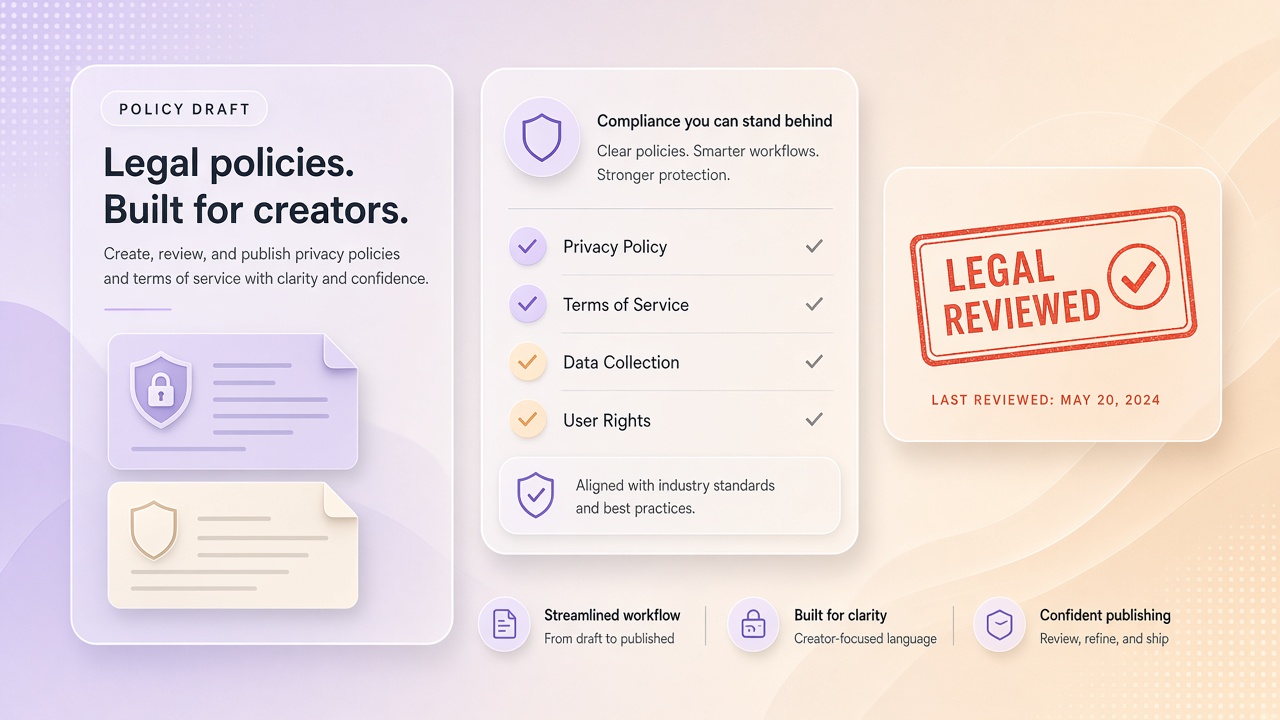
Creators collect emails, run comment sections, embed affiliate links, and plug in analytics before a lawyer ever sees the site. Copy-pasted templates drift from actual tools within months. A privacy policy that omits your newsletter vendor or misstates cookie behavior creates compliance risk and sponsor doubt. An ai workflow creator privacy policy draft pipeline maps required sections to your business model, drafts plain-language structure, documents every tool in a data collection map, and stops at a mandatory legal professional review gate before anything goes live. AI accelerates organization; qualified counsel signs off on enforceable language.
This guide targets independent creators, small media businesses, and newsletter-first brands shipping their first formal policies. Use AI chatbot tools to interview yourself about data flows before drafting, and AI productivity assistants to maintain version history and change logs, never to replace attorney review of final text.
Required Sections by Business Model
Privacy policies for creators must reflect how the site actually operates: free content only, paid memberships, digital downloads, coaching calls, email lists, affiliate commerce, or ad-supported video each trigger different disclosure blocks under GDPR, CCPA, and platform partner rules. Terms of service are often optional for small blogs but become important when you sell products, run communities, or license content. AI can generate an outline; humans select sections that match revenue streams.
- Identify controller identity: legal name, contact email, and business address where required.
- List every way you collect data: forms, checkout, comments, analytics, affiliate pixels.
- Map purposes and lawful bases for each processing activity if EU or UK visitors are likely.
- Add children and age-gating language if content targets or permits minors.
- Include update procedure and effective date at the top of each policy.
| Business model | Privacy policy must cover | Terms of service often add |
|---|---|---|
| Ad-supported blog or video | Analytics, cookies, comment data, ad network recipients | Acceptable use, IP ownership, disclaimer of warranties |
| Newsletter plus free content | Email collection, ESP processor, unsubscribe rights | Newsletter content license, termination of access |
| Affiliate and sponsorship heavy | Affiliate cookies, tracking partners, disclosure cross-links | Prohibited promotion methods, indemnity clauses |
| Paid community or courses | Payment data via processor, account data, refund-related retention | Payment terms, refund rules, account suspension |
Platform Partner Requirements
Amazon Associates, Mediavine, YouTube Partner Program, and app stores each impose disclosure and privacy language beyond generic templates. Collect partner checklists before AI drafts. Missing affiliate cookie language is a common audit failure. Platform rules change; legal review should include a partner appendix scan quarterly.
What Is a Creator Privacy Policy?
A creator privacy policy is a public document that explains who operates the site or channel properties, what personal data the creator collects, why it is processed, which vendors receive it, and what rights visitors have to access or delete their information. Unlike a media kit or sponsor deck, the privacy policy is a legal transparency instrument, not marketing copy. It must match real behavior: if you run a waitlist on Typeform, embed YouTube with enhanced measurement, or sell merch through Shopify, each touchpoint belongs in the policy after your data map confirms the flow.
Terms of service, by contrast, define the contract between you and users: acceptable behavior, intellectual property ownership, payment terms for paid products, limitation of liability, and dispute resolution. Creators who only publish free articles may start with privacy policy plus cookie notice; creators who sell courses, memberships, or digital downloads typically need both documents reviewed together so refund language in terms aligns with retention language in privacy.
AI Draft for Plain-Language Structure
Prompt AI to produce section headings and short plain-language paragraphs that explain what you collect, why, and who sees it, using eighth to tenth grade readability without hiding legally required specificity. Feed the model your business model table and data map outline. Ask for dual outputs: full policy skeleton and a one-page summary for your footer "privacy at a glance" box if you use one.
- Start from a jurisdiction list: US states with privacy laws, EU/UK, Canada, other markets you target.
- Request active voice and defined terms on first use (e.g., "personal data," "processor").
- Ban vague phrases like "we may share data with partners" without naming categories.
- Generate separate cookie notice draft linked from the main policy.
- Mark every AI paragraph with [DRAFT] until counsel reviews.
| Policy section | AI can draft | Attorney must finalize |
|---|---|---|
| Data categories | Lists from your data map | Accuracy against actual collection |
| Legal bases (GDPR) | Suggested basis per purpose | Jurisdiction-specific validity |
| Limitation of liability | Boilerplate options | Enforceability in your state or country |
| Dispute resolution | Clause variants | Arbitration enforceability, consumer rules |
Readability Without Legal Dilution
Plain language should shorten sentences and define jargon, not remove mandatory disclosures about international transfers, retention periods, or user rights. Creators serving global audiences need complaint authority references for EU users and CCPA-style rights language for California residents when applicable. AI suggests structure; counsel calibrates risk.
Data Collection Map for Your Stack
A data collection map lists each tool, what personal data it processes, why you use it, where data is stored, and whether it is a controller or processor relationship, before any policy text claims otherwise. Walk your site as a new visitor: comment login, newsletter popup, checkout, community platform, analytics script, chat widget, and affiliate link redirectors. Missing one vendor invalidates the whole policy.
- Inventory hosting, CMS, email service provider, payment processor, and community platform.
- Document analytics and ad tags, including consent banner behavior.
- Note affiliate networks and major merchant programs with cookie duration settings.
- Record customer support tools and CRM if you store inquiry content.
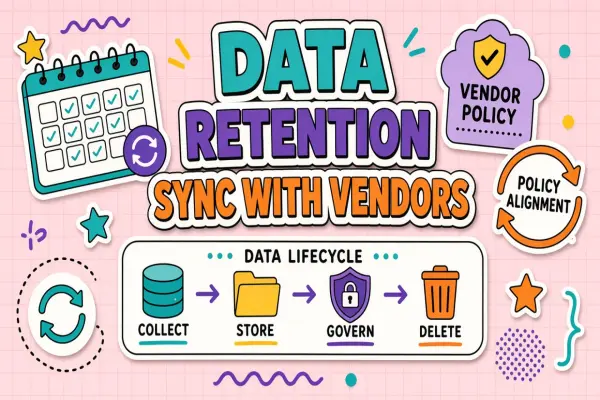
- Store vendor privacy policy URLs and data processing agreement status.
| Tool category | Example vendors | Typical data processed | Policy mention |
|---|---|---|---|
| Email marketing | MailerLite, Beehiiv, ConvertKit | Email, name, open and click events | Processor name, purpose, unsubscribe rights |
| Analytics | Plausible, Google Analytics, Fathom | IP, device, page views | Cookie or cookieless disclosure, opt-out path |
| Affiliate tracking | Amazon Associates, ShareASale, LTK | Click ID, timestamp, referral URL | Affiliate cookie purpose, duration, opt-out |
| Comments and community | Disqus, Circle, Patreon | Username, content, moderation logs | Public display rules, retention |
Map to Cookie Banner Configuration
Cookie consent tools must mirror the policy: if the privacy document lists only necessary and analytics cookies, the banner categories and block behavior should match before launch. Misfired marketing tags before consent are a frequent GDPR complaint trigger. Test in a clean browser profile after legal approval.
Mandatory Legal Professional Review
AI-generated policy text is a drafting aid, not legal advice; a qualified attorney or privacy specialist must review final language for your jurisdictions, business model, and vendor contracts before publication. Budget review for initial launch and after material changes. Provide counsel your data map, affiliate agreements, and sample user journeys. Ask explicitly about FTC disclosure placement separate from privacy prose.
- Send draft, data map, and tool list in one packet to reduce back-and-forth.
- Flag target countries and states with known privacy laws.
- Ask which sections require clickwrap acceptance versus footer link only.
- Request redlines in editable format with rationale comments.
- Store approved PDF and source with effective date and reviewer name.
FTC guidance expects clear affiliate disclosures near promotional content, not buried only in a privacy policy footer. Amazon's operating agreement requires accurate disclosure of data collection by you and advertisers. Legal review should connect marketing pages, video descriptions, and policy links into one consistent story.
When Not to Skip Review
Do not publish AI policy drafts unchanged when you collect emails, run paid communities, target EU visitors, use behavioral ads, or process health or financial topics, even at small scale. Creator size does not eliminate supervisory authority interest when personal data processing is systematic. A one-hour attorney consult beats a template lawsuit response.
Update Triggers: New Tools, Regions, Kids Audience
Republish or prominently notify users when you add tools that process personal data, expand into regulated regions, begin selling data-heavy products, or shift content toward children and teens. Maintain a change log tied to your data map. AI can diff old and new tool lists and suggest policy paragraph updates; counsel approves wording.
- New email provider, analytics suite, or payment processor: update processors section within 30 days.
- Localized ads or translated sites: review international transfer language.
- Launching a mobile app: add app store privacy labels aligned with web policy.
- Kids content or family channels: COPPA and age-appropriate design considerations.
- Major affiliate network addition: cookie and joint controllership disclosures.
| Trigger event | Documents to update | User notice needed |
|---|---|---|
| New marketing pixel | Privacy policy, cookie notice, banner config | Often yes for EU/UK visitors |
| EU traffic growth | Legal bases, DPO/representative if required | Policy version bump |
| Membership launch | Terms of service, refund policy, privacy retention | Clickwrap at signup |
| Comment section added | Privacy policy, community guidelines | Notice at collection point |
Version Control and Footer Dates
Display effective dates prominently and archive prior versions so sponsor diligence and user complaints reference the correct text. AI productivity workflows can track markdown policy source in git with tagged releases; public site shows counsel-approved HTML or CMS pages only.
Terms of Service Sections Creators Commonly Need
Creator terms of service typically cover user conduct, content licensing, disclaimers, limitation of liability, termination, governing law, and payment or refund rules when products are sold. AI can outline these blocks from your business model table; attorneys adapt enforceability to your jurisdiction. Comment sections benefit from clauses that reserve moderation rights and define user-generated content licenses. Paid communities need clear rules on account sharing, refund windows, and what happens to access after cancellation.
- Acceptable use: no harassment, spam, or illegal activity in comments or community spaces.
- Intellectual property: who owns user posts, thumbnails, and course materials.
- Disclaimers: educational content is not professional legal, medical, or financial advice.
- Limitation of liability: caps damages to fees paid in a defined period where enforceable.
- Governing law: state or country selected with counsel input, not random template defaults.
Clickwrap vs Browsewrap Acceptance
Clickwrap acceptance, where users check a box or click "I agree" before account creation or purchase, is more enforceable than browsewrap, which relies on a footer link alone. Implement clickwrap at newsletter signup only if your counsel recommends it for your list size and regions; many creators use informed consent copy at collection plus privacy policy link. Paid checkout should always use explicit terms acceptance logged with timestamp.
Frequently Asked Questions
What must I disclose for email lists?
Email collection requires clarity on what subscribers receive, how often, which provider stores addresses, whether data is shared with sponsors, and how to unsubscribe or delete data. Double opt-in practices should match policy promises. GDPR and CAN-SPAM both expect honest purpose statements at signup. AI drafts signup microcopy and policy sections together so they align.
How detailed should cookie disclosures be?
List cookie categories, name major tools, state purposes and typical durations, and explain how users change preferences through your banner or browser settings. Separate cookie notice pages help mobile readers. Affiliate tracking cookies need their own plain-language paragraph with opt-out paths where law requires consent before non-essential cookies fire.
Where do affiliate disclosures belong?
FTC expects clear disclosure before or near affiliate links and sponsored recommendations, in addition to privacy policy language about tracking cookies. Video descriptions, blog intros, and pinned comments count. Privacy policy explains data processing; on-page disclosure explains commercial relationship. AI can draft both; counsel confirms placement meets partner program and FTC expectations.
Do I need terms of service if I only publish free content?
Free blogs may operate with privacy policy alone, but terms become valuable when you host comments, license user content, or want limitation of liability clauses. Assess risk with counsel. Lightweight terms covering acceptable use and intellectual property still benefit creators who accept guest posts or run forums.
Structure With AI, Enforceability With Counsel
An ai workflow creator privacy policy draft that protects creators and audiences maps sections to business model, drafts readable structure from a verified data collection map, routes all public text through legal professional review, and updates when tools, regions, or audience age profiles change. AI removes blank-page friction; enforceability requires human experts.
Start by inventorying every tool that touches visitor or subscriber data this week. Draft section headings with AI from that map alone, without publishing. Book counsel review before your next sponsor campaign or product launch. Set calendar reminders for quarterly data map audits. Policies stay trustworthy when they track reality, not template nostalgia.