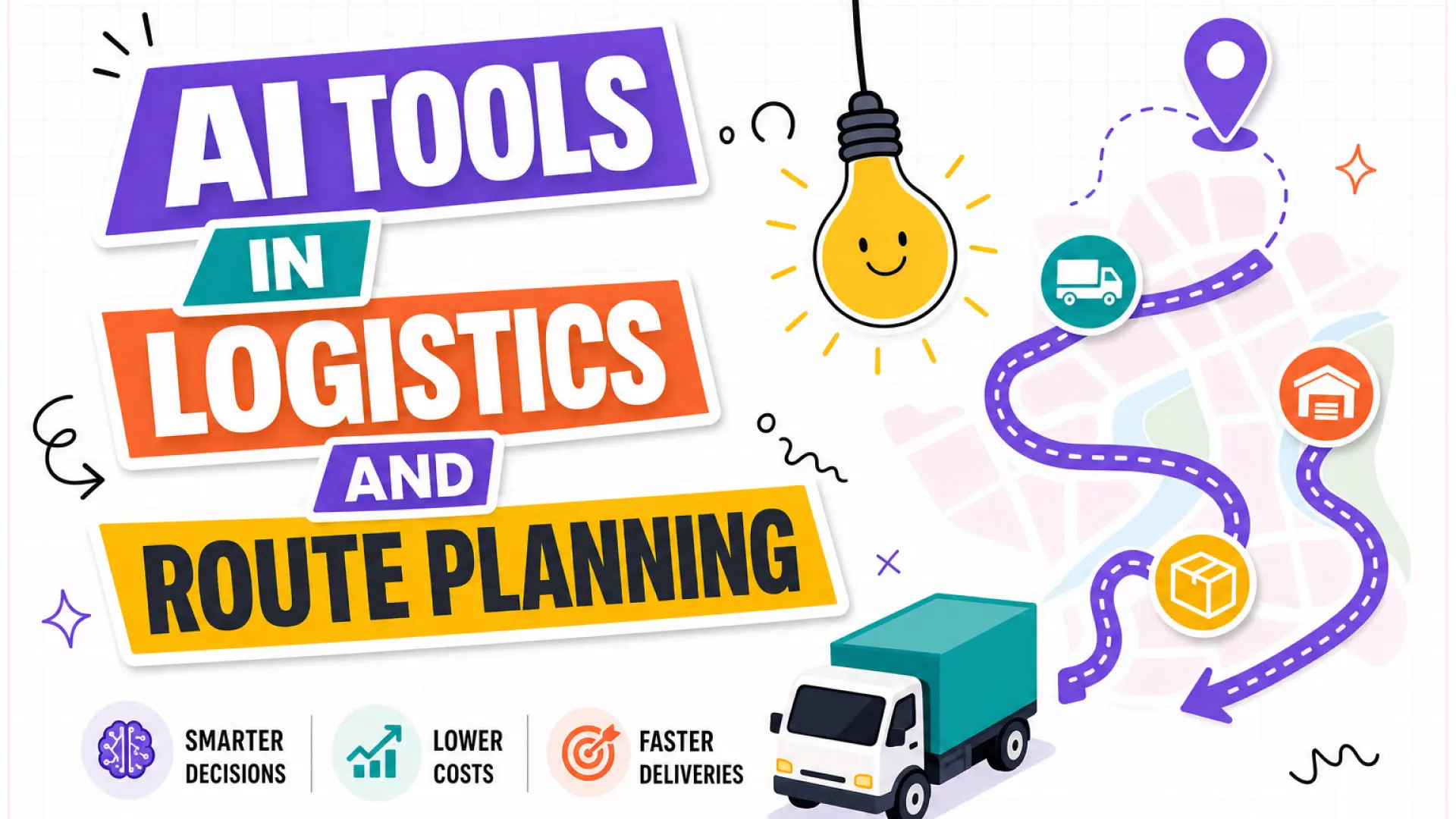
Spreadsheet routes collapse when traffic spikes, a customer adds a dock appointment, or a refrigerated truck needs a shorter chain. AI logistics route planning ingests constraints humans juggle intuitively, but dispatchers still override exceptions the model cannot see. The goal is fewer miles and on-time delivery, not blind obedience to an algorithm.
This guide lists required inputs, human override patterns, telematics integration, and cost vs service tradeoffs. Engineering teams evaluating optimization APIs alongside AI coding assistants should treat route solvers as operations software with SLA implications, not side projects. Operations leads comparing narrative runbooks may use AI writing assistants for dispatcher SOPs separate from the solver itself.
Inputs: Traffic, Windows, and Vehicle Capacity
Quality routes require accurate geocodes, time windows, vehicle dimensions, skill tags, and live traffic feeds. Missing any input class produces plausible-looking routes that fail on the ground. Build a constraint checklist before vendor selection.
| Input | Source | Failure mode if wrong |
|---|---|---|
| Geocoding | TMS, customer master | Wrong side of highway, failed delivery |
| Time windows | Appointments, receiving hours | Missed SLA, redelivery cost |
| Capacity | Weight, cube, pallets, temp zones | Split loads, overtime |
| Traffic | Live and historical APIs | Late sequences, idle drivers |
| Driver skills | Hazmat, liftgate, language | Compliance violation |
Human Override for Exceptions
Dispatchers must reorder stops, reassign vehicles, and freeze routes when weather, protests, or customer calls change the plan. Override UX should log reason codes for later analysis, not fight the dispatcher with modal friction during rush hour.
- One-click lock stop sequence for priority medical or perishable loads.
- Drag-and-drop reassignment with capacity revalidation in real time.
- Broadcast message to driver app when override changes next three stops.
- Compare planned vs actual path for continuous model tuning.
- Train new dispatchers on when to trust vs override solver output.
Telematics and Proof-of-Delivery Data
Close the loop with GPS breadcrumbs, engine data, door sensors, and POD photos feeding back into ETA predictions and billing. Telematics without integration into the route engine is dashboard theater. Feed actual service times per customer site to improve future dwell estimates.
POD images processed by vision models can flag damaged pallets before invoice disputes. Ensure image pipelines respect driver privacy and union agreements on cab monitoring. Data retention should match customer contract and regulatory needs for fleet planning ai tools audits.
Dispatcher workflow integration
Embed optimization inside TMS screens dispatchers already use. Standalone map tabs get ignored. Morning planning batch plus midday reoptimization on exceptions matches most LTL and last-mile operations. Document SOPs with writing assistants for onboarding, but keep executable runbooks in the TMS help panel.
Cost vs Service Level Tradeoffs
Objective functions must reflect business strategy: minimize cost per stop, maximize on-time percentage, or balance both with penalty weights. A route that saves ten miles but misses a hospital delivery window is a failure. Tune weights with operations and sales, not only engineering.
- Define primary KPI: OTIF, cost per mile, stops per hour, carbon.
- Simulate historical weeks with proposed weights before go-live.
- Review override reasons monthly; feed patterns into constraint rules.
- Segment customers by service tier; VIP windows get hard constraints.
- Report tradeoffs to leadership in dollars and SLA points, not abstract scores.
Developers integrating solvers via coding assistants should version constraint JSON in Git and test against golden route fixtures. Production changes to weights need change advisory board approval when SLAs are contractual.
Last-Mile vs Linehaul Optimization Patterns
Last-mile routes need dense stop sequencing and tight customer windows; linehaul focuses on hub timing, trailer utilization, and driver hours-of-service across longer legs. Using one solver configuration for both modes produces brittle results. Segment your ai route optimization logistics deployment by business unit with separate constraint templates.
Last-mile benefits from frequent reoptimization when drivers report access issues: gated communities, elevator delays, failed contactless deliveries. Linehaul benefits from stable daily plans with exception handling at hubs. Pilot each mode on one depot before enterprise rollout. Capture driver feedback in structured reason codes so monthly reviews improve rules, not only model weights.
Data Quality Governance
Bad master data defeats the best solver: wrong geocodes, obsolete time windows, and missing skill tags compound into expensive rework. Assign data stewards in transportation planning to own customer location accuracy. Quarterly audits on top fifty customers by volume catch systematic geocode drift.
- Validate new customer addresses against rooftop geocoding, not ZIP centroids.
- Sync appointment changes from TMS to solver within minutes, not overnight batch only.
- Flag routes where actual service time deviates more than thirty percent from model dwell.
- Maintain golden-week regression tests when upgrading solver versions.
- Document integration failures in runbooks updated via your internal knowledge base.
Driver Experience and Mobile App Alignment
Drivers abandon optimized sequences when the mobile app fights them: poor turn-by-turn, missing delivery notes, or inability to record exceptions. Route AI succeeds when drivers trust the next stop recommendation. Show why a stop moved: customer window, traffic, priority code. One-tap exception capture feeds the next reoptimization cycle instead of silent deviation.
Train drivers that overrides are data, not failure. Supervisors review override clusters weekly. If every driver skips the same apartment complex, fix geofence and access notes rather than punishing non-compliance. Integration with engineering teams keeps mobile releases aligned with solver API changes each sprint.
Seasonal and Peak Planning
Peak seasons need pre-staged constraint profiles: expanded fleet lists, temporary depots, and relaxed non-critical windows on promotional volume. Load historical peak weeks into simulation before Black Friday, harvest, or vaccine distribution campaigns. Pre-negotiate carrier surge capacity with routes pre-validated against dock appointments at hubs.
Carrier and 3PL Collaboration
When brokers and 3PL partners execute routes, share constraint templates and performance scorecards instead of raw solver access. Export planned sequences in standard formats with service windows and access notes embedded. Partners return actuals via API or EDI for closed-loop tuning. Disputes over accessorial charges drop when planned vs actual paths are comparable in one system.
Contract language should define acceptable override rates and data latency SLAs. A partner who never sends POD timestamps starves your models. Quarterly business reviews with documented agendas keep AI roadmap aligned with lane growth and new customer onboarding volume.
Security and Multi-Tenant Isolation
Route data reveals customer locations, volumes, and service patterns; treat TMS and solver tenants as confidential operations data. Use separate API keys per business unit. Redact customer names in logs used for vendor support tickets. Pen-test integrations that expose stop sequences to driver personal devices.
Cold Chain and Special Requirements
Refrigerated and frozen lanes need temperature monitoring constraints, maximum route duration, and pre-cool checks in the solver. AI must not sequence grocery delivery after non-food stops without washout rules where regulations require. Pharmaceutical last mile may need chain-of-custody handoffs modeled as hard constraints, not soft penalties.
Document temperature excursion procedures when reoptimization moves a frozen stop later in sequence. Drivers need explicit alerts when AI changes cold chain order. Telematics temperature probes should feed exception dashboards dispatchers monitor during heat waves.
Implementation Roadmap
Roll out in four phases: data audit, pilot lane, parallel run, and full cutover with rollback plan. Week one fixes geocodes and time windows on historical data. Weeks two to four run solver alongside manual planning on one depot. Month two compares OTIF and miles; month three expands if metrics beat control lane by agreed threshold. Keep manual planning team engaged; they own exception expertise the model learns from.
Document integration architecture for engineering handoff: TMS events, solver API, mobile app, and telematics feedback loop. Version constraint templates in Git. Run regression on golden weeks after every solver upgrade. Executive dashboards should show dollars and OTIF, not abstract optimization scores operators cannot interpret.
Analytics and Continuous Improvement
Build executive dashboards on planned vs actual miles, stops per hour, fuel per route, and first-attempt delivery rate. Segment by depot, customer segment, and season. AI model retraining should trigger when KPI drift exceeds control limits for four consecutive weeks. Share wins with drivers when mileage drops without pay cut to maintain adoption.
Returns and Reverse Logistics
Return pickup routes differ from forward delivery: consolidation at hubs, inspection time at dock, and disposition codes affect sequencing. Model return density by SKU category to avoid mixing hazmat returns with food grade forward stops on same truck without washout compliance.
The Bottom Line
AI logistics route planning succeeds on complete inputs, dispatcher-friendly overrides, telematics feedback loops, and explicit cost-service tradeoffs. Treat the solver as operations infrastructure with measured OTIF impact, not a demo map. Keep SOPs and APIs maintained as fleet and customer mix evolve.
Frequently Asked Questions
How do cross-border routes affect optimization?
Add customs dwell distributions, document checks, and prohibited corridor rules per country pair. Generic traffic APIs miss border queue patterns. Maintain broker contact escalation when clearance delays exceed model assumptions.
Can AI route hazardous materials like general freight?
No. Hazmat requires segregated solvers with tunnel restrictions, quantity limits, and driver certification tags. Validate against DOT and ADR rules per shipment class. Human sign-off mandatory on every hazmat route.
How often should routes reoptimize mid-day?
On exception triggers: late departure, failed delivery, new urgent order. Continuous reoptimization every minute confuses drivers. Set minimum stability windows unless SLA risk score crosses threshold.
What ROI should we expect in year one?
Mature deployments often see five to fifteen percent mileage reduction and measurable OTIF gains if data quality was poor before. Year one includes integration cost; measure pilot lane before network-wide claims.
How do multi-depot operations share fleet?
Configure depot affinity rules so vehicles return home unless cross-docking saves measurable miles. Solver runs per depot first, then optional inter-depot transfers for overflow. Document transfer labor cost in objective function so AI does not chase theoretical savings that operations cannot execute.
Can route AI support carbon reporting?
Yes when tied to fuel consumption models and actual telematics MPG by vehicle class. Export miles and fuel by customer for shipper sustainability reports. Validate emission factors against your fleet mix; generic industry averages misstate refrigerated and electric vehicle contributions.