AI tools healthcare compliance is not only a clinical IT problem. Marketing, scheduling, billing, and operations staff paste patient-adjacent content into chat tools daily. A consumer-tier chatbot that works for blog drafts can become a HIPAA violation when Protected Health Information (PHI) crosses the boundary.
This guide covers PHI definition and leak paths, Business Associate Agreement (BAA) requirements, clinical vs administrative boundaries, FDA nuances for clinical decision support, and safe workflows for non-clinical teams. Review approved tools in our AI chatbot and AI transcription categories only after your compliance team signs off on plan tier and data handling.
PHI Definition and Common Leak Paths in AI
PHI is individually identifiable health information held or transmitted by a covered entity or business associate. Names combined with dates, medical record numbers, addresses, photos, and any data that could identify a patient in context count. De-identification requires removing 18 HIPAA identifiers per Safe Harbor, or expert determination.
Where PHI leaks into AI tools
- Pasting patient emails or call transcripts into general chatbots for reply drafts.
- Uploading intake forms or insurance cards for "summarization."
- Using AI transcription on clinical calls without a BAA-covered vendor.
- Screenshots of EHR screens shared with image or vision models.
- Embedding patient notes in RAG knowledge bases on consumer SaaS tiers.
- Debugging prompts in shared Slack channels that include case details.
For healthcare AI data privacy, assume any tool without a signed BAA and documented HIPAA configuration is for de-identified or public content only until proven otherwise.
BAA Requirements for AI Vendors
A Business Associate Agreement is required when a vendor creates, receives, maintains, or transmits PHI on behalf of a covered entity. Consumer AI plans typically do not offer BAAs. Enterprise healthcare or HIPAA-eligible tiers from major providers may, with specific configuration requirements.
| Use case | PHI involved? | Typical requirement |
|---|---|---|
| Public health blog drafting | No | Standard business tier may suffice |
| Appointment reminder copy with names | Yes | BAA + HIPAA-eligible product configuration |
| Clinical note summarization | Yes | BAA + clinical workflow validation + often FDA review |
| De-identified quality metrics analysis | No if properly de-identified | Document de-identification method; legal review |
| Staff scheduling with employee health notes | Often yes | BAA or remove health details from prompts |
Clinical vs Administrative Use Boundaries
Non-clinical teams should not use general-purpose AI for clinical decision-making, diagnosis suggestions, or treatment recommendations. Administrative uses (generic template drafting, internal process documentation without PHI) sit in a lower-risk band but still require data hygiene.
- Allowed with controls: Generic policy language, de-identified training scenarios, public-facing education copy.
- Requires BAA and workflow review: Anything with patient identifiers, billing codes tied to individuals, or clinical content.
- Clinical domain: Diagnosis support, medication interaction checks, triage bots. Often regulated as medical devices or clinical decision support software.
For AI tools medical office adoption, separate "green zone" tools (no PHI) from "red zone" tools (PHI permitted only with BAA and audit). Never let convenience blur the zones.
FDA and Clinical Decision Support Nuances
Software that drives clinical decisions may fall under FDA oversight depending on function and transparency. The 21st Century Cures Act exempts certain clinical decision support (CDS) tools if they meet criteria including enabling independent review of the basis for recommendations. AI that obscures reasoning or automates high-risk decisions faces stricter scrutiny.
Non-clinical teams should not procure or pilot clinical AI without involvement from clinical leadership, regulatory affairs, and legal. A scheduling bot is not the same product category as a sepsis alert model, even if both use "AI" marketing language.
Safe Workflows for Scheduling, Billing, and Communications
Practical workflows keep PHI out of unapproved tools or route approved tools through enterprise configuration.
- Use templates with placeholders instead of pasting real patient names into consumer chatbots.
- Route transcription through HIPAA-eligible vendors with signed BAA and access logging.
- Redact identifiers in prompts; have a second human verify no re-identification risk.
- Disable training on customer data in vendor admin settings where available.
- Maintain an approved tool list with plan tier, BAA status, and review date.
- Train staff on shadow IT risk: personal ChatGPT accounts for work PHI.
HIPAA Applicability Checklist for Non-Clinical Teams
- Does this prompt contain names, dates, locations, or IDs linked to health status?
- Is the vendor a business associate with a signed BAA on file?
- Is the specific product tier marked HIPAA-eligible by the vendor?
- Are admin controls (SSO, audit logs, retention limits) enabled?
- Is output reviewed by a human before reaching patients or external parties?
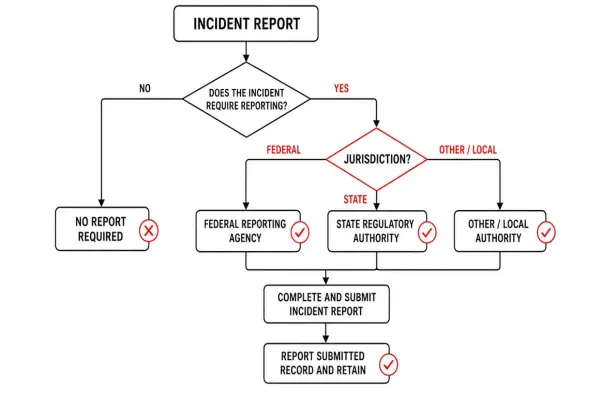
- Is there a incident response plan if PHI was sent to the wrong tool?
Frequently Asked Questions
Can we use AI if we de-identify data first?
Yes, when de-identification is done correctly and documented. Safe Harbor removal of 18 identifiers or expert determination is required. Residual risk remains if free text can be re-identified (rare disease + small town, for example). Legal review is advisable for recurring workflows.
Is AI transcription of patient calls allowed?
Only with a HIPAA-compliant vendor, BAA, and appropriate consent and notice practices. Consumer transcription apps without healthcare tiers are not suitable for clinical or billing calls containing PHI.
Can AI draft patient portal messages?
Yes with guardrails: use approved tools, avoid pasting full charts into consumer tiers, require clinician review before send, and log what was AI-assisted. Templates without live PHI in the prompt reduce risk during drafting.
What are minimum HIPAA AI tools requirements?
Signed BAA, HIPAA-eligible configuration, access controls, audit capability, encryption in transit and at rest, breach notification terms, and minimum necessary data handling. A vendor marketing "secure AI" without a BAA is not sufficient for PHI workflows.