Healthy teams experiment. Unhealthy teams let experiments become shadow production: new tools, new data classes, new automations, and new invoices with no hypothesis, no owner, and no stop date. Scope creep turns innovation budget into shelfware budget.
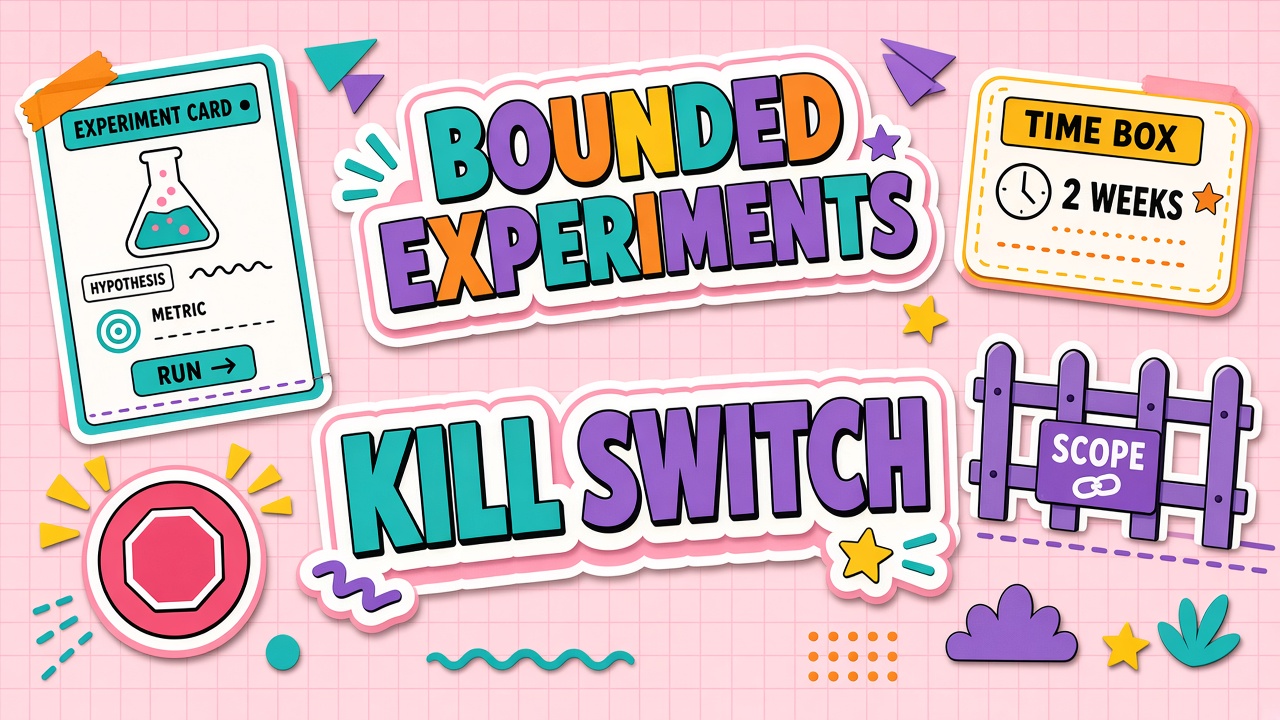
An AI tool experimentation framework separates experiments from production with a written card: hypothesis, bounded scope, time box, resource cap, kill criteria, and learning archive. This guide shows how to run bounded trials without blocking useful discovery. When an experiment graduates, compare winners in AI productivity tools and AI automation tools with the same rubric you used during the trial.
Experiment vs Production Distinction
Production workflows have owners, SLAs, monitoring, and rollback paths. Experiments have hypotheses and end dates. If an experiment lacks an end date, call it production and govern it accordingly. If production lacks monitoring, call it an experiment and reduce blast radius immediately.
Experiments use sandbox accounts, synthetic or redacted data, and explicit non-goals. Production uses approved tools, classified data tiers, and reviewer checkpoints appropriate to risk.
Hypothesis and Scope Statement
Every experiment card opens with a falsifiable hypothesis: "If we use [tool] on [workflow] for [population], then [metric] will improve by [target] within [duration] without increasing [risk metric]." Scope lists who, what data, what actions are allowed, and what is explicitly out of scope.
| Experiment card field | Example |
|---|---|
| Hypothesis | AI summarization cuts ticket triage time twenty percent |
| Scope | Tier-one tickets, three agents, internal tool only |
| Non-goals | No customer-facing sends; no PII in prompts |
| Owner | Named operator with kill-switch authority |
| Success threshold | Median triage time down fifteen percent with stable QA score |
Time Box and Resource Cap
Time boxes default to two to four weeks for tool trials unless integration depth justifies six. Resource caps include maximum spend, maximum seats, and maximum engineer hours for setup. When either cap hits, the experiment pauses for continue, change, or stop decision rather than silent extension.
Kill Switch Criteria
Kill switches are pre-agreed events that halt the experiment immediately: data class violation, quality incident, cost overrun beyond cap, scope breach affecting unauthorized users, or vendor security alert. Name one person who can revoke credentials without committee approval.
Softer stop criteria include missing success threshold at time box end, inability to fix blockers within one week, or negative signal from the skeptical participant cohort.
Documenting Learnings for the Team
End every experiment with a one-page learning note: hypothesis result, metrics, what worked, what failed, and recommendation (graduate, revise, archive). Blameless tone encourages honesty. Failed experiments with good documentation are assets; successful experiments without documentation repeat the same discovery tax later.
Experiment Backlog Prioritization
Score proposed experiments on impact, confidence, cost, and reversibility. Run highest score that fits current caps. Park the rest visibly so enthusiasm does not spawn shadow trials. One backlog owner approves new cards; no card, no sandbox account.
Weekly experiment standup (fifteen minutes)
Active experiments only: days remaining, spend vs cap, leading metric trend, kill-switch near-misses, and decision preview for ending week. No new scope discussion without a revised card.
Graduating experiments to pilots
When an experiment hits success thresholds, open a formal pilot charter rather than silently expanding seats. The charter adds production data rules, broader population, and executive decision authority experiments deliberately skipped.
Resource Caps That Actually Hold
Caps need teeth: prepaid budget codes, seat limits enforced by IT, and calendar end dates that disable sandbox credentials automatically. Soft caps that rely on goodwill become suggestions. Publish remaining budget weekly during active experiments so enthusiasts see limits before overspending.
Include engineer hours in caps. A "free" trial that consumes forty integration hours is not free. Track setup time explicitly in the learning note so future experiments price realism correctly.
Blameless learning archive
Store ended experiment cards in a searchable archive tagged by workflow, tool category, and outcome. Before starting a new test, search the archive for prior failures in the same space. Reinventing disproven hypotheses is the hidden cost of poor documentation.
Frequently Asked Questions
How do we run blameless postmortems on failed experiments?
Focus on system gaps: Was scope too broad? Was data ready? Was the metric wrong? Avoid scoring individuals for hypothesis failure. Celebrate kills that happened before large spend. Share learnings in the weekly review ritual.
How many concurrent experiments should a team run?
Most teams under twenty people should run one to two active experiments per quarter per department. More than that fragments attention and duplicates tooling. A visible experiment backlog prioritizes the next test.
Can scope expand mid-experiment?
Only with a new signed card diff: updated hypothesis, caps, and kill criteria. Verbal scope expansion is how creep enters. Treat expansion like a new experiment branch.
When does an experiment graduate to production?
Graduate when success thresholds pass, kill criteria stay clean, security review covers expanded data, and a production owner accepts SLAs. Graduate to a pilot charter if rollout affects more than the experiment population.
Experiment Card Worked Example
Hypothesis: AI ticket tagging reduces triage time for tier-one support. Scope: twenty agents, English tickets only, tags from approved taxonomy. Non-goals: auto-close, customer-visible replies. Time box: three weeks. Spend cap: five hundred dollars API plus forty engineer hours. Kill switches: any PII in training paste, tag accuracy below seventy percent on sample, or more than two wrongful escalations traced to bad tags.
Success: fifteen percent median triage time reduction with QA score stable. Owner: support ops lead. End decision: continue to pilot charter with expanded queue, change taxonomy prompts, or stop and archive card.
This level of specificity fits one page and prevents the experiment from becoming "try AI on support" without boundaries.