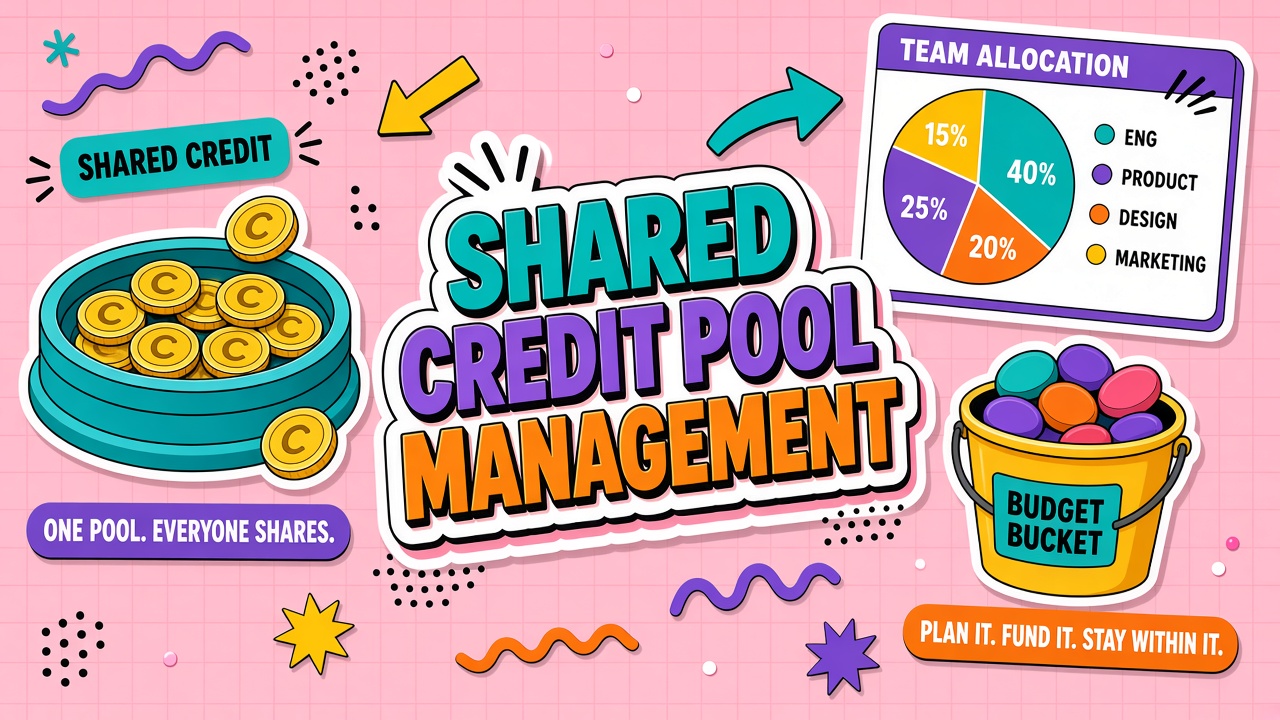
One engineering squad runs overnight batch jobs and burns the company's monthly AI credits by the tenth. Marketing discovers empty quotas before a campaign launch. Ai credit pool management turns a shared wallet into governed budgets with visibility, caps, and fair recovery when usage is uneven.
Vendors sell org-level credit pools because procurement prefers one invoice. Without internal rules, pools behave like tragedy-of-the-commons. Teams adopting AI coding assistants and AI writing assistants need allocation models before the first viral internal demo.
Pool vs Per-Team Wallets
Org pools maximize flexibility; per-team wallets maximize accountability. Hybrid models keep a central pool for overflow while giving each department a monthly allocation that refills on schedule.
Pools suit unpredictable R&D spikes. Wallets suit marketing and support with steady campaign rhythms. Document which teams draw from which structure to avoid shadow charging.
Some vendors support sub-accounts or API key budgets natively. Where they do not, enforce limits in your gateway proxy that tracks keys per team.
Finance should see both views: departmental wallet utilization and org pool headroom. Executives care about total burn; managers care about their slice.
Soft Caps and Hard Stops
Soft caps trigger alerts at eighty percent of wallet; hard stops block requests at one hundred percent unless approved uplift. Pre-production environments should hard-stop by default to prevent test script accidents.
Define who can approve temporary uplift: engineering director, finance partner, or automated ticket workflow. Log approver, amount, and expiry. Temporary uplifts that never expire become permanent budget leaks.
Soft caps without owners become ignored email noise. Route alerts to Slack channels with on-call rotation for the team that owns the API key.
Monthly True-Up Process
Reconcile actual burn to allocations monthly. Teams under budget may roll a percentage forward or return surplus to the org pool per policy. Over-budget teams true up from next month's allocation or cross-charge internal cost centers.
Publish a simple report: team, allocated, used, variance, notes. Transparency reduces political fights about who "wastes" credits on experiments.
Align true-up calendar with vendor billing cycle. Internal monthly views that disagree with vendor invoices erode trust in the governance model.
Fairness When Usage Is Uneven
Not all teams generate equal value per credit. Platform engineering may consume heavily while enabling ten product teams. Separate "platform" wallets funded centrally from "product feature" wallets tied to revenue teams.
Seasonal teams (events, retail) need burst allowances without permanent allocation inflation. Time-bound burst credits expire automatically.
Avoid punishing innovation: reserve a small org-wide experimentation pool anyone can request for time-boxed pilots with lightweight approval.
Credit pool governance checklist
- Define pool vs wallet model per department
- Assign API keys or sub-accounts per cost center
- Configure 50%, 80%, 100% alert thresholds
- Document uplift approval workflow with expiry
- Run monthly true-up report shared with finance
- Reserve experimentation pool for pilots
Alert Configuration Guide
Configure alerts at fifty, sixty-five, eighty, ninety-five, and one hundred percent of each wallet. Fifty percent is informational for squad leads. Eighty percent requires acknowledgment in Slack within four business hours. Ninety-five percent pages platform on-call. One hundred percent triggers hard stop on non-production keys and finance notification on production keys unless pre-approved uplift exists.
Test alerts monthly with synthetic usage in staging. Alerts that fail silently erode trust faster than no alerts. Log alert delivery IDs the same way you log deployment IDs.
Credit Pool Governance Roles
Central platform owns vendor relationship and discount tiers. Department leads own allocation requests. Finance owns true-up approval. Security owns key rotation when employees transfer teams. Without RACI, credit pool governance becomes endless Slack threads about who moved ten thousand credits.
Allocate AI Credits Departments Playbook
Start quarterly with baseline equal share per department headcount band. Allow one uplift request per quarter backed by workflow business case: expected outputs, quality bar, and pilot metrics. Denied requests return to queue with written reason. Approved uplifts expire unless renewed. This keeps shared AI credits teams aligned to outcomes while preserving a fair default.
Integration With Chargeback
Credit pools pair naturally with chargeback models. Tags that drive wallet allocation should match tags on monthly allocation reports. When chargeback goes live, wallets become enforcement levers: departments that exceed chargeback allocation hit hard stops first in staging, then production if pattern repeats.
Implementing Soft Caps in Practice
Soft caps are warnings; hard stops block spend. Configure soft caps per wallet at eighty percent of monthly allocation. Require squad lead acknowledgment in ticketing system before raising cap to ninety-five percent. Hard stop at one hundred percent on staging keys always. Production may use notify-only at one hundred with pre-approved uplift token, but finance must define when notify-only is allowed. Document exceptions in quarterly governance review.
Credit pool management fails when engineering treats soft caps as suggestions. Automate acknowledgment tracking. Unacknowledged eighty percent alerts escalate to director after forty-eight hours. This keeps shared ai credits teams accountable without surprise outages on production paths that truly need burst capacity.
Monthly True-Up Finance Handoff
Export three artifacts each month: vendor usage by tag, internal allocation spreadsheet, and exception log. Finance matches vendor total to sum of tags within tolerance. Untagged spend above two percent blocks month close until platform assigns retroactive tags or central reserve absorbs with sponsor approval. True-up is not spreadsheet hygiene; it is the control that makes chargeback credible later.
Operational Checklist
Assign a single owner for monthly refresh. Publish assumptions where finance and engineering both edit. Tie forecast or policy changes to ticket IDs. Review variance before month close, not after invoice payment. Run tabletop exercises when vendors announce pricing or deprecations. Keep archived exports for audit comparison quarter over quarter.
Document decisions in plain language any new hire can follow. Operational discipline matters as much as spreadsheet formulas or contract clauses. Teams that treat AI spend as unplannable noise get unplannable invoices. Teams that treat spend as a managed metric catch drift early and negotiate from data.
Cross-Functional Alignment
Platform owns technical tags and caps. Finance owns forecast and chargeback posting. Procurement owns contract language. Product owns workflow rollout dates that drive usage. Security owns trial data classification. Weekly five-minute sync during rollout quarters prevents each function optimizing locally while global spend drifts. Alignment is boring work that prevents exciting overage surprises.
Common Mistakes to Avoid
Mistake one: single org-wide average hiding squad spikes. Mistake two: ignoring human review labor in ROI or unit economics. Mistake three: annual commit sized on peak pilot week. Mistake four: alerts configured without owners. Mistake five: sunset without migration support. Mistake six: treating free tier as production. Mistake seven: streaming timeouts fixed by disabling streams without root cause. Mistake eight: duplicate responses patched in UI only while webhooks still double-write. Avoiding these patterns saves more than marginal token discounts.
Metrics to Track Monthly
Track spend variance versus plan, tag coverage percentage, alert acknowledgment time, dispute count, unused license count, cost per usable output where applicable, stream completion rate for customer-facing apps, and duplicate side effect rate for integrated workflows. Pick three metrics primary for your pillar; log the rest as secondary. Review trend not single points. A metric without owner and target is dashboard decoration.
Share metrics with department leads in language they can act on. Finance sees dollars. Engineering sees error rates and timeouts. Product sees adoption and quality. Same underlying data, different emphasis, one source of truth export from vendor and internal logs reconciled monthly.
Implementation Timeline
Week one: assign owners and export baseline data from vendor admin or application logs. Week two: draft spreadsheet, policy, or runbook sections relevant to your pillar. Week three: pilot with one squad and fix tagging or alert noise. Week four: publish org-wide with office hours. Month two: first variance or true-up review and adjust assumptions. Month three: executive summary with decisions made from metrics, not only spend totals.
Skipping the pilot week creates alert fatigue and mistrust in chargeback numbers. Investing four weeks upfront pays back when finance, security, and engineering reference the same artifacts instead of rebuilding from scratch each quarter. Treat this as operational infrastructure parallel to the AI features themselves.
Frequently Asked Questions
Do unused credits roll over month to month?
Vendor rules vary; internal policy can be stricter. Many orgs allow limited rollover (ten to twenty percent) to avoid hoarding while reducing waste anxiety.
Vendor credits expire at year-end. How do we plan?
Track expiry dates in the same spreadsheet as forecasts. Schedule discretionary projects before forfeiture. Negotiate extension with vendor if large balance remains from delayed projects.
One API key is shared across teams. Fix?
Split keys per team immediately. Shared keys make attribution and caps impossible. Rotate the old key after migration.
Engineering and content teams share one writing product. Split how?
Use separate seats or workspaces if vendor supports them. Otherwise proxy layer tags requests by source system for chargeback even on one key.
Review this guide quarterly against your vendor admin console and finance exports. Interfaces change; caps move; new premium toggles appear inside familiar SKUs. A quarterly thirty-minute review keeps policy, forecast, and contract language aligned with what the product actually bills. Assign the review to a named role, not a mailing list.
When in doubt, measure for two weeks before committing annually or sunsetting a vendor. Short measurement windows beat long debates. Export logs, tag them, compute the metric or variance, then decide. Data ends internal stalemates that otherwise consume more payroll than the AI line item under discussion.
The Bottom Line
Shared ai credits teams need wallets, caps, true-ups, and fairness rules before the pool hits zero mid-month. Govern credits like cloud spend: visible, allocated, and alert-driven.