AI subscriptions often auto-renew with thirty-day notice buried in order forms. Teams discover the renewal only when procurement forwards the invoice. A structured AI tool contract renewal workflow starts sixty days out: audit usage, re-run risk reviews, negotiate from data, and prepare migration if the tool no longer fits.
Renewals touch AI API contracts with variable spend and seat-based AI marketing suites alike. The timeline below applies to both; only the usage metrics and stakeholders change.
T-60: Usage Audit and Stakeholder Survey
Sixty days before renewal, pull usage and ask stakeholders if they still need the tool. Compare active users to purchased seats. List integrations and workflows that depend on the product. Survey department leads with three questions: value delivered this year, critical workflows, and willingness to migrate if pricing rises more than ten percent.
Identify shadow alternatives employees already use. Renewal conversations fail when leadership defends a platform the floor abandoned. Export support ticket volume and incident history for the contract period. Low usage plus high incident rate is a strong signal to down-tier or exit.
Document qualitative wins and failures alongside usage charts. A tool with moderate seat use may still justify renewal if it powers a revenue-critical workflow. Conversely, high seat use with no measurable outcome is a consolidation candidate. Stakeholder survey responses should name workflows, not generic satisfaction scores.
Compare current contract terms to what you would accept on a new purchase today. Standards evolve; renewals should not grandfather unacceptable data terms simply because the tool is familiar.
T-30: Security and Legal Re-Review
Thirty days out, security and legal revalidate the vendor. Check for new subprocessors, changed data processing terms, and certifications approaching expiry. AI vendors update model training policies and logging practices frequently; last year's review may be stale.
Legal should confirm auto-renewal clause, price escalation caps, and termination for convenience. Security should confirm SSO, SCIM, audit logs, and retention settings still match policy. Block signature if open findings from the original procurement remain unresolved unless risk acceptance is documented at executive level.
| Milestone | Owner | Deliverable |
|---|---|---|
| T-60 | IT / ops | Usage report and stakeholder summary |
| T-30 | Security / legal | Risk memo and contract redlines |
| T-14 | Procurement | Negotiation targets and walk-away |
| T-0 | Program lead | Signed renewal or migration kickoff |
T-14: Negotiation Targets and Walk-Away Point
Two weeks before notice deadline, set targets and a walk-away point. Targets may include seat true-down, API tier alignment, improved SLA credits, or bundled training. Walk-away is the maximum price or risk level where migration is cheaper than staying. Walk-away without a migration plan is a bluff vendors recognize.
Negotiation levers beyond discount: multi-year only if exit clauses stay fair, case study trade only with marketing approval, and professional services credits if adoption lags. Bring usage and incident data to every call. Vendors discount more when churn risk is credible and documented.
T-0: Migration Plan If Not Renewing
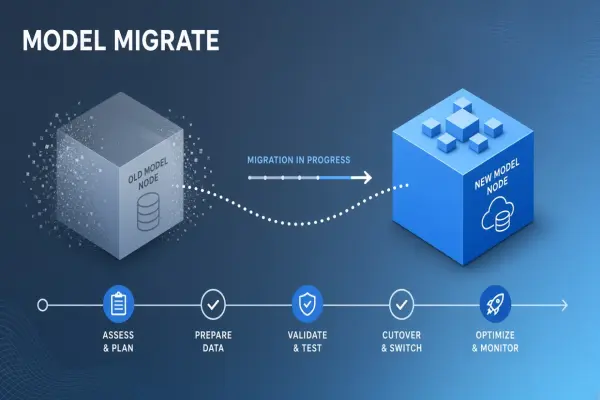
If you do not renew, T-0 starts migration, not surprise. Export data per contract terms. Map feature parity gaps. Communicate cutover dates to users. Parallel access periods reduce panic but double cost; cap parallel run at a defined window.
Migration plans should list API consumers, Zapier flows, and embedded customer features first. Those dependencies cause the longest outages when ignored. Assign a single migration lead with authority to freeze new integrations on the outgoing tool during transition.
Store renewal decisions in a central register: renew, renegotiate, replace, or retire. Include decision date, approver, and next review. Procurement teams managing dozens of AI subscriptions lose track without a register; auto-renewals slip through during reorganizations.
60-Day Renewal Timeline Checklist
T-60: usage audit, stakeholder survey, shadow tool scan. T-45: draft recommendation memo for sponsor. T-30: security and legal review complete. T-21: negotiation kickoff with vendor. T-14: walk-away decision locked. T-7: signature or migration project charter issued. T-0: contract effective or access terminated per plan.
Calendar every notice deadline at contract signature, not only at renewal time. AI vendors increasingly bundle model access changes into renewal cycles; early calendar discipline buys negotiation time.
Negotiation Levers Without Vendor Ranking
Usage true-down: reduce seats or API commits to observed levels. Term flexibility: shorter renewal with price reopener if model pricing changes. SLA credits: apply prior quarter misses to renewal invoice. Training and onboarding: professional services hours if adoption lags. Data and exit terms: export APIs, transition support, and deletion certificates.
Avoid negotiating only on list price discount. AI vendors often concede on terms, credits, or tier alignment when margin on discount is tight. Walk-away point should combine price and risk: a cheaper vendor with weak DPA may cost more after incident response and migration.
Document negotiation outcomes in the renewal register: what changed, effective date, and who approved. Next year's T-60 audit compares promised roadmap items from last renewal to actual delivery. Vendors respond better when you reference prior QBR commitments with dates.
Frequently Asked Questions
How do we avoid auto-renew traps?
Track notice deadlines in procurement calendar with ninety-day reminders. Require legal review before any multi-year auto-renew clause. Some teams disable auto-renew in favor of annual explicit orders even at slightly higher list price for control.
When are multi-year AI contracts worth it?
When usage is stable, switching cost is high, and price protection exceeds model obsolescence risk. Avoid multi-year locks on fast-moving API-only stacks unless exit and price reopener clauses are strong. Model generations can make three-year commits feel expensive by year two.
What if the team bought the tool on a credit card?
Bring it into the renewal workflow anyway. Card renewals still auto-charge. Centralize before renewal so security review and volume pricing apply. Shadow card spend is how organizations end up with ten overlapping writing tools.
Can renewal season drive tool consolidation?
Yes. T-60 stakeholder surveys should ask which tools overlap. Procurement can bundle negotiations or retire redundant contracts when usage data supports consolidation. Consolidation without workflow mapping creates new shadow tools; pair retirement with approved alternatives documented in the knowledge base.
Present consolidation options to the executive sponsor with tradeoffs: savings, migration cost, and user disruption. Sponsors decide when two tools serve different risk profiles even if features overlap. Renewal workflow outputs should include a explicit renew, consolidate, or exit recommendation, not only a signature line.
Renewal workflow discipline prevents zombie subscriptions that auto-charge while usage flatlines. It also prevents panic renewals signed during outages when leverage is poor. Starting at T-60 gives procurement, security, and champions time to influence terms instead of rubber-stamping vendor paperwork the week before expiry.
Pair renewal decisions with migration communication plans when you exit. Users learn about replacements early; IT executes cutover with budget already approved. Renewal season is portfolio management, not paperwork.
T-14 walk-away points protect procurement from signing under deadline pressure. Walk-away includes price ceiling, required security terms, and minimum SLA credits. If vendor refuses, migration plan activates before auto-renew locks you in. Walk-away without migration funding is theater.
Stakeholder surveys at T-60 should ask quantitative and qualitative questions: seats used, workflows dependent, incidents last year, and single biggest frustration. Qualitative answers surface political land mines quantitative usage misses, such as a team planning migration regardless of discount.
Auto-renew traps hide in order form footnotes: notice windows, price escalators, and true-up clauses. Calendar every deadline at signature. T-30 security and legal re-review catches subprocessors and logging changes models introduced mid-contract. T-0 without a signed renewal should mean migration plan execution, not emergency extension at vendor list price.
The sixty-day renewal timeline gives procurement leverage: usage audit, stakeholder survey, security re-review, negotiation targets, and migration plan if exit wins. Negotiation levers include true-down seats, SLA credits, training hours, and data export terms, not only percentage discounts. Multi-year deals need exit clauses and price reopeners when model economics shift. Renewal register tracking prevents zombie subscriptions and documents renew, consolidate, or exit decisions for auditors.
Calendar T-60 the day you sign, not the week before renewal. Assign one procurement DRI and one technical validator so usage exports and security memos arrive before negotiation starts. If stakeholders recommend exit, fund migration communications and engineering parallel run in the same approval packet as the non-renewal decision. Renewals without usage evidence reward vendor optimism; renewals with data reward your organization with fair terms or a clean exit.
Procurement, IT, security, and sponsors share the sixty-day renewal timeline so no function learns about expiry from an auto-charge email. Structured renewals turn subscriptions into portfolio decisions.
T-30 legal and security re-review catches subprocessors and logging changes mid-contract. T-14 locks walk-away and negotiation targets. T-0 executes signed renewal or funded migration. Multi-year deals need exit clauses when model economics shift faster than contract length. Auto-renew notice deadlines belong in procurement calendar at signature, not rediscovery week before charge.
Renewal workflow outputs should state renew, consolidate, or exit with named migration lead when exit wins. Procurement gains leverage when stakeholders, security, and usage data arrive before the notice window closes.
Usage audits at T-60 should include integration dependencies and shadow tools. Security re-review at T-30 catches model and subprocessor changes. Negotiation at T-14 uses walk-away points backed by migration funding. Renewal season is when portfolio decisions happen; treat it as program governance, not accounts payable routine.
Calendar renewal milestones when the contract is signed so T-60 preparation is never a surprise scramble.
Document every renewal decision in a central register with approver, date, and next review so subscriptions never auto-renew unnoticed by procurement or finance teams.
A disciplined sixty-day renewal workflow turns subscription autopilot into portfolio governance with data, security review, and a clear exit path when vendors no longer fit.