Finance teams inherit AI invoices that swing month to month. Seat counts grow quietly. API usage spikes after one successful workflow demo. Model list prices change with little warning. Without a repeatable process, AI tool budget forecasting becomes guesswork and surprise approvals.
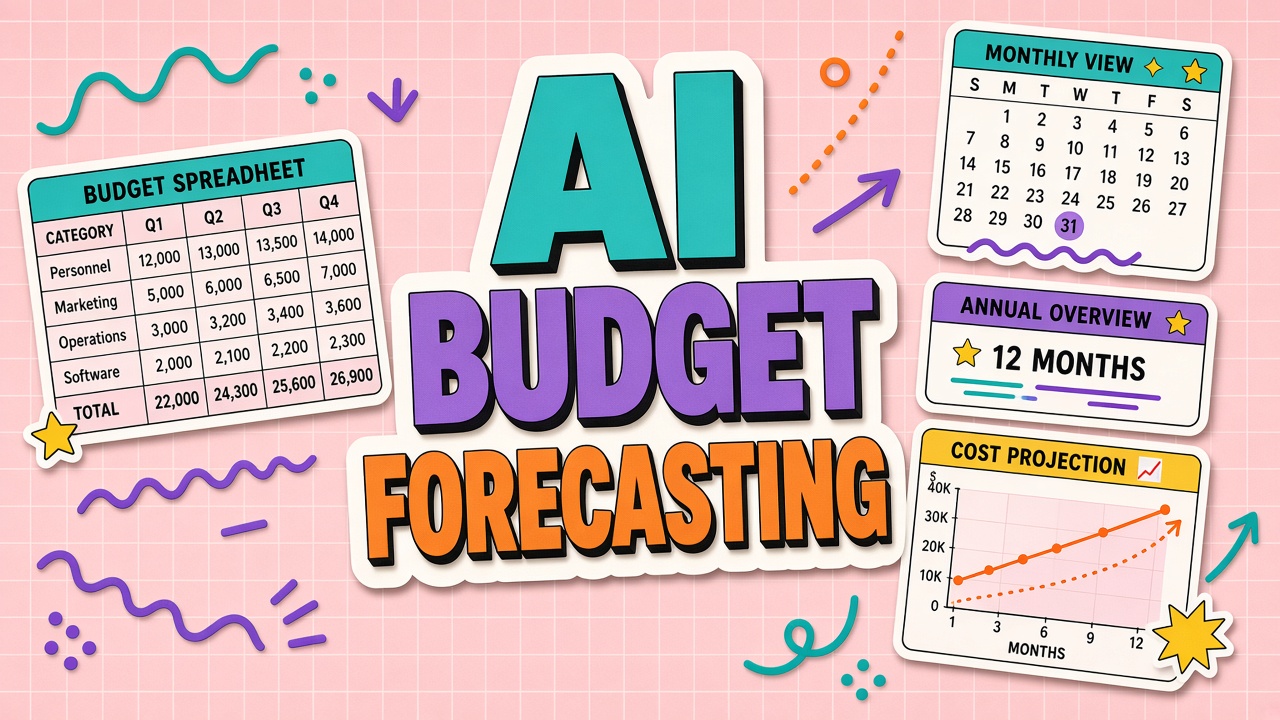
This workflow separates fixed seat costs from variable AI API burn, models headcount and new workflow drivers, and runs scenarios for price changes and usage spikes. Pair it with AI automation rollout plans so projected automation savings or costs appear in the same forecast document.
Baseline: Fixed Seats vs Variable API
Split your AI stack into fixed subscriptions and variable consumption. Fixed items include per-seat chat licenses, design tools, and platform minimums. Variable items include token billing, image generation credits, transcription minutes, and overage charges. Build the baseline from trailing three-month averages, not a single peak month unless that peak is the new normal.
Export vendor admin reports on the same calendar day each month. Tag costs by cost center in your finance system even if procurement pays centrally. Baseline accuracy depends on allocation tags more than on spreadsheet formulas. If tags are missing, fix tagging before tuning forecast math.
| Cost type | Forecast input | Review frequency |
|---|---|---|
| Fixed seats | Licensed headcount × price | Monthly |
| API tokens | Daily average × days × growth factor | Weekly during rollout |
| Credits / minutes | Usage per workflow × volume | Monthly |
Growth Drivers: Headcount, New Workflows
Forecast growth from planned drivers, not hope. Headcount hiring plans add seats on known start dates. New workflows add API load: document expected requests per day, average tokens per request, and pilot versus production ramp. Marketing campaigns that embed AI features need a dated traffic assumption tied to the campaign calendar.
Ask department leads for a quarterly "AI demand" line: new use cases, expected users, and go-live month. Convert use cases into numbers with engineering help. A vague "we will use more AI" line item should not enter the forecast without a named workflow and owner.
In prose, the monthly variable forecast often looks like this: take the trailing thirty-day daily average spend, multiply by days in the month, then apply a growth factor for approved rollouts (for example 1.15 if two teams go live mid-quarter). Add fixed seat changes on their effective dates. Document every assumption in a comment column finance can audit.
Separate experimental spend from production spend in the forecast model. Experiments need caps and end dates; production lines need growth curves tied to business metrics such as ticket volume or content output. Mixing them produces either over-funded pilots or under-funded rollouts when experiments succeed.
Track unit economics where possible: cost per summarized call, cost per generated image, cost per automated ticket deflection. Unit costs make headcount-driven growth projections credible to finance reviewers who do not live inside token dashboards daily.
Scenario: Model Price Change, Usage Spike
Run at least three scenarios: base, upside, and stress. Base uses committed plans and approved rollouts. Upside adds experimental workflows or faster adoption. Stress models vendor price increases, loss of volume discounts, or a viral internal tool that doubles API calls.
For API-heavy stacks, a ten percent list price change on the primary model can move annual spend materially. Model routing to cheaper models may offset part of the increase; include routing plans only if engineering commits to a date. Usage spike scenarios should name the circuit breaker: rate limits, budget caps, or feature throttles that prevent runaway spend.
Finance Review Cadence and Variance Alerts
Review forecast versus actual monthly with variance thresholds. Alert when any line exceeds ten percent over forecast or when cumulative year-to-date variance crosses a dollar threshold your CFO sets. Investigate before the quarter closes, not during renewal panic.
Variance meetings should include the workflow owner, not only finance. "API overage" is not actionable; "support bot pilot doubled tokens per ticket" is. Update the forward forecast the same week you explain variance so the next month inherits corrected assumptions.
Present forecast confidence bands to leadership: base case plus stress case without pretending precision. AI pricing and adoption are volatile; honest ranges build trust better than a single dollar figure that misses by forty percent next quarter. Tie stress case triggers to predefined actions such as throttling non-critical workflows or deferring new pilots.
Forecast Formula in Prose for Finance Partners
Annual forecast equals sum of monthly forecasts plus contingency buffer. Each monthly forecast equals fixed subscriptions plus (variable daily average times days times growth factor) plus one-time project fees. Contingency buffer often ranges ten to twenty percent of variable API spend until usage patterns stabilize for twelve months.
Finance partners should receive a glossary translating vendor jargon: tokens, credits, seats, minimum commits, and true-up clauses. Shared vocabulary prevents mismatches where engineering thinks in tokens and procurement thinks in annual contract value only.
Scenario Planning for Leadership Reviews
Present three scenarios in every quarterly leadership review. Base: approved rollouts on schedule, stable model pricing. Growth: faster adoption, one additional department pilot promoted to production. Stress: vendor price increase, usage spike from viral internal tool, or delayed automation savings.
Each scenario lists dollar impact, probability estimate, and trigger conditions. Leadership approves pre-authorized responses: throttle non-critical workflows, defer hires tied to AI productivity gains, or renegotiate contracts. Scenarios without pre-approved responses become panic during the first overage invoice.
Revisit scenarios when major vendor announcements land: new model families, pricing changes, or deprecated endpoints. Engineering should flag technical triggers (migration deadlines) to finance the same week, not at month-end close.
Frequently Asked Questions
How do chargebacks fit into AI budget forecasting?
Forecast centrally, allocate in the same model you use for actuals. Departments see their forecast share so they throttle pilots before central budget breaks. Chargeback rules should be published before fiscal year start, not retroactively applied after overages.
Can departments own their own AI forecast lines?
Yes, with a central template and shared assumptions for platform-wide API rates. Department lines roll up to a portfolio view. IT maintains vendor-wide minimums and true-ups separately so double counting does not occur.
Should we forecast monthly or only annually?
Monthly operational forecast with quarterly reforecast to leadership. Annual numbers are the sum of monthly plans plus scenario buffers. AI spend is too volatile for a single annual number without monthly course correction.
Tie monthly reviews to vendor billing cycles. Many API invoices lag usage by days; align internal reporting cutoffs with vendor statements to avoid phantom variance. When invoices arrive, reconcile before closing the month so finance and engineering share one truth.
How do we forecast a tool we have not purchased yet?
Model pilot spend separately with a cap and kill date. Use vendor list price and engineering estimates for tokens per workflow. Promote to production forecast only after pilot metrics justify scale. Pilots without caps belong in scenario upside, not base budget.
Document assumptions in the forecast workbook: expected users, requests per user per day, average tokens per request, and model price per million tokens. When any assumption changes more than twenty percent, trigger a reforecast conversation with the workflow owner before the month closes.
Forecasting maturity shows up when finance and engineering argue about assumptions with shared data, not when either side is surprised by the invoice. Build the habit monthly; annual budgets become aggregation instead of guesswork. Tie forecast reviews to vendor QBRs so commercial and technical trends update the same model.
Sponsors use forecast variance to prioritize which workflows get optimization engineering. A line item over budget with flat business value is a cut candidate. A line item over budget with measured outcome gains is a expansion candidate with clearer ROI narrative for the board.
Chargeback models work best when departments see their forecast line monthly, not only after overages. Transparency changes behavior: teams throttle experiments when they see burn rate in real time. Central IT can still negotiate volume discounts while departments retain accountability for workflow choices.
Annual planning should inherit monthly actuals automatically. Manual annual re-entry introduces errors and stale assumptions. Finance systems that tag AI spend by workflow ID make rollups credible to auditors and to engineering leaders defending headcount plans tied to automation savings.
Finance review cadence should include variance alerts at ten percent monthly and twenty percent cumulative quarterly. Alerts trigger a fifteen-minute review with workflow owner before month close. Forecasting is a living workflow, not a January spreadsheet exercise forgotten until overrun.
Baseline splits between fixed seats and variable API burn make growth drivers visible: headcount, new workflows, and model price changes each get scenario lines. Departmental chargebacks align accountability when central procurement pays invoices. Sponsors review forecast variance alongside adoption to decide which workflows deserve optimization investment versus sunset.
Start monthly forecasting with three tabs: fixed seats, variable API, and assumptions log. Add scenarios in quarter two once baselines stabilize. Pair every forecast line with a workflow owner name finance can call when variance spikes. Without named owners, forecasts become finance-only exercises engineering ignores until overages hit.
AI budget forecasting succeeds when finance and engineering share one assumptions log updated monthly. Volatility is normal; surprise is optional when variance reviews happen before invoices close.
Scenario planning presents base, growth, and stress cases with pre-approved responses such as throttling pilots or renegotiating API tiers. Department chargebacks align accountability when central procurement pays vendors. Annual numbers should roll up from monthly actuals, not a separate guess each January. Forecast discipline turns AI spend from surprise overages into managed growth.