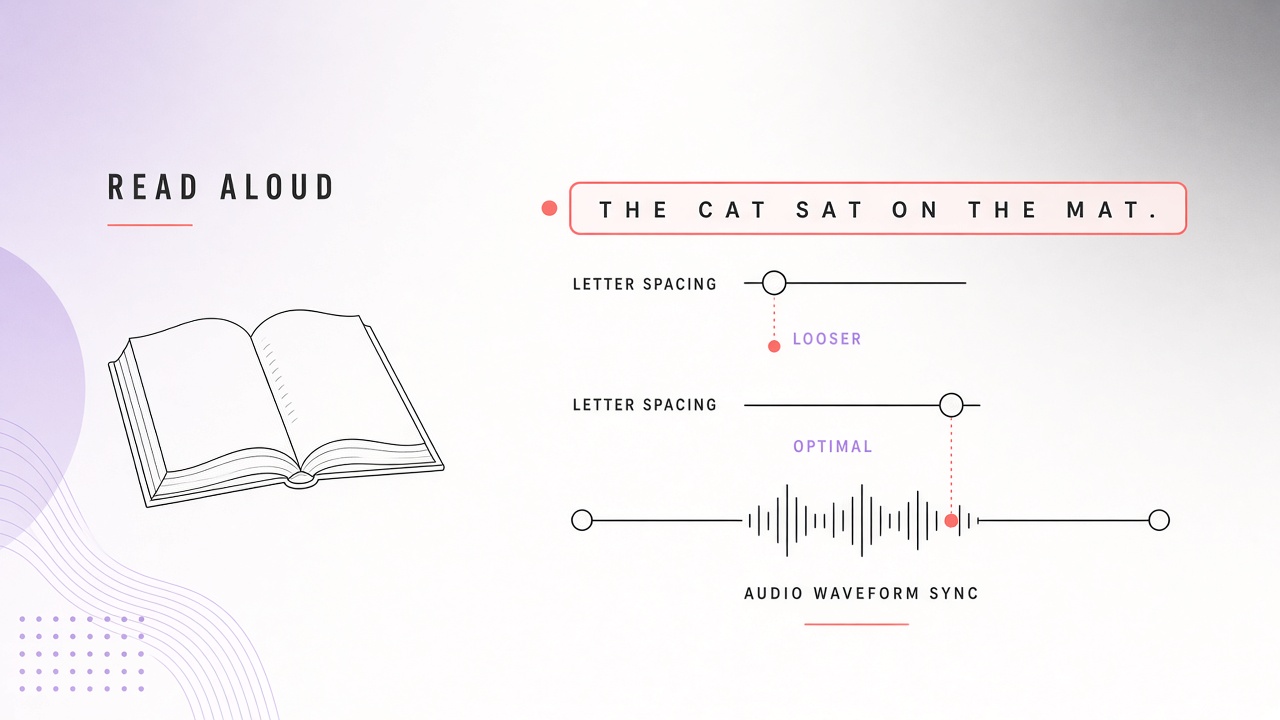
Dyslexia affects how readers map letters to sounds, track lines, and hold sentences in working memory. Marketing for "dyslexia fonts" and AI simplifiers often outpaces peer-reviewed evidence. A rigorous ai dyslexia friendly text stack combines adjustable spacing, justified typography choices, optional lexical simplification with human oversight, and read-aloud synchronization rather than a single magic typeface. A 2017 study in Annals of Dyslexia (PMC5629233) found OpenDyslexic did not improve reading rate or accuracy compared to Arial and Times New Roman among children with dyslexia. Dyslexie font studies show mixed results depending on age and language. Teams evaluating AI image generator adjacent reading tools or browsing popular AI tools for education should separate evidence from packaging and design classroom pilots with measurable outcomes.
How Dyslexia Affects Reading Pathways
Dyslexia involves difficulties in phonological processing, rapid naming, and sometimes visual crowding where adjacent letters interfere with letter identification. It is not a vision problem cured by glasses alone, nor a sign of low intelligence. Readers may skip lines, reverse letter order, or fatigue quickly on dense paragraphs. Digital tools target different bottlenecks: wider letter and line spacing reduces crowding; text-to-speech offloads decoding; simplification reduces syntactic load. Effective interventions match the reader's profile rather than applying one preset to every student.
Comorbid conditions such as ADHD affect sustained attention during long passages. Tools that chunk text, highlight the current line, and offer progress markers address executive function as well as decoding. Schools should coordinate with speech-language pathologists and special education staff before mandating AI formatting across an entire district.
Typography and Spacing Adjustments
Letter spacing, word spacing, and line height often produce larger gains than switching to a branded dyslexia typeface alone. Research on extra letter spacing (tracking) shows benefits for some dyslexic readers in controlled studies, though effect sizes vary. Sans-serif fonts with clear distinction between similar glyphs (b/d, p/q) help when spacing is adequate. OpenDyslexic's weighted bottoms aim to anchor letters, yet PMC5629233 reported no significant reading rate improvement over common fonts in their child sample. Dyslexie font trials show context-dependent results; some readers prefer it subjectively without objective speed gains.
| Adjustment | Evidence summary | Implementation tip |
|---|---|---|
| Increased letter spacing | Moderate support in dyslexia literature | Offer slider, default +2 to 5 percent |
| Line height 1.5 to 2.0 | Reduces line skipping for many readers | Pair with ragged-right alignment |
| OpenDyslexic font | No reading rate gain in PMC5629233 | Allow choice, do not mandate district-wide |
| Shorter line length | Subjective comfort; fewer saccades | Max 65 to 70 characters per line |
AI formatting tools can apply CSS variables per user profile, storing preferences in browser local storage or SSO-linked accounts. Dark mode and cream backgrounds reduce glare for some readers; others need high contrast black on white. Avoid justified text that creates uneven word gaps.
AI Lexical Simplification Tradeoffs
Large language models can shorten sentences and replace rare words, but simplification risks meaning loss, factual drift, and reduced exposure to grade-level vocabulary students must learn. A summary that omits negation or conditional clauses can invert an author's intent. Science passages may lose technical precision when models substitute generic terms. Best practice treats AI simplification as a draft: teachers or students compare versions side by side, flag errors, and retain original text for assessment. Lexile or CEFR targets help only when validated against the simplified output, not assumed from marketing claims.
Multilingual classrooms face extra risk: simplification in one language may not align with bilingual IEP goals. Tools should log model version and prompt for audit when simplified text appears on high-stakes worksheets. For literature, simplifying destroys voice; poetry and primary sources need human adaptation, not automated paraphrase.
Read-Aloud Synchronization Benefits
Text-to-speech with word or sentence highlighting reinforces phoneme-grapheme mapping and keeps readers oriented during long digital assignments. Quality TTS voices reduce robotic fatigue; synchronized highlighting lets eyes follow audio, cutting line-loss errors. AI pipelines extract clean text from PDFs and EPUBs, then align timestamps via forced alignment or publisher-provided structure. Read-aloud sync pairs well with spacing adjustments: audio carries decoding while visual layout reduces crowding. Students should control speed and voice; forced fast playback helps nobody.
Commercial platforms such as Learning Ally and Bookshare offer human-narrated alternatives where prosody matters. AI TTS improves yearly but still mishandles heteronyms and inline equations. STEM content needs specialized parsers so "H2O" and fractions read correctly. Browser extensions that slap TTS on any webpage without structure often read navigation menus first; scoped region selection fixes that annoyance.
Classroom Adoption and IEP Context
Individualized Education Programs may specify assistive technology accommodations; district-wide AI formatting must not override IEP teams or parent consent for data collection. Pilots should measure words correct per minute, comprehension quiz scores, and student preference over six to eight weeks. Title I and IDEA funding can cover licensed tools when documentation ties features to measurable goals. Train teachers to export both original and formatted views for grading fairness. Privacy review is required when student reading data trains vendor models.
Chromebook deployments favor web-based formatters over native apps with uneven accessibility APIs. LMS integrations (Canvas, Google Classroom) should inject formatting at render time without altering source files teachers reuse across sections. When AI simplification is used, store the teacher-approved version as canonical so late enrollees see consistent text.
Chrome extensions that reformat any webpage on the fly help university students reading journal PDFs, but they can break LMS quiz integrity if simplification runs during timed assessments. IT policies should whitelist formatting tools only on reading assignments, not secure exam browsers. Parents of younger children report that read-aloud voices with natural prosody reduce frustration on homework nights, yet students still need explicit phonics instruction; TTS is accommodation, not replacement for structured literacy curricula endorsed by reading researchers.
Open-source projects such as OpenDyslexic remain popular in classrooms despite mixed evidence because students feel ownership over personalized settings. Combining user-chosen fonts with evidence-backed spacing defaults respects autonomy while avoiding false medical claims in district marketing. Researchers continue to study whether dynamic line highlighting driven by eye tracking improves outcomes; those features are emerging in premium tools and need independent validation before Title I purchases scale statewide.
Frequently Asked Questions
Should schools mandate OpenDyslexic?
Mandates are hard to justify after studies such as PMC5629233 found no reading rate advantage. Offer font choice and spacing controls instead. Student agency improves engagement more than a single branded typeface on every worksheet.
Is AI simplification safe for tests?
High-stakes assessments require publisher-approved accommodations, not ad hoc AI paraphrase. Practice assignments can use simplification with teacher review. Never simplify secure test items without explicit authorization from the assessment vendor.
Which age groups benefit most?
Emerging readers in grades 2 through 5 often gain from TTS plus spacing; adolescents may prefer speed controls and dark themes. Adult workplace training needs plain language without patronizing tone. Calibrate defaults by cohort and collect feedback quarterly.
How should districts assess vendor claims?
Request peer-reviewed citations, independent pilot data, and FERPA-compliant data processing agreements. Red flags include guaranteed grade jumps, exclusive font licensing as the only intervention, and no export of student preference settings when contracts end.
Do these tools work for multilingual dyslexia?
Phonological differences across languages change which interventions help. Spanish and English bilingual programs need tools that simplify and narrate per language, not machine translation of English-simplified text alone. Consult bilingual specialists before rollout.
Read-aloud AI versus human audiobooks?
Human narration excels for literature prosody; AI TTS scales for daily worksheets and last-minute material. Many students use both. Ensure licensing permits classroom playback and offline access for students without home broadband.
Evidence-based design means publishing what did not work: if a district pilot shows no comprehension gain from AI simplification alone, report that and reallocate budget to tutoring or structured literacy programs. Transparency builds trust with parents skeptical of edtech hype. Researchers continue to study personalized spacing; tools that A/B test settings per reader may outperform static presets within a few years.
Workplace accommodations under ADA parallel school IEPs: employees with dyslexia may request formatting plugins for internal wikis and meeting pre-reads. IT departments should allow browser extensions that adjust spacing without breaking SSO security. Pairing formatted views with captioned video summaries covers multimodal learners who struggle equally with dense slide decks.
Marketing claims about "AI dyslexia cure" apps should be weighed against PMC5629233 and subsequent replication studies. Spacing, scaffolding, and qualified instruction remain the backbone; AI layers convenience on top when governed by educators who understand tradeoffs between simplification and vocabulary growth.
Public libraries lending literacy tablets preloaded with formatting apps extend access to families without home computers. Librarians report that teenagers engage more when they control voice speed and background color rather than receiving teacher-mandated fonts alone. Grant proposals should budget professional development for staff who coach caregivers on settings, not only student-facing licenses.
Neuroscience labs continue imaging reading circuits during dyslexia interventions; digital tools that log reading time and pause patterns may eventually personalize spacing per user. Until peer-reviewed adaptive systems ship, districts should treat static AI presets as starting points and measure comprehension with the same rigor applied to tutoring programs competing for the same budget line items.
Higher education disability services coordinate with publishers on digital textbook accessibility statements. When vendors claim dyslexia-friendly formatting, ask for controlled study citations rather than marketing PDFs. Students who receive both formatted text and extended time on exams need consistent versions across accommodations to avoid confusion during high-stakes weeks.
Workplace reasonable accommodations under the ADA sometimes include text formatting software for analysts reviewing long policy PDFs. HR should document which vendor settings were approved so replacements during laptop refreshes preserve employee preferences without repeating lengthy approval cycles each hardware cycle.