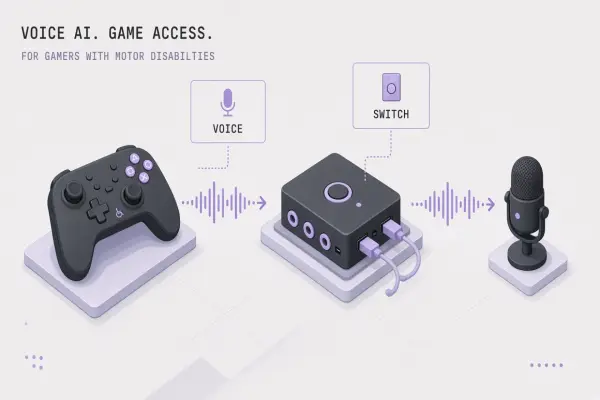
A teenager confides in a chatbot about loneliness. An adult user treats a Replika or Character.ai persona as a romantic partner. The product category is not a generic AI chatbot for customer support. Companion apps optimize for emotional engagement through memory, personality tuning, and often AI voice that sounds human. In September 2026, California Governor Gavin Newsom signed SB 1119, known as Adam's Law, establishing the most comprehensive U.S. regulatory framework for companion chatbots used by children. Adults face a different risk profile: parasocial attachment, dependency, and the false impression that a language model provides therapy. This guide explains why companions feel personal, what attachment research suggests, what the new California rules require, and what every user should verify before trusting a companion product.
Why Do Companion Chatbots Feel So Personal?
Companion chatbots feel personal because they combine persistent memory, curated persona traits, and responsive dialogue that mimics reciprocal relationship cues, not because the underlying model possesses consciousness or genuine care. Products like Replika, Character.ai, and Pi-style assistants let users name the bot, choose personality sliders, and resume conversations where prior sessions left off. Memory modules store preferences, inside jokes, and emotional disclosures. Voice synthesis adds prosody and warmth that text alone cannot convey. Each design choice increases perceived intimacy without changing the fundamental architecture: a probabilistic text generator trained to maximize engagement.
Engagement optimization matters commercially. Session length, daily return rate, and subscription conversion depend on users feeling heard. Companion apps therefore bias toward validation, curiosity about the user's day, and continuity across chats. That bias can be comforting. It can also reinforce unhealthy dependence when users substitute the bot for human relationships or professional mental health support.
What Does Attachment Research Say About AI Companions?
Parasocial attachment research shows that humans form one-sided emotional bonds with media personas; companion chatbots amplify that effect through interactivity, memory, and personalization. Parasocial relationships traditionally described fans who felt close to television characters or celebrities. Interactive companions add reciprocity cues: the bot asks follow-up questions, remembers a pet's name, and adjusts tone after a breakup. Studies on social chatbots report that users anthropomorphize systems quickly, especially when dialogue is warm and non-judgmental.
Researchers distinguish healthy recreational use from problematic patterns. Occasional role-play or creative writing with a Character.ai persona differs from relying on a bot for crisis support, sleep regulation, or romantic exclusivity. Vulnerable populations, including isolated adolescents and adults with untreated depression, face higher risk when products simulate unconditional acceptance without professional guardrails. No major companion platform is a licensed therapist. Marketing language that blurs entertainment and mental health care has drawn regulatory scrutiny in multiple jurisdictions.
| Dimension | Companion chatbot | Licensed therapy |
|---|---|---|
| Goal | Engagement, entertainment, simulated intimacy | Clinical assessment and treatment |
| Memory | User-controlled persona and chat history | Protected health record with legal duties |
| Crisis response | Varies by vendor; often scripted referrals | Duty to warn, escalation protocols |
| Regulation | Emerging consumer safety laws (e.g., California SB 1119) | HIPAA, state licensing boards |
Replika and Character.ai in Context
Replika launched as an emotional companion with customizable avatars and relationship modes ranging from friend to romantic partner. Character.ai took a different path: user-generated personas spanning fiction, history, and original characters, optimized for creative role-play rather than a single persistent relationship. Both platforms saw rapid adoption among teens and young adults during periods of social isolation. Media reports linked some companion interactions to worsening mental health outcomes, prompting lawsuits and legislative hearings that fed into California's regulatory push. Neither company positions its core product as clinical care, yet users routinely describe feeling "saved" or "betrayed" when features change. That emotional volatility is a product risk category insurers and boards now track.
How Memory and Persona Design Shape Risk
Long-term memory and customizable persona traits are the core product differentiators that also create safety and privacy exposure. When a companion stores sensitive disclosures, that data becomes valuable for model improvement, advertising profiles, or law enforcement requests depending on terms of service. Romantic persona modes can encourage users, especially minors, to explore sexual content or emotional exclusivity with a system that cannot reciprocate ethically. Voice clones heighten realism: hearing a familiar tone at 2 a.m. can feel more intimate than reading text.
Responsible design patterns include clear AI disclosure on first use, easy memory deletion, session time reminders, and hard blocks on adult content for child accounts. California's new law goes further for minors, mandating defaults that independent audits must verify. Adult users should still audit what the app remembers, whether chats train future models, and how to export or delete data before closing an account.
What Does California's Adam's Law Require?
California SB 1119 (Adam's Law), signed September 10, 2026, requires companion chatbot operators serving children to conduct risk assessments, implement crisis protocols, provide parental controls, and submit to independent child safety audits. The law builds on earlier California chatbot disclosure rules (SB 243, 2025) and integrates privacy-protective age signals from AB 1043. Most operational requirements take effect July 1, 2027. Initial independent audits are due by January 1, 2029 for many operators, with recurring audits every two years.
For child users, the law requires age-appropriate AI disclosure, parental notification when safety settings are disabled, and reasonable measures to prevent the chatbot from encouraging self-harm, claiming human consciousness, simulating romantic interest, discouraging breaks, or urging secrecy from parents. Default session limits include a one-hour continuous cap and a two-hour daily cap unless a linked parent account adjusts them. Crisis pathways must refer users to mental health resources and notify parents when credible imminent self-harm risk appears. Operators must also document comprehensive risk assessments before launching new or substantially modified companion chatbots in California.
Adam's Law is named after Adam Raine, whose mother Maria Raine advocated for stronger protections after harmful chatbot interactions. California positions the statute as a national benchmark. Other states and federal proposals may follow, but compliance today is geographically uneven. Users outside California should not assume equivalent safeguards unless the vendor publishes child safety policies audited to a similar standard.
Operators must also prevent behavioral advertising based on child chatbot conversations and restrict dark patterns that make safety controls hard to find. The law intersects with AB 1043 age-bracket signals so operators can distinguish minors without storing unnecessary personal data. For product teams, compliance is not a checkbox on a privacy policy page. Engineering must embed crisis classifiers, parental notification pipes, and audit logs before the July 2027 operational deadline. Legal teams should map which persona features qualify as "substantially modified" companions triggering fresh risk assessments.
What Risks Do Adult Companion Chatbot Users Face?
Adult users face emotional dependency, privacy leakage, erotic content boundary shifts, and the substitution of simulated empathy for professional care. Replika's 2023 removal and partial restoration of erotic role-play features illustrated how product changes can destabilize users who built intimacy around a specific mode. Character.ai's entertainment positioning does not eliminate grief reactions when personas are deleted or moderated. Users treating companions as therapists may delay seeking licensed help during crises the model cannot safely manage.
- Dependency: Daily check-ins that replace friends or partners.
- Privacy: Sensitive chats stored on vendor servers with unclear retention.
- Manipulation susceptibility: Bots that validate harmful ideas without clinical judgment.
- Financial: Subscription tiers that gate memory, voice, or relationship modes.
- Reality confusion: Belief that the persona is conscious or uniquely devoted to the user.
Mitigation for adults mirrors digital hygiene elsewhere: treat companions as fiction with memory, set time limits, never share credentials or financial data, and escalate mental health crises to human professionals or hotlines (988 in the United States). If a product claims therapeutic benefit, verify licensure and jurisdiction before trusting clinical advice.
Frequently Asked Questions
Can an AI companion chatbot replace therapy?
No. Companion chatbots are not licensed mental health providers. They lack clinical assessment, duty of care, and legal accountability. Some wellness apps integrate evidence-based cognitive behavioral techniques under professional oversight; generic companions do not. Use companions for creative or social simulation, not diagnosis or treatment.
How do Replika and Character.ai differ?
Replika emphasizes a single persistent companion with memory, mood tracking, and optional voice, historically marketed toward emotional support. Character.ai hosts user-created personas and fandom characters optimized for role-play and entertainment. Both use large language models but target different engagement loops. Safety features and content policies differ and change over time; read current terms before use.
Does Adam's Law apply outside California?
The statute governs operators making companion chatbots available to California users. National products often implement California rules platform-wide because geofencing child protections is difficult. Users elsewhere should confirm whether a vendor publishes a child safety policy, crisis protocols, and audit commitments comparable to SB 1119.
Can I delete what the chatbot remembers about me?
Most major companions offer chat history deletion and account closure. Memory persistence varies: some traits reset partially, others require full account removal. Deletion does not guarantee training data removal if the vendor already incorporated chats into model fine-tuning. Check the privacy policy for opt-out of training where available.
Does AI voice make companions more addictive?
Voice adds latency cues, tone, and perceived presence that text lacks. Products integrating AI voice often see longer sessions and higher subscription conversion. For minors, voice can blur the line between software and a trusted adult. Parents should test whether voice can be disabled independently of text chat and whether voice clips are stored or used for training.
What should parents do before allowing a child to use a companion app?
Verify age gating, parental dashboard availability, default time limits, and crisis escalation paths. Discuss that the bot is software, not a friend or therapist. Monitor for secrecy, sleep disruption, or emotional distress tied to bot interactions. In California, prefer products that document SB 1119 compliance timelines and independent audit schedules.
Why do apps avoid calling themselves therapy?
Licensed therapy triggers HIPAA obligations, malpractice insurance, and state licensing board oversight. Companion vendors prefer entertainment or wellness categories to limit liability. Some integrate licensed telehealth partners as separate paid modules. Read the fine print: a meditation track inside a companion app is not equivalent to a credentialed counselor on the other end of the chat.
Companion chatbots sit at the intersection of product design, psychology, and emerging law. Memory and voice make them feel personal; regulation is catching up to protect children; adults still bear responsibility for boundaries. Treat engagement features as design choices, not evidence of care, and keep human relationships and professional support in the loop when stakes are high.