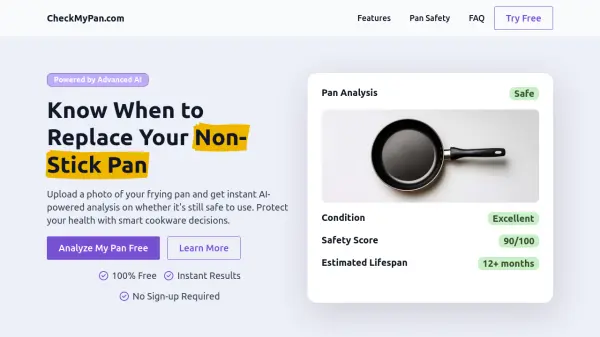
What is CheckMyPan?
CheckMyPan is a free AI-powered tool that analyzes photos of your non-stick cookware to determine its safety and remaining lifespan. By simply uploading a picture, you receive an instant safety score, condition assessment, and personalized recommendations for replacement or safer alternatives.
The tool uses advanced machine learning algorithms to detect subtle coating wear patterns invisible to the human eye, helping you make informed decisions about when to replace your pans. It also provides expert guidance on non-toxic cookware options and proper care techniques to extend the life of your cookware.
Features
- Instant Safety Analysis: Upload a photo and receive immediate analysis of your pan's coating condition.
- AI-Powered Precision: Advanced machine learning detects subtle coating wear patterns that human eyes might miss.
- Smart Recommendations: Get personalized recommendations for non-toxic cookware alternatives based on your cooking habits.
- Lifespan Prediction: Learn how long your non-stick pan will last based on current condition and usage patterns.
- Health Protection: Identify potentially harmful chemicals released by damaged non-stick coatings.
- Expert Guidance: Access expert knowledge on when to replace nonstick pans, proper care, and safer alternatives.
Use Cases
- Check if your non-stick pan is still safe to use
- Determine when to replace your frying pan
- Identify health risks from damaged non-stick coatings
- Get recommendations for non-toxic cookware
- Extend the lifespan of your cookware with proper care tips
FAQs
-
How long do non stick pans last on average?
Non-stick pans typically last 3-5 years with regular use, but this varies based on usage frequency, cooking temperature, cleaning methods, and pan quality. Higher-end pans may last longer, while budget options might need replacement sooner. Our AI tool helps determine the exact condition of your specific pan. -
When should I replace my nonstick pan?
Replace your nonstick pan when you notice visible scratches, peeling coating, discoloration, or if food starts sticking regularly. These signs indicate the non-stick surface is compromised and may release harmful chemicals. Early replacement is safer for your health. -
What are the health risks of damaged non-stick pans?
Damaged non-stick coatings can release harmful chemicals like PFOA and PTFE into your food. These substances have been linked to immune system effects, increased cholesterol, and potential cancer risks. Our tool helps identify when your pan coating is compromised. -
What are the best non toxic cookware alternatives?
Excellent non toxic cookware alternatives include stainless steel, cast iron, carbon steel, and ceramic pans. Each has unique benefits: stainless steel is durable, cast iron provides excellent heat retention, carbon steel works for high-heat cooking, and ceramic offers natural non-stick properties without chemicals. -
How accurate is the AI analysis?
Our AI analysis tool maintains a 98.5% accuracy rate, trained on thousands of pan images across different brands, ages, and conditions. It can detect subtle wear patterns that might be missed by visual inspection alone.