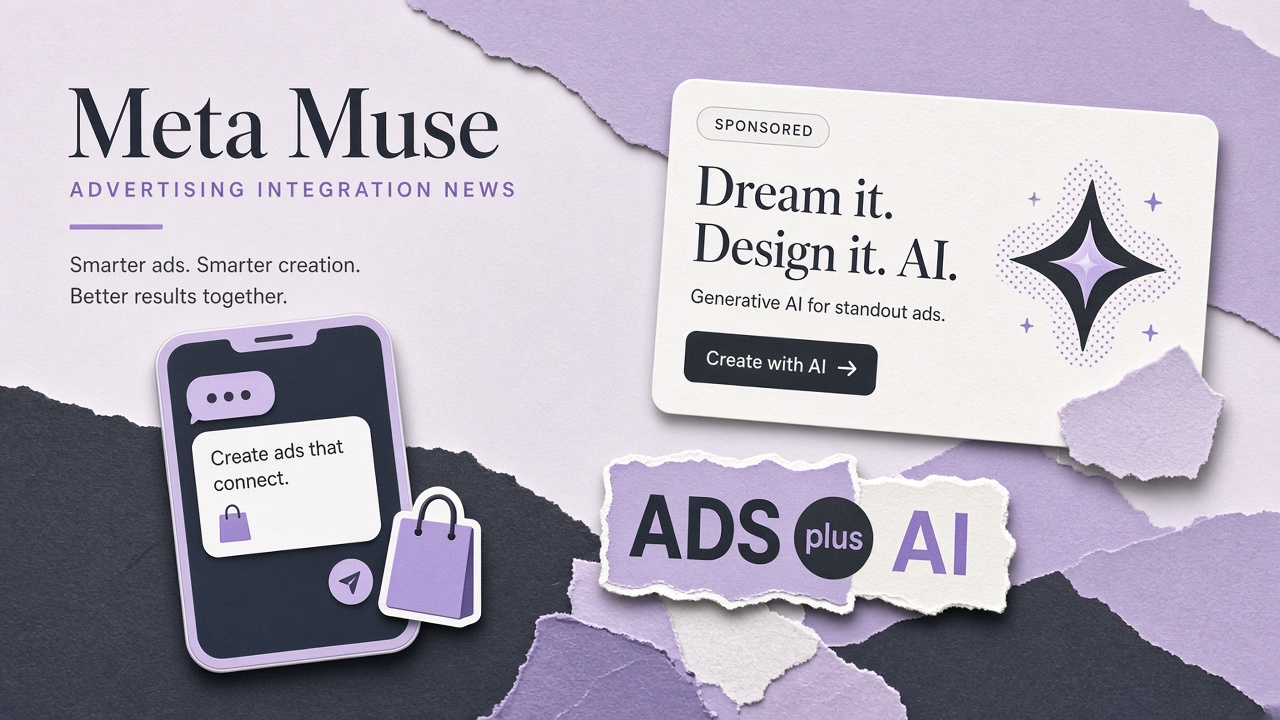
Meta Superintelligence Labs launched Muse Image on July 7, 2026, and announced the model will power image generation inside Advantage+ Creative for advertisers in the coming weeks. Meta for Business said Muse Image brings agentic visual reasoning and self-refinement to gen AI ad tools, enabling on-brand variations, product backgrounds, and static creatives extracted from video. Separately, Meta introduced Muse as a personal AI agent on September 8, 2026, raising questions about how advertising graphs, shopping catalogs, and attribution systems will connect to conversational agents.
This analysis covers Meta Muse advertising integration paths: reported Advantage+ rollout plans, user data boundaries and opt-outs, early brand campaign tests, regulatory scrutiny, and FAQ for paid social teams evaluating Meta AI and AI chatbot marketing tools.
Reported Ads Integration Plans for Muse
Meta plans to embed Muse Image inside Advantage+ Creative so advertisers generate lifestyle visuals, product backgrounds, and on-brand variants without leaving Ads Manager, while Muse agent features may eventually tie recommendations to catalog and conversion data. As of September 2026, Muse Image is live in the Meta AI app, meta.ai, Instagram Stories, and WhatsApp in limited countries, but Ads Manager integration remains in rolling rollout.
Confirmed and reported advertiser capabilities include:
- Advantage+ Creative upgrades: Muse replaces or augments prior background generation and touch-up models
- Brand-aware variants: adjusting elements and swapping styles based on existing creative assets
- Product visualization: room restyling in Meta AI Shopping using business catalog images
- Video-to-static extraction: generating still ads from video source material
- Instagram feed integration: pulling public photos from connected accounts when brands opt in
Meta's July 2026 technical blog described Muse Image as an agent that invokes search and coding tools, self-refines outputs, and integrates with Muse Spark for joint planning. For ads, that architecture implies iterative creative briefs rather than one-shot prompt-to-image workflows, which may change how performance marketers structure tests.
| Surface | Muse status (Sep 2026) | Advertising relevance |
|---|---|---|
| Advantage+ Creative | Rolling out in coming weeks from July announcement | Primary ads integration path |
| Meta AI Shopping | Room restyling live for catalog products | Discovery-to-purchase visualization |
| Muse personal agent | US rollout Sep 8 on muse.ai and WhatsApp | Future sponsored recommendations unclear |
| Public API | Not available | Manual download and upload workaround only |
User Data and Opt-Out Paths
Meta states Muse advertising features can use public Instagram photos from connected business accounts when enabled, while consumer Muse agents run on Muse Secure VM with separate Sentinel approval flows for outbound actions. Brands must review account linking settings before Advantage+ pulls visual identity from organic feeds.
Privacy and control considerations for advertisers and users:
- Instagram public photo use: brands can opt out of having connected account images used in generative variants
- AI info labels: Meta applies disclosure when ads are created or significantly edited with generative AI
- Content Seal watermark: invisible watermark on Muse outputs survives cropping and compression
- Personal agent data: Muse Secure VM boundaries aim to separate agent browsing from ad targeting graphs, but integration roadmaps are not fully public
- EU and state privacy laws: automated decision-making and profiling rules may apply when recommendations personalize shopping or ads
Agencies report clients should document which creative elements are human-made vs Muse-generated for brand compliance and political ad categories, where Meta applies stricter mandatory disclosure rules.
Brand Campaign Early Tests
Early advertiser workflows combine manual Muse prompting in the Meta AI app with uploaded creatives in Ads Manager until native Advantage+ access appears account by account. Ecommerce guides from July 2026 recommend preparing brand guidelines, asset libraries, and disclosure language before Q3 2026 rollout waves hit large spending accounts.
Practical test patterns emerging in industry coverage:
- Baseline human creative vs Muse variants in split tests once Advantage+ toggle appears
- Product-only prompts vs lifestyle scenes to measure catalog fit and return rates
- Instagram feed-informed variants vs studio shots to evaluate brand consistency risk
- Political and regulated categories excluded from automated generative workflows pending legal review
Meta has not published aggregate performance lifts for Muse-powered Advantage+ versus prior gen AI stacks. Advertisers should treat claimed Arena benchmark positions for Muse Video as vendor statements separate from ads performance until independent campaign data accumulates.
Brand Safety and Attribution Questions
Attribution models may struggle when Muse agents influence discovery outside traditional ad impressions, while brand safety teams worry about unreviewed generative variants scaling across Advantage+ automation. Regulatory scrutiny spans FTC endorsement rules, EU AI Act transparency for synthetic media, and state consumer protection on dark patterns in conversational commerce.
| Risk area | Why it matters | Mitigation steps |
|---|---|---|
| Unapproved variants | Advantage+ can scale creatives without human review per asset | Lock brand palettes, ban topics, require legal pre-clearance lists |
| Attribution gaps | Agent recommendations may not map to click-based models | Define incrementality tests for agent-influenced conversions |
| Disclosure compliance | AI info labels appear in About this ad panels | Brief clients on visible and hidden disclosures before launch |
| Synthetic likeness | Muse can compose from multiple references | Rights clearance for talent, logos, and user-generated content |
California and EU rules on AI-generated political content and companion chatbots may extend to Muse-driven shopping suggestions if regulators classify agent recommendations as automated decision-making with legal effect.
Frequently Asked Questions
Is Muse available in Ads Manager today?
Meta announced Advantage+ integration in the weeks following the July 7, 2026 Muse Image launch. Industry trackers report rolling Q3 2026 access by account. Advertisers can prompt Muse free in the Meta AI app and upload results manually until native integration appears.
How does Muse personal agent relate to Muse Image ads?
Muse personal agent (September 2026) handles proactive tasks on Muse Secure VM. Muse Image powers generative creative in consumer apps and, soon, Advantage+ Creative. Meta has not detailed whether agent conversations will surface sponsored recommendations from the ads graph.
Can agencies call Muse via API?
No public API exists as of September 2026. Third-party ad tools cannot integrate Muse directly. Workflows require Meta-native surfaces or manual asset export.
Do Muse ad creatives require AI disclosure?
Meta applies AI info labels when ads are created or significantly edited with its generative AI features. Fully Muse-generated variants should be treated as disclosable. Minor edits like cropping may not trigger labels.
What brand safety controls should teams set before rollout?
Prepare approved asset libraries, topic blocklists, regulated-category exclusions, and client disclosure templates. Monitor Advantage+ settings panels for Muse toggles and test variants in limited spend campaigns before scaling.