Open-weight model releases dominate enterprise experimentation in 2026, yet EU compliance teams still struggle to answer a basic question: which obligations disappear when weights ship under a permissive license? Article 53(2) offers a narrow carve-out for free and open-source GPAI models. Article 55 adds stricter duties for models with systemic risk. The two articles interact in ways that surprise teams who assume "open" means "exempt."
Confir and AI Office guidance agree on the narrow scope: relief covers Annex XI technical documentation and Annex XII downstream information for qualifying releases, not copyright policies, training-data summaries, authorized representative duties, or any Article 55 obligation. Teams shipping OLMo-style fully open smaller models face a lighter pack than Meta or Mistral frontier lines that cross compute presumptions or ship behind API gates.
This guide explains Article 55 open model exceptions (and the limits of those exceptions), residual documentation duties, implications for Meta Llama and Mistral releases, and how downloader versus publisher roles split liability. Map your stack against EU AI Act requirements and AI code tooling that bundles open weights locally.
Carve-Out Criteria Under Article 53(2)
Providers release under a free and open-source license that allows access, usage, modification, and distribution, with weights, architecture, and usage information publicly available. When all conditions are met and the model is not systemic-risk, providers are exempt from Annex XI technical documentation and Annex XII downstream information obligations in Article 53(1)(a) and (b).
AI Office GPAI guidelines add practical gates beyond the statute text. Licenses that restrict commercial use, research-only access, or scale-based relicensing typically disqualify the exemption. Gated downloads, approval workflows, or missing architecture details also break the "publicly available" requirement. Indirect monetization through mandatory paid support or data processing upsells may disqualify providers who otherwise use open licenses.
| Criterion | Passes carve-out? | Common failure |
|---|---|---|
| FOSS license with four freedoms | Required | Custom licenses with revenue thresholds |
| Public weights and architecture | Required | Gated Hugging Face approvals |
| No systemic risk designation | Required | Compute above 10^25 FLOPs presumption |
| Copyright policy + data summary | Still required | Teams assume full exemption |
Residual Obligations for Open Releases
Even qualifying open-source GPAI providers must publish a copyright policy and training-data summary, cooperate with authorities, and comply with Article 54 representative rules where applicable. Article 53(2) does not eliminate baseline transparency duties in Article 53(1)(c) and (d).
If the model carries systemic risk under Article 51, Article 55 applies in full: standardized evaluation, adversarial testing, systemic risk mitigation, serious incident reporting, and cybersecurity protections. The statute explicitly states the open-source exception does not apply to systemic-risk models. There is currently no widely accepted open-weight frontier release that escapes Article 55 while exceeding the compute threshold.
Article 55 Duties That Survive Any Carve-Out
- Model evaluation with documented adversarial testing
- Union-level systemic risk assessment and mitigation
- Serious incident reporting to the AI Office without undue delay
- Cybersecurity protections for model weights and hosting infrastructure
- Code of practice or harmonized standard conformity, or alternative adequate means
Meta Llama and Mistral Implications
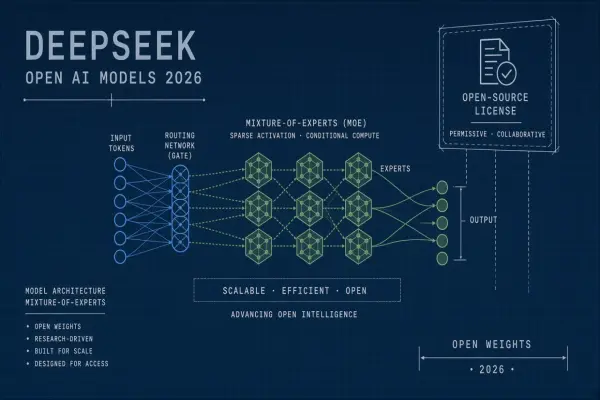
Meta Llama and Mistral releases illustrate how license branding diverges from EU "open" treatment. Smaller open-weight checkpoints may qualify for partial Article 53(2) relief if weights, architecture, and usage information are truly public without commercial gates. Larger frontier checkpoints trained above the Article 51 compute presumption face Article 55 regardless of license name.
Meta's community license and usage restrictions have prompted compliance teams to analyze whether all four freedoms are granted without conditional commercial terms. Mistral's mix of open and proprietary endpoints means enterprises must separate obligations for downloadable weights from API-only models that never qualified as open-source releases.
European enforcement in September 2026 sent RFIs to more than 30 providers covering safety and copyright strands simultaneously. Open-weight publishers cannot assume partial Annex XI relief shields them from adversarial testing questions if their models approach systemic-risk compute or capabilities. Downstream startups that fine-tune Llama or Mistral checkpoints for EU SaaS products should obtain written confirmation from upstream publishers about which documentation tier applies and whether Article 55 packs exist for their base model version.
| Release type | Likely Art. 53(2) relief | Article 55 exposure |
|---|---|---|
| Small open weights (sub-threshold compute) | Partial: skips Annex XI/XII if fully open | Low unless Commission designates |
| Frontier open weights (above 10^25 FLOPs) | No Annex XI/XII relief | Full Article 55 stack |
| Gated or API-only flagship | No open carve-out | Arts. 53, 54, and 55 as applicable |
Downloader vs Publisher Duties
The EU AI Act assigns provider obligations to entities that develop or place GPAI models on the market, not to every enterprise that downloads weights for internal use. Downloaders become deployers or providers of derivative AI systems when they fine-tune, integrate, or place products on the market, triggering different articles.
A publisher that releases open weights must still meet copyright policy and training-data summary duties at minimum. If the publisher is also a systemic-risk provider, Article 55 compliance sits with the publisher, not with a downstream company that merely runs inference on unchanged weights inside a private VPC.
Downloader duties escalate when teams modify weights, expose a consumer-facing product in the EU, or fail to use Annex XII information that a non-exempt provider should have supplied. Legal teams should document which party is the GPAI provider for each model instance in production, especially when internal fine-tunes ship to customers.
Decision Tree: Open vs Systemic Risk vs Commercial Deployment
- Is the entity developing or placing a GPAI model on the EU market? If no, assess deployer or AI system provider rules instead.
- Does the release meet cumulative AI Office open-source criteria? If yes, Annex XI/XII may be waived for non-systemic models.
- Does Article 51 systemic-risk presumption or designation apply? If yes, implement Article 55 regardless of license.
- Are copyright policy and training-data summary published? If no, fix immediately; no tier exempts these.
- Will downstream customers integrate the model in EU products? If yes, supply or obtain Annex XII materials unless a valid 53(2) exemption exists.
Commercial Deployment and Fine-Tune Scenarios
Many enterprises download open weights internally but ship fine-tuned derivatives to customers, shifting who counts as the GPAI provider. A internal-only deployment of Mistral or Llama weights inside a VPC may not trigger provider duties for the downloader if no placement on the EU market occurs. Once the fine-tune becomes a product feature sold to EU customers, the enterprise may become a provider of an AI system and must integrate upstream Annex XII information unless a valid exemption applied to the base release.
Commercial hosting platforms that repackage open weights behind APIs often lose Article 53(2) relief because weights are not truly publicly available without the platform gate. Meta's larger checkpoints trained above the compute threshold must meet Article 55 evaluation and incident reporting even when smaller siblings qualify for partial documentation relief. Compliance teams should maintain a model inventory tagged with license type, compute estimate, systemic-risk status, and market placement date.
Practical Steps for Open-Weight Programs
- Publish copyright policy and training-data summary before any public weight drop.
- Document compute and capability evidence supporting or rebutting systemic-risk presumption.
- Prepare Article 55 packs before release if near the 10^25 FLOP line, not after the first RFI.
- Contractually require downstream integrators to acknowledge which Annex XII version applies.
- Re-evaluate exemption status when licenses change usage tiers or add commercial riders.
Hugging Face's EU AI Act open-source guide illustrates the quadrant model: fully open non-systemic models face partial exemption, while GPAI with systemic risk (GPAISR) faces full Article 53, 54, and 55 stacks with no open-source escape hatch. Treat marketing labels like "open weight" as starting points for legal analysis, not conclusions.
Frequently Asked Questions
Does "open weight" mean open source under the AI Act?
Not automatically. Weights published without architecture details, with usage gates, or under licenses that restrict commercial deployment may fail Article 53(2). The AI Office definition is narrower than colloquial "open model" marketing.
Can Article 55 apply to models below the compute threshold?
Yes. The Commission may designate models with high-impact capabilities under Annex XIII even when training compute stays below 10^25 FLOPs. Open-source status does not block designation.
Do fine-tunes inherit publisher exemptions?
A fine-tune provider may become a GPAI provider in its own right depending on generality and market placement. Do not assume the base model publisher's exemption flows to derivative checkpoints without analysis.
What about Hugging Face hosting without re-release?
Hosting unchanged third-party weights does not automatically make the host the GPAI provider, but packaging, branding, or modifying availability can change roles. Contracts should clarify which party answers Article 91 RFIs.
How do open carve-outs interact with September 2026 RFIs?
Enforcement requests to more than 30 providers tested both security and copyright strands. Open-release teams should expect RFIs on training-data summaries and incident reporting even when Annex XI was waived.
Does a typical Mistral 7B release qualify for carve-out?
Smaller Mistral open checkpoints that publish full weights under permissive licenses and stay below systemic-risk compute presumptions may qualify for Annex XI/XII relief while still requiring copyright policy and training-data summary publication. API-only flagship models do not. Verify each release independently because license updates and gating changes can move a model between tiers overnight.