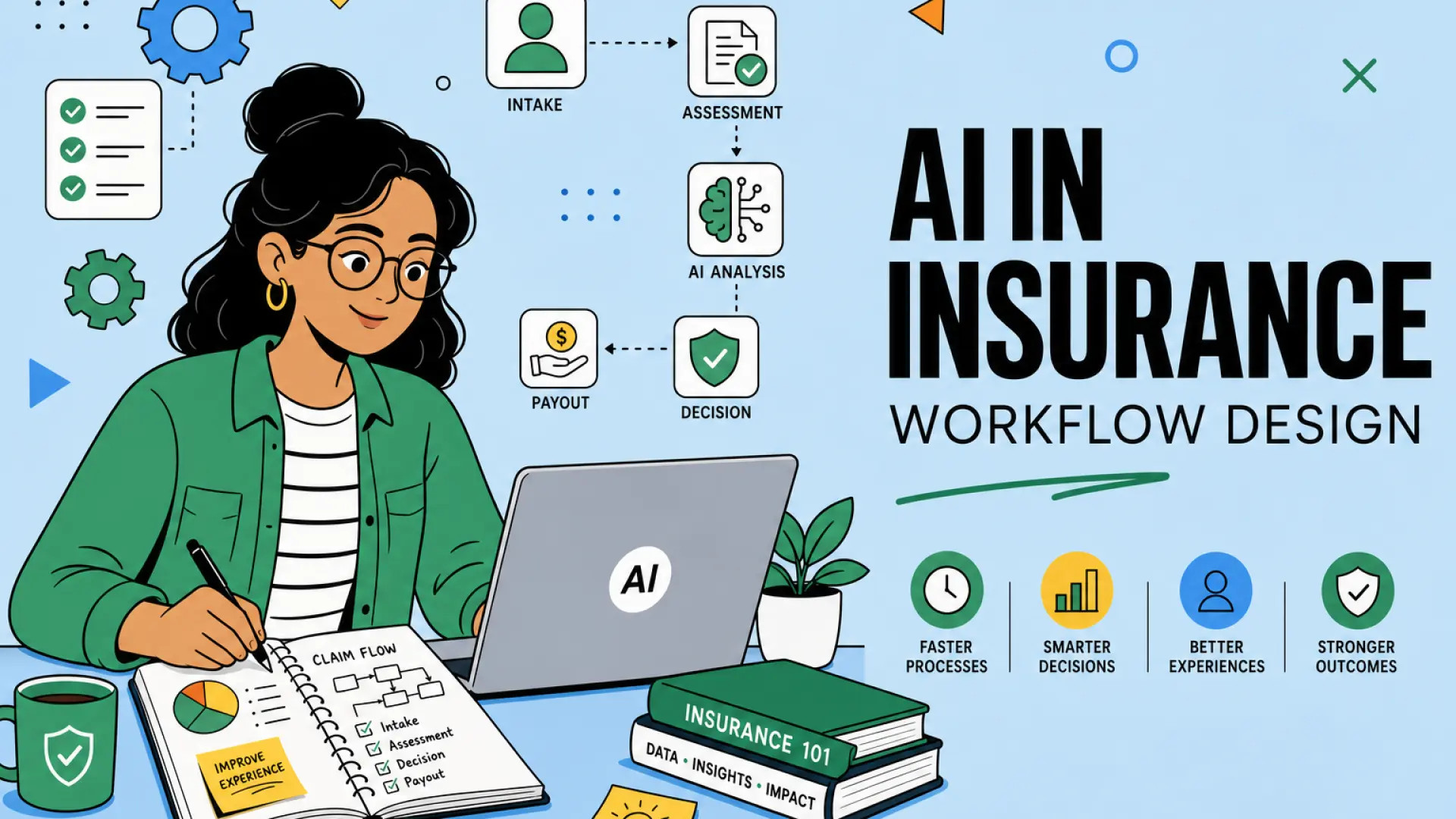
Carriers face pressure to shorten quote-to-bind cycles while regulators scrutinize every model that touches risk selection. An ai insurance underwriting workflow must draw clear lines between permitted assistance and prohibited automation. AI can summarize applications and flag missing data; it cannot silently replace underwriter judgment on adverse decisions without explainability and human review.
This guide maps permitted vs prohibited uses, data and explainability requirements, fair lending monitoring, and vendor due diligence. Evaluate AI chatbot and AI API vendors through your model risk and compliance workflow before piloting in production underwriting paths.
Permitted vs Prohibited AI Uses in Underwriting
Permitted uses assist human underwriters with document extraction, consistency checks, and draft rationales; prohibited uses make binding risk decisions without validated models and documented overrides. State insurance departments and federal fair lending frameworks treat underwriting as a regulated decision process, not a prompt engineering exercise.
| Use case | Typical posture | Control |
|---|---|---|
| Application data extraction | Generally permitted with validation | Human verify extracted fields |
| Missing document checklist | Permitted | Rules engine cross-check |
| Autonomous declination | Prohibited without validated model | MRM, adverse action notices |
| Premium recommendation | Restricted to approved rating engines | Actuarial sign-off, filings |
Document internal policy before procurement. Underwriters need a one-page allowed list, not a fifty-page vendor whitepaper. Prohibited uses should include uploading full applicant files to consumer chat tiers without enterprise agreements and using generative models to invent loss history or inspection findings.
Data Sources and Model Explainability Needs
Every input to an underwriting assist model must have documented provenance, permissible use, and retention rules. Third-party property data, motor vehicle records, and credit-based insurance scores each carry state-specific constraints. LLM summaries of unstructured notes must cite source documents, not paraphrase from memory.
- Maintain inventory of data vendors, refresh frequency, and opt-out handling.
- Require explainability artifacts for any model influencing tier or declination.
- Store prompt version, model ID, and input snapshot for audit replay.
- Separate training environments from production; no production PII in vendor fine-tuning.
- Test summary accuracy on representative applications monthly.
Fair Lending and Discrimination Monitoring
Monitor outcomes and model features for disparate impact even when AI only assists human underwriters. Assistance that steers consistent declinations or surcharges on protected classes triggers the same scrutiny as fully automated rules. Bias can enter through proxy variables in external data or through training corpora that underrepresent certain geographies.
- Define protected classes and comparison groups per line of business.
- Run regular statistical tests on approval rates and pricing outcomes.
- Review flagged variables with compliance and actuarial jointly.
- Document overrides when underwriters reject AI suggestions.
- Retrain or retire models that fail monitoring thresholds.
Vendor Due Diligence for Carriers
Third-party AI vendors are extensions of your model risk program, not shortcuts around it. Due diligence covers security, subprocessors, model update practices, incident history, and contractual rights to audit and exit.
- SOC 2 Type II and insurance-sector references where available.
- Data processing agreement with subprocessors listed and notification SLAs.
- Model change notification and regression testing rights.
- Right to delete data on termination and proof of deletion.
- Concentration risk if one vendor underpins multiple lines.
Workflow Design Principles
Design workflows so AI outputs appear in structured fields underwriters must acknowledge, not buried in free text they can ignore. Integrate with policy admin systems rather than standalone chat tabs. Measure cycle time, override rate, and error rate on extracted fields. If override rate exceeds twenty percent on a field, fix extraction or retire that automation path.
Commercial vs Personal Lines Considerations
Commercial underwriting AI ingests financial statements, loss runs, and schedules of values; personal lines focus on motor vehicle records and property characteristics with different privacy rules. Do not reuse personal lines chat workflows for commercial accounts with unaudited financials. Segregate models and validation datasets by line to avoid feature leakage.
Commercial accounts need structured extraction of COPE data, fleet schedules, and contractual liability endorsements. Personal lines emphasize telematics and credit where state law permits. Mixing training data across lines can introduce illegal proxies; maintain separate model cards and validation reports per line. Underwriters switching between lines need UI cues showing which assist model is active to avoid applying commercial summarization templates to homeowners applications.
Reinsurance and Treaty Alignment
AI summaries of ceded portfolios must reconcile to bordereaux and treaty wording before reinsurer meetings. Automate extraction from submission packets but verify limits, retentions, and loss development factors against policy admin. A hallucinated limit in an AI draft creates treaty disputes that erase efficiency gains from faster memo preparation.
Cat modeling outputs remain actuarial domain; generative text must not reinterpret model layers or attachment points. Document when AI assisted catastrophe submission narratives. Reinsurers increasingly ask about model governance; include AI vendor inventory in renewal data requests proactively.
Underwriter Training and Change Management
Roll out AI assist with shadow mode, office hours, and override analytics so underwriters trust but verify. Champions on each desk pair with compliance for weekly triage of bad extractions. Incentivize documented overrides over silent fixes in Word exports outside the system. Retrain when vendor models change; regression test on fifty historical files per major upgrade.
- Publish internal FAQ when extraction error patterns spike on a carrier form type.
- Record short videos on acknowledging AI fields in policy admin workflow.
- Track time-to-quote before and after; pair with quality sampling, not speed alone.
- Escalate vendor bugs with file hash and field ID, not screenshots only.
Special Investigation and Fraud Boundaries
AI may flag inconsistencies in applications and claims narratives; SIU conclusions require investigator judgment and legal coordination. Do not auto-decline based on NLP fraud scores without human review and adverse action compliance. Prohibit uploading surveillance or law enforcement sensitive material to unapproved cloud tools. SIU notes belong in restricted case systems with role-based access.
MGA and Program Administrator Models
MGAs binding on behalf of carriers inherit carrier filing and fair lending obligations; AI governance must flow from carrier to MGA contract. Program administrators using AI extraction must provide carrier audit access to prompts, models, and override logs. Speed without carrier-approved controls risks program termination.
White-label portals should not expose consumer chatbots that quote premium without routing to filed rating engine. Marketing AI copy on coverage descriptions still needs compliance review for misrepresentation under state unfair trade practices acts.
Claims and Underwriting Data Linkage
Loss history feeding underwriting AI must match claims system totals; reconcile before bind. Discrepancies between AI-extracted loss runs and bureaus trigger manual review. Do not bind when extraction confidence score below threshold without full human entry. Document reconciliation in underwriting file for examiner sampling.
Producer and Agent Channel Controls
Agents using AI on applications remain responsible for accuracy of submitted data. Carrier portals should block paste of AI-generated applicant statements without attestation checkbox. Train agents on prohibited uses: fabricating inspection notes, altering loss dates, or summarizing undisclosed hazards.
International and Surplus Lines Considerations
Cross-border risks introduce currency, sanctions, and local regulatory data restrictions AI may mishandle. Screen extracted entities against sanctions lists through approved service, not chat completion. Surplus lines tax and filing rules vary by state; AI drafts of diligence checklists need surplus lines broker review.
Multinational programs need data residency decisions per country. Do not consolidate EU applicant data in US consumer AI without transfer mechanism. Document lawful basis for automated processing under GDPR where applicable.
Audit and Examiner Readiness
Prepare examination workpapers showing AI inventory, validation, monitoring, and sample underwriting files with AI assist flagged. Examiners may request override rates and error logs. Proactive disclosure beats discovery during on-site. Train underwriting leadership on explaining model limitations without defensiveness.
The Bottom Line
A sound ai insurance underwriting workflow accelerates document handling and consistency while keeping humans accountable for binding decisions. Map permitted uses, enforce explainability and fair lending monitoring, and run rigorous vendor due diligence on every API and chatbot touchpoint. Actuarial judgment and filed rates remain authoritative; AI is assistive infrastructure.
Frequently Asked Questions
Do AI underwriting tools require new state filings?
When AI changes rating methodology or declination rules reflected in filed programs, actuarial and regulatory affairs must review filing impact. Pure administrative summarization without rating effect may not require filing, but document the boundary with legal counsel per state.
What consumer notices apply when AI assists underwriting?
Adverse action and fair credit reporting notices still apply when credit or third-party data influences decisions. Disclose automated processing where state privacy laws require it. AI-generated denial letters need human review for accuracy and required statutory language.
Can AI replace actuarial risk assessment?
No for filed premium and reserved classes. AI may summarize risk factors for underwriter review but cannot replace approved rating algorithms without validation, filing, and governance consistent with model risk management standards.
How do we pilot underwriting automation safely?
Start with read-only extraction and checklists in shadow mode. Measure accuracy and override rates. Expand to draft memos with mandatory human edit. Defer any auto-bind integration until compliance and actuarial sign structured validation reports.