Ag retail teams spend June through August turning thousands of scouting observations into seasonal advisory bulletins, fungicide timing sheets, and nutrient recommendations. Field notes arrive as voice memos, app exports, and handwritten cards that sit in inboxes until an agronomist has a quiet evening to write.
An ai workflow agriculture advisory bulletins process captures scouting data with consistent standards, drafts bulletin sections by growth stage, routes every recommendation through licensed agronomist review against local weather and regulations, distributes timestamped advisories to growers, and closes the loop with yield outcome feedback. AI accelerates drafting; agronomists own the final call. Explore capture automation via AI code integrations for scouting app connectors and private AI chatbot deployments that keep grower data inside your retail network.
What Is an Ag Retail Crop Advisory Workflow?
An ag retail crop advisory workflow turns structured field scouting notes into grower-ready seasonal bulletins with licensed agronomist sign-off on every recommendation. The workflow spans capture in the field, AI-assisted drafting by crop and growth stage, human validation against weather and pesticide rules, distribution with audit timestamps, and post-harvest feedback that improves next season's templates.
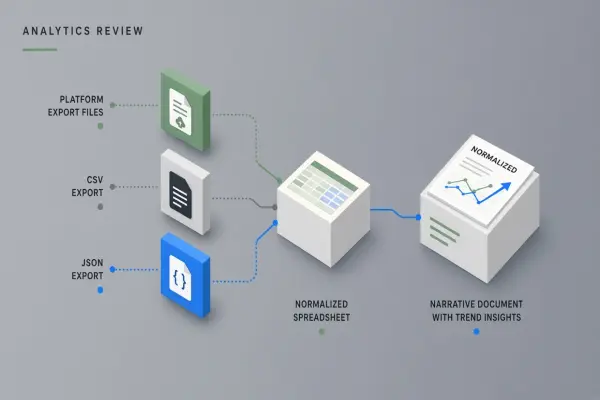
Platforms such as FarmQA Scouting, ScoutPro, and xarvio FIELD MANAGER For AgBusiness already standardize geo-tagged observations, offline capture, and PDF report generation. AI sits between those scouting exports and the advisory language growers receive, not between the agronomist and the legal recommendation.
Field Note Capture Standards
Field note capture standards define what scouts record at every stop so AI can draft accurate bulletin sections without inventing pest pressure or growth stage details. Retailers publish a scouting template per crop with required fields, photo rules, and severity scales scouts use consistently across territories.
- GPS pin and field identifier linked to the grower account in your CRM or farm management system.
- Crop, hybrid or variety, planting date, and estimated growth stage using a published staging guide.
- Pest, disease, weed, or nutrient observations with severity score and affected plant part.
- Weather at visit time plus notes on recent rainfall, irrigation, or frost events.
- Photos with scale reference when imagery will appear in grower-facing bulletins.
- Scout name, visit timestamp, and whether the stop was routine or risk-prioritized from satellite alerts.
| Capture element | Minimum standard | Why AI needs it |
|---|---|---|
| Growth stage | Published scale (V/R for corn, etc.) | Maps notes to correct bulletin section |
| Severity score | 1 to 5 with threshold definitions | Prevents overstated treatment urgency |
| Product mentions | Trade name plus EPA registration when applicable | Supports label-accurate draft language |
| Organic flag | Certified organic, transitional, or conventional | Routes drafts to compliant product lists |
Offline and Batch Capture
Scouts must capture notes offline at remote fields and sync when connectivity returns, with timestamps preserved from the visit, not from upload time. BASF's xarvio FIELD MANAGER For AgBusiness documents offline scouting with GPS navigation to prioritized field zones. Your workflow should queue synced notes for AI drafting only after the scout confirms the record is complete.
Imagery Standards for Advisory Use
Photos attached to scouting notes need consistent framing, lighting notes, and permission flags before AI references them in grower bulletins. Train scouts to include a leaf or cob in frame for scale, avoid identifiable people without consent, and mark whether the image is internal only or grower-shareable. AI should never auto-publish field photos without agronomist review.
Draft Bulletin Sections by Growth Stage
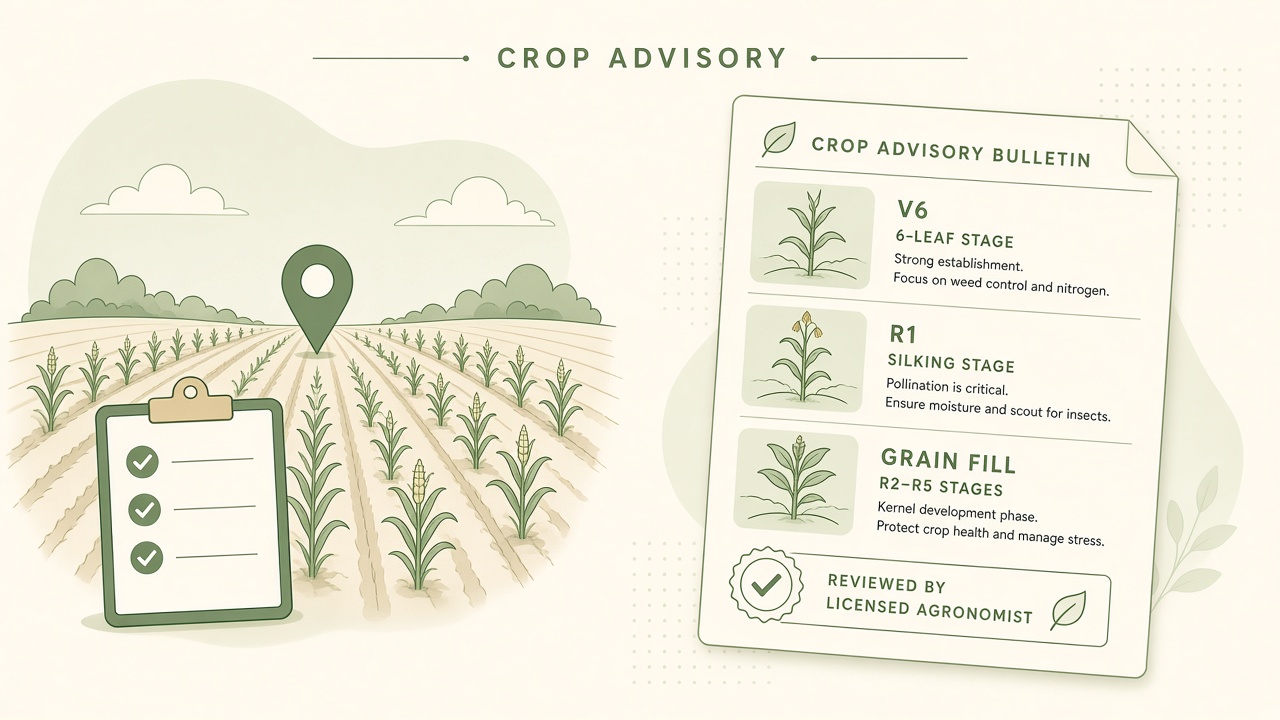
AI drafts advisory bulletin sections grouped by crop growth stage so growers receive timing-relevant guidance instead of one undifferentiated paragraph per field. Retail agronomy teams maintain master templates per crop with sections for early vegetative, reproductive, grain fill, and harvest prep. AI populates each section from scouting exports that include stage codes.
- Executive summary: two to three sentences on territory-wide themes for the week.
- Field-specific observations: one block per grower account with cited scout notes.
- Recommended actions: draft timing windows, not final product rates until agronomist review.
- Watch list: emerging risks from satellite or weather models your retail subscribes to.
- Regulatory reminders: placeholder slots for state-specific restrictions agronomists fill in.
Prompt engineering should pass the retailer's approved product list and prohibited phrases into every draft request. Custom AI code scripts can merge scouting CSV exports from FarmQA or similar platforms into stage-keyed JSON before the language model runs.
Territory Aggregation Before Drafting
Before AI drafts a regional bulletin, aggregate scouting notes by township, county, or sales territory so recommendations reflect local pressure patterns. EarthDaily Territory Insights and similar tools aggregate field-level signals into business-ready views. Your workflow can mirror that pattern: cluster notes by geography, then draft one advisory per cluster with field-level appendices for large growers.
Agronomist Review for Local Weather and Regulations
Every AI-drafted advisory requires licensed agronomist review that validates recommendations against current local weather, pesticide labels, and organic certification rules before any grower sees the bulletin. AI does not replace the certified crop advisor sign-off. Review is a gated step, not an optional polish pass.
- Agronomist receives draft with linked source scouting notes and growth stage tags.
- Cross-check forecast windows for spray timing and pre-harvest intervals.
- Verify product rates, tank mix partners, and REI/PHI against current label PDFs.
- Confirm organic fields receive only NOP-compliant or certifier-approved inputs.
- Edit language for tone, liability qualifiers, and retailer brand standards.
- Sign and release, or return to scout for missing field evidence.
| Review checkpoint | Agronomist verifies | Common AI error |
|---|---|---|
| Spray timing | Wind, rain, and temperature windows | Generic calendar dates without forecast |
| Product selection | Label match to pest and crop | Outdated or off-label suggestions |
| Organic compliance | Certifier and buffer rules | Conventional product bleed-through |
| Liability language | Retailer disclaimer and scope | Overconfident yield promises |
Run drafts through a private AI chatbot hosted on your infrastructure when grower names, acreage, and field boundaries must not leave your network. The agronomist still reviews output in the same gate whether the model runs locally or in a contracted cloud.
Distribution to Growers With Timestamps
Approved advisories distribute to growers through email, grower portal, or SMS with immutable send timestamps and version numbers so retailers prove what guidance was live on a given date. ScoutPro-style read receipts help confirm growers opened time-sensitive fungicide windows. Store the signed PDF and source note bundle together for audit.
- Version ID in subject line: crop, week, and revision number.
- Send timestamp in UTC with local timezone display for growers.
- Link to grower portal copy that matches the email attachment hash.
- Expiration note when guidance is valid only through a weather window.
- Escalation path to the assigned agronomist for questions, not a generic inbox.
Multi-Channel Delivery Rules
When the same advisory goes to email, portal, and printed counter copies, all channels must reference the same version ID so growers do not follow superseded guidance. Operations should block portal publishing until the agronomist release step completes. AI-generated drafts never bypass that gate.
Feedback Loop From Yield Outcomes
Post-harvest yield data, application records, and grower satisfaction scores feed back into advisory templates so next season's AI drafts reflect what worked in your territory. Without this loop, AI repeats generic language that does not match local hybrid performance or retailer product mix.
- Match advisory version IDs to application logs and yield monitor exports per field.
- Tag outcomes: recommendation followed, modified, or declined with grower reason.
- Quarterly agronomy meeting reviews false alarms and missed pressure events.
- Update master templates and AI prompt context with validated local thresholds.
- Retire bulletin sections that consistently required heavy agronomist rewrites.
Yield outcomes vary by soil, hybrid, and weather year. Feedback loops improve draft quality; they do not automate liability transfer. Agronomists interpret whether a missed recommendation was a scouting gap, a model limit, or an uncontrollable weather event.
Intern and Seasonal Staff Onboarding
Seasonal scouts and interns need the same capture standards and AI workflow training as full-time agronomists before they touch grower-facing drafts. Pair new scouts with a shadow week where agronomists compare AI drafts to raw notes and explain every edit. Consistent documentation across scout tenure levels is what platforms like ScoutPro emphasize for manager visibility.
Data Governance and Grower Privacy
Scouting notes contain grower identities, acreage, product purchases, and field boundaries that must stay inside approved systems when AI drafts advisory bulletins. Retail IT should block copy-paste of raw scouting exports into public chat tools. Contract language with AI vendors should cover training opt-out, retention limits, and breach notification aligned with your grower data policies.
Segment AI prompt context by grower permission tier: some accounts allow named field references in bulletins, others require anonymized territory summaries only. Agronomists confirm the distribution tier before release. Audit logs should tie each published advisory to the scout notes and model prompt version used for drafting.
Fungicide and Nutrient Timing Windows
Advisory bulletins for fungicide and nutrient applications need explicit timing windows tied to growth stage and forecast data, not generic calendar weeks. AI drafts should pull growth stage tags from scouting notes and surface the retailer's standard threshold tables for disease severity. Agronomists adjust windows when local extension alerts or supplier technical bulletins change recommended intervals mid-season.
Frequently Asked Questions
Can AI reference pesticide labels accurately in advisory drafts?
AI can draft label-adjacent language from structured product metadata you supply, but agronomists must verify every rate, timing, and tank mix statement against the current EPA label PDF before release. Do not rely on model memory for registration numbers or state supplemental labels. Maintain a curated product database synced to your supplier updates and pass only that context into prompts.
How does the workflow handle organic certification rules?
Organic fields require a separate product allow-list and certifier contact in the capture template so AI drafts route to compliant inputs only. Flag transitional acres differently from fully certified ground. Agronomists confirm buffer distances, record-keeping requirements, and whether a suggested input needs prior certifier approval. Never merge organic and conventional scouting batches into one undifferentiated draft.
Should field photos appear in grower advisories?
Field photos help growers trust scouting observations when scouts follow imagery standards and agronomists approve each image for external use. Mark photos as internal-only by default. AI should caption images with scout-confirmed descriptions, not speculative diagnoses from pixels alone. Compress images for email delivery and host high-resolution copies in the grower portal linked from the bulletin.
How do satellite or drone alerts fit this workflow?
Remote sensing prioritizes which fields scouts visit first; AI drafts still require ground-truth notes before recommendations go to growers. Territory-level tools may flag vegetation stress, but bulletin language should cite the scout visit that confirmed the issue. Satellite-only drafts create liability and trust problems when ground truthing disagrees with the model.
Licensed Review Before the Grower Inbox
Ag retail wins when scouting notes arrive structured, AI drafts bulletin sections by growth stage, agronomists validate every line against local weather and regulations, growers receive timestamped advisories, and yield feedback sharpens next season's templates. Speed matters in-season; accuracy and auditability matter more.