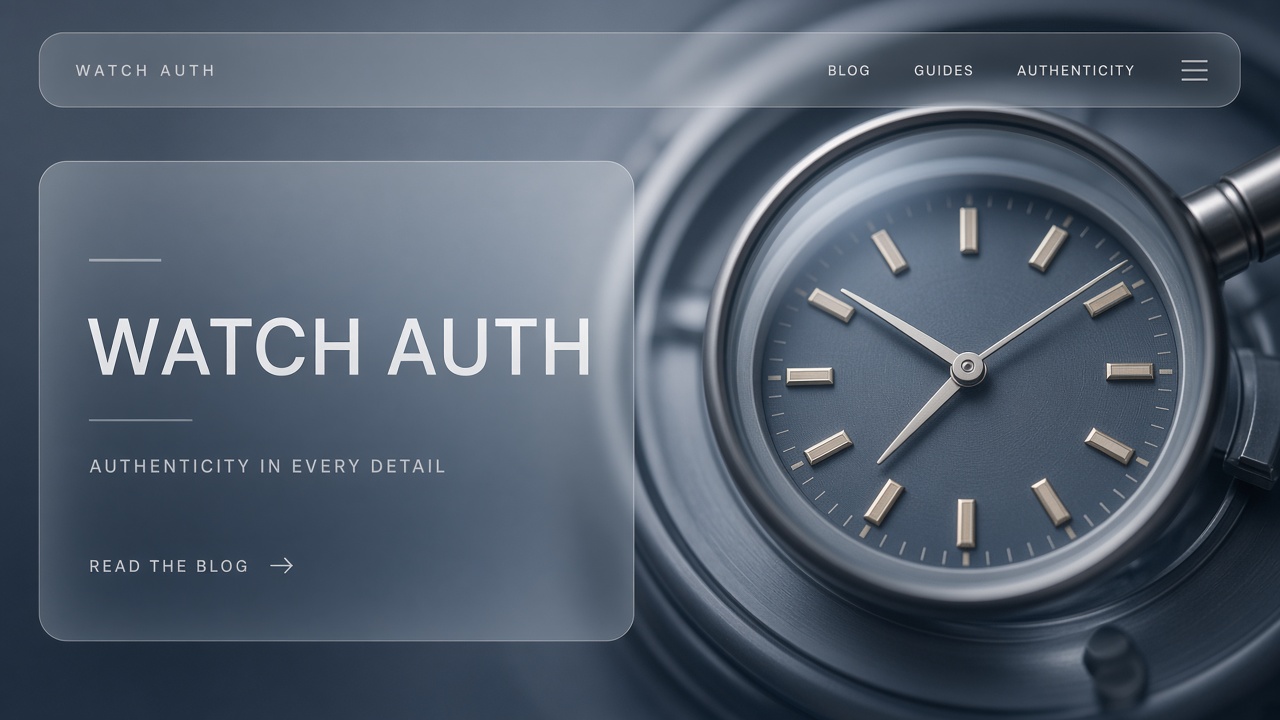
AI watch authentication for luxury resellers applies computer vision to macro photos of dials, hands, rehauts, movements, and case backs, then cross-references serial patterns and stolen-watch databases before a human expert makes the final authenticity call. Grey-market platforms such as Chrono24 still rely on vetted watchmakers for Certified programs, but image search and anomaly detection already support listing review at scale. Auction houses and insurers need repeatable triage when thousands of Rolex, Omega, and Patek references trade daily. Teams evaluating AI chatbot research tools or scanning popular AI tools for marketplace fraud stacks should map which checks machines handle well and which require loupe, timing machine, and archive access.
Grey Market Trust and the Authentication Gap
Pre-owned luxury watch marketplaces face a persistent trust gap: buyers cannot inspect weight, sweep, or movement finishing before wire transfer, while sellers face return fraud and chargebacks on disputed references. Chrono24 surveys found roughly ten percent of customers worried about buying online despite dealer expertise. Certified programs split Partner Certified (dealer watchmaker pre-check) and Chrono24 Certified (optional buyer-paid escrow authentication). Checks cover exterior and interior authenticity, complications, scope of delivery, and serial theft databases. AI layers aim to shrink review time before those human steps.
Superclone replicas improve yearly. Font kerning, laser-etched coronets, and bracelet clasp codes once separated tiers; now marginally wrong hue on a rehaut or misaligned cyclops magnification may be the only tell in listing photos. Scale demands automated first passes.
Macro Photo Features Models Detect
Vision models trained on genuine and replica examples score typography sharpness, hand length ratios, dial lacquer texture, lume plot shape, bezel insert font, and movement finishing patterns from standardized photo sets. Effective pipelines require capture guidelines: diffuse light, dial-up and dial-down angles, six o'clock macro of rehaut text, case back engravings, and movement views when case backs open. Convolutional and transformer classifiers flag out-of-distribution dial layouts for a reference number before a human opens the case.
| Feature region | Common replica tells | AI detection approach |
|---|---|---|
| Dial text | Font weight, kerning, metallic print | OCR plus reference glyph templates |
| Hands and indices | Length mismatch, lume fill shape | Keypoint ratio classifiers |
| Cyclops lens | Weak magnification, off-center date | Geometric magnification estimate |
| Movement | Wrong caliber, stamped finishing | Architecture matching vs reference DB |
| Serial engravings | Depth, placement, font era mismatch | Style-era consistency rules |
Chrono24 already uses image-based watch search for discovery. Extending similar embeddings to counterfeit scoring is a natural product evolution even when public marketing emphasizes human Certified watchmakers.
Serial Cross-Reference and Provenance
Authentication workflows match serial numbers and reference codes against manufacturer era tables, stolen-watch registries, and prior listing history to catch swapped movements or franken builds. AI extracts serial strings from photos, normalizes fonts, and flags impossible date combinations for a reference. Provenance models link box, papers, warranty cards, and purchase receipts when sellers upload documentary evidence. Gaps trigger manual requests before escrow release.
Vintage pieces complicate rules: service dials, relumed plots, and replaced crowns may be authentic maintenance yet reduce collectibility. Systems should label "consistent with reference" separately from "factory original configuration" to avoid false fraud alerts.
Human Expert Final Call
Marketplace guarantees still depend on qualified watchmakers opening cases, testing amplitude and beat error, and consulting brand archives when photos raise yellow flags. Chrono24 Certified watchmakers access fake expert networks for edge references. AI triage routes only high-risk or high-value listings to full bench time, preserving economics on sub-threshold watches while protecting six-figure outliers.
Auction houses extend the pattern: computer vision pre-screens consignments, then in-house specialists physicalize results under warranty terms. No responsible insurer binds coverage on vision-only green lights for undisclosed modded pieces.
Insurance, Chargebacks, and Escrow
Digital certificates of authenticity, escrow holdbacks, and thirty-day authenticity guarantees shift chargeback risk from buyers to platforms that must document inspection steps. AI audit logs timestamp which models scored which photos, supporting dispute resolution when a superclone passed initial review. Insurers pricing dealer inventory riders increasingly ask for machine-assisted intake records alongside human sign-off names.
Chargeback fraud also flows seller-to-platform when buyers swap genuine pieces for replicas on return. Photo fingerprinting at shipment and receipt closes part of that loop. Vision models compare incoming return photos to outbound archive stills.
Omega, Rolex, and Patek Reference Libraries
Authentication AI quality depends on reference libraries segmented by brand, reference number, production era, and dial variant, because a 1680 Submariner red line dial differs materially from a 116610 ceramic bezel model. Rolex typography changed subtly across serif and rehaut laser eras. Omega Speedmaster Professional transitions across calibers 321, 861, and 3861 with distinct movement architectures visible only with case back open. Patek complications add layers: perpetual calendar dial spacing and moon phase disc color vary by generation. Models trained only on modern sports watches fail vintage auctions without explicit uncertainty flags.
Data collection respects manufacturer intellectual property while relying on thousands of consignment photos labeled by outcome of prior human authentication. Transfer learning from one brand to another misleads; cross-brand classifiers should gate confidence low when reference metadata is incomplete.
Auction House and Dealer Integration
Auction houses integrate vision triage at consignment intake: photographers shoot standardized sets, models score risk tiers, specialists prioritize high-value anomalies before catalog copy deadlines. Dealers listing on Chrono24-style marketplaces batch-upload inventory; AI flags listings where dial photos disagree with stated reference numbers or where serial fonts mismatch production year claims. Partner Certified dealers still bear reputational cost if triage misses franken builds, so hybrid shops keep bench capacity proportional to AI-flagged volume rather than cutting watchmakers entirely.
Escrow platforms archive model version IDs alongside certificates so disputes reference which software generation approved a listing. When superclone quality jumps between model releases, reprocessing historical listings becomes a product requirement, not a nice-to-have audit feature.
Building an In-House Triage Stack
Dealers building in-house triage stacks should standardize capture booths, version-control model weights, and log human overrides when watchmakers disagree with vision scores. Override logs become training feedback for the next model generation. Without them, AI teams optimize for photo aesthetics rather than bench outcomes. Integrate serial OCR with stolen-watch API checks before any listing goes live on consignment software tied to AI chatbot support bots that answer buyer authenticity questions from certificate text.
Start with high-fraud references where replica volume is highest, then expand tail references as labeled photo archives grow. ROI appears first in reduced return shipping and chargeback losses, not in eliminating watchmaker payroll.
Limitations of Photo-Only Authentication
Photo-only pipelines cannot weigh cases, measure beat error, detect incorrect mainsprings, or confirm bracelet link authenticity codes hidden on clasp interiors. Macro photography also fails when sellers use heavy filters or shoot through plastic wrap glare. Marketplaces mitigate by requiring raw upload formats and rejecting heavy compression. Some platforms experiment with short video sweeps across dial angles to catch depth and reflection tells static JPEGs hide.
Frequently Asked Questions
Can AI authenticate an Omega Speedmaster?
AI can flag dial and hand anomalies on common Speedmaster references against large replica datasets, but calibar 321 versus 1861 movement swaps and service parts require bench inspection. Treat AI as pre-screen for Moonwatch listings, not moon landing provenance proof.
How do vintage watches differ in AI workflows?
Vintage authentication needs era-correct dial patina models and explicit tolerance for legitimate service replacements, or false positive rates explode. Train separate classifiers per production decade and document uncertainty bands in certificates.
What about modded or franken watches?
AI should classify aftermarket dials, bezels, and crystal swaps as configuration issues distinct from counterfeit brand marks when parts are disclosed. Undisclosed mods detected via reference mismatch should block Certified status until listings update.
Does Chrono24 use AI today?
Chrono24 publicly emphasizes human Certified watchmakers while leadership confirms long-standing machine learning for search, recommendations, and image discovery. Expect AI-assisted listing review to expand even when buyer-facing copy highlights expert appraisers.
Who benefits most from AI watch authentication?
High-volume grey-market dealers, consignment platforms, and insurers gain the most from triage speed; collectors buying single pieces still benefit from clearer risk scores before escrow. Pair tooling research on popular AI tools with mandatory human bench time for any watch above your personal risk threshold.
Will AI replace Chrono24 watchmakers?
Public buyer guarantees still require human bench inspection for Certified inventory; AI shrinks the queue of suspicious listings watchmakers must open first. Expect blended workflows where vision scores route escrow holds and photography standards tighten marketplace-wide.
How do insurers use authentication AI?
Insurers price dealer policies partly on documented intake procedures; machine-readable audit trails plus human sign-off names reduce moral hazard when high-value pieces move through consignment. Photo fingerprinting at bind and claim time catches swap fraud rings that repeat across platforms.
What photos do marketplaces require for AI triage?
Minimum viable sets include dial front, side profile, case back, bracelet clasp code, and movement photo when case back opens; missing angles should downgrade automation confidence automatically. Listings without movement views stay in manual review queues for references above fraud risk thresholds.
Can buyers use AI before a Chrono24 purchase?
Third-party browser tools and marketplace image search help buyers compare listing photos against reference galleries, but escrow plus Certified watchmaker inspection remains the strongest buyer protection on high-value pieces. Treat consumer AI scores as supplementary research, not a substitute for return policies and authenticity guarantees.
AI watch authentication for luxury resellers compresses photo review, serial validation, and provenance checks before experts touch metal. The final call stays human because trust, not probability, closes high-value sales.