A partner asks whether three hours on a research memo should bill at full rate when half the draft came from an AI assistant. Associates paste AI summaries into timesheet narratives without disclosure. Clients audit invoices and question every line that mentions "analysis" but not assistance. Professional services firms need a workflow, not hallway judgment calls.
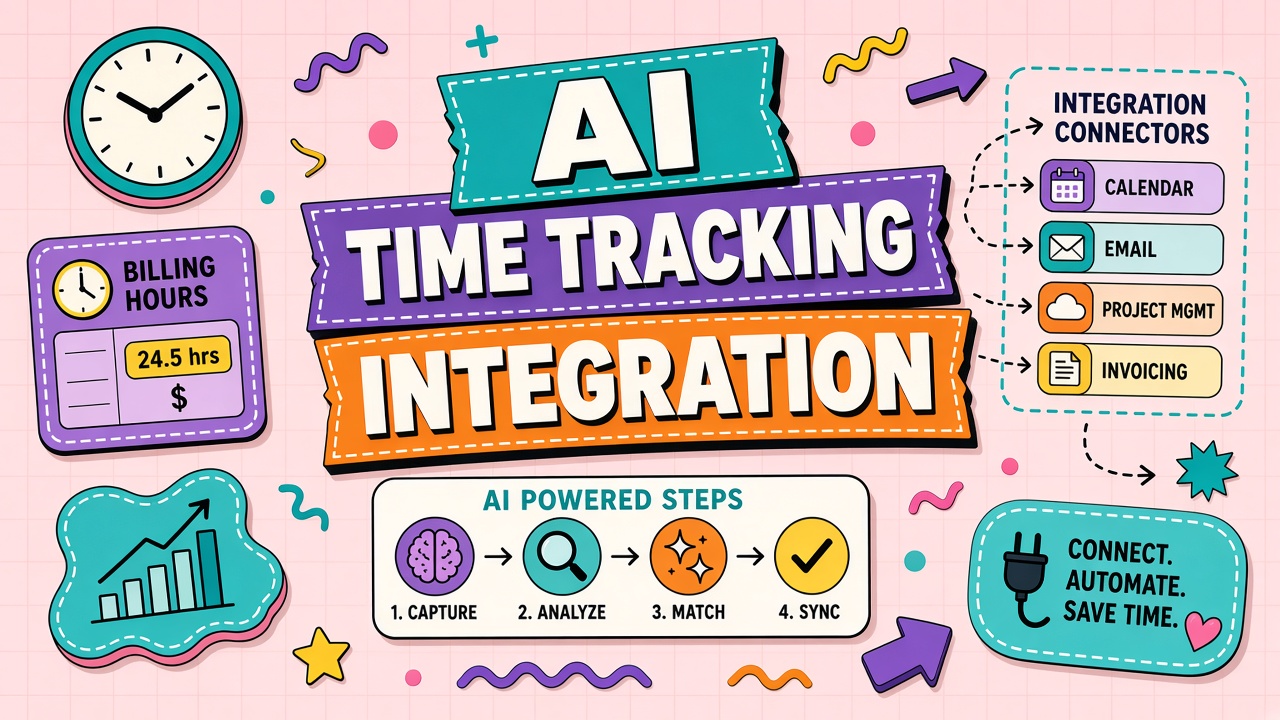
Integrating AI steps into time tracking and billing means defining billable versus non-billable AI time, standard codes and narratives, engagement letter language, and audit sampling. This guide targets firms using AI productivity tools and API-connected assistants in research, drafting, and review workflows.
Finance partners should receive monthly extracts of AI-coded hours by office and practice group before invoices finalize. Patterns of non-billable AI-NO-BILL spikes may indicate training gaps rather than policy violations. Partner committees review extracts quarterly alongside professional responsibility updates.
Client audits increasingly request methodology descriptions for technology-assisted work. Maintain a firm-wide methodology memo aligned with engagement letter language so individual partners respond consistently. The memo references approved API tools and verification standards without exposing vendor confidential terms.
Define Billable vs Non-Billable AI Time
Start with a simple rule: time spent prompting, validating, and integrating AI output into client deliverables is generally billable when it advances the matter. Time spent learning the tool, experimenting with prompts unrelated to the engagement, or fixing tool errors caused by vendor outages may be non-billable overhead.
- Billable: Drafting with AI under partner direction, fact-checking AI citations, merging AI research into work product
- Non-billable: Personal upskilling, piloting new tools without client authorization, re-running failed generations due to user error
- Split entries: When a block mixes both, split time or use sub-codes rather than rounding everything to billable
Ethics rules and client contracts override generic guidance. Some clients prohibit billing any AI-assisted time; others allow it with disclosure. The time tracking policy must reference the engagement letter, not replace it.
Partners should publish firm-wide examples of borderline cases: using AI to summarize deposition excerpts (often billable with verification), versus running the same prompt across unrelated matters to "learn the tool" (non-billable). Examples reduce inconsistent treatment between offices and practice groups.
Rate levels matter when AI shortens production time. If a task previously billed at associate rates now takes half the hours because of productivity assistants, the engagement letter or client guidelines may require adjusted rates or explicit disclosure rather than silent windfalls.
Time Entry Codes and Narratives
Add activity codes or narrative tags that identify AI-assisted work without exposing vendor names in client-facing exports
unless required. Examples include AI-DRAFT-REVIEW for human verification of generated text and
AI-RESEARCH for assisted literature or precedent search.
| Code | Use when | Narrative requirement |
|---|---|---|
| AI-ASSIST | General assisted drafting or analysis | Task description plus verification steps performed |
| AI-REVIEW | Partner or senior review of AI output | Scope of review (facts, tone, compliance) |
| AI-NO-BILL | Training or tool testing on the matter | Brief reason code links to firm policy |
Narratives should describe professional judgment applied, not paste model output. "Reviewed AI-generated case summary, verified citations against Westlaw, revised conclusions" satisfies audit needs better than "used ChatGPT."
Train timekeepers to record verification steps, not model prompts. Auditors and clients care whether a human checked facts, not which temperature setting was used. For API-integrated workflows, logging may capture tool invocation automatically; narratives should still describe professional judgment applied on top of generated drafts.
Configure billing exports to map AI codes to client-safe labels. Some clients accept "technology-assisted research" while rejecting vendor trademarks in invoices. Align export mappings with API-connected assistant inventory so only approved tools appear in compliant narratives.
Client Engagement Letter Updates
Update standard engagement letters to address AI use, billing treatment, confidentiality, and client opt-out rights. Plain language beats buried footnotes: state whether the firm uses AI assistants, which categories of work they touch, and how the firm protects client data when using API-based tools.
For existing matters, a short addendum or email confirmation may be required before expanding AI use. Track acceptance in the matter management system so timekeepers see flags at entry time.
Segment engagement language by client industry. Regulated financial clients may require prior written consent before any AI processing of their data. Healthcare clients may reference BAA constraints that prohibit certain cloud assistants entirely. A single boilerplate paragraph rarely fits all matters; use templates with mandatory fields per client tier.
Audit Sampling for Timesheets
Finance and professional responsibility partners should sample timesheets quarterly for AI-coded entries. Review whether narratives match deliverables, billable flags align with engagement terms, and juniors received supervision on verified outputs.
- Pull all entries with AI tags for the sample period
- Match random subset to underlying work product or billing backup
- Score compliance: disclosure, verification, appropriate rate level
- Feed patterns back into training and policy updates
Firms heavy on productivity assistants should weight sampling toward high-risk practice areas first (litigation filings, regulated advice), then expand.
Workflow Integration Points
Embed reminders at the moment of capture: browser extensions, matter opening checklists, and timer apps that prompt for AI tags when certain tools or domains are detected. Manual honor systems fail under deadline pressure; gentle friction at entry time improves compliance.
Sync approved tool lists with IT so only entitled users can bill AI-assisted codes, reducing fraudulent tagging on unapproved shadow tools.
Partner Review and Rate Governance
Partners remain accountable for work product whether or not AI assisted production. Define when partner review is mandatory: court filings, opinion letters, material client advice, and any output sent without junior double-check. Time entries should reflect partner review as distinct from AI drafting when rates differ.
Rate governance committees should review AI impact annually. If assistants compress research time firm-wide, consider whether value billing, alternative fee arrangements, or transparent hourly disclosure better preserves client trust. Silent hour reductions without client conversation invite disputes during audits.
Systems Integration for Time Capture
Integrate matter management, document management, and time systems where possible. When an associate saves a memo draft from an approved assistant into the DMS, prompt for time capture with suggested AI codes. Timer apps tied to browser extensions on approved domains reduce end-of-day reconstruction from memory.
For firms using API integrations, log correlation IDs between assistant sessions and billing entries during audits. Technical logs supplement narratives; they do not replace human-readable descriptions of work performed.
Matter opening checklists should ask whether AI assistance is permitted on the engagement before first time entry. Early flags prevent retroactive write-offs when clients dispute AI-coded hours mid-matter. Train billing coordinators to reconcile AI tags with engagement letter flags monthly.
Cross-border matters may impose different disclosure rules. A UK client may accept technology-assisted research while a US litigation client prohibits it entirely. Time system matter templates should surface jurisdiction-specific AI billing notes at entry time.
Global Firm Policy Alignment
Multi-office firms need one AI billing policy with localized engagement letter riders where bar rules differ. Central policy prevents London and New York offices from inventing incompatible AI codes that break firm-wide billing analytics. Regional partners sign off on riders; finance publishes a master code table with regional flags.
Annual policy refresh should coincide with vendor catalog updates. When a firm drops or adds approved assistants, update codes, training, and audit sampling weights in the same release. Staggered updates leave some offices billing deprecated vendor names clients no longer accept on invoices.
Frequently Asked Questions
How does this work on flat-fee matters?
Time may still be recorded for profitability analysis even when not billed hourly. AI tags help partners see whether flat fees remain sustainable as assistants shorten production time. Client disclosure requirements in the engagement letter still apply.
Should juniors and partners use the same codes?
Use the same code set but different rate levels and review rules. Junior AI-assisted drafting should trigger mandatory senior review codes; partner use may require less oversight but still needs narratives on verification for high-stakes work.
What if a client refuses AI-assisted billing?
Flag the matter as AI-billing prohibited. Block AI tags from billing exports or map them to non-billable automatically. Document manual workflows required so teams do not accidentally charge prohibited time.
Should we name vendors in narratives?
Internal records can name vendors for audit. Client-facing narratives should follow engagement letter conventions, often describing "firm-approved research technology" unless the client requests specificity.
Training Timekeepers on AI Billing Policy
Roll out billing policy changes with live examples from your practice management system, not only PDF memos. Monthly office hours where finance answers "is this billable?" questions reduce inconsistent tagging. Record sessions for associates who join mid-year.
Include managing partners in the first training wave. When partners model correct narratives and refuse to bill prohibited AI time, juniors follow. When partners ignore codes, audits fail regardless of associate training quality.
Compare AI-coded hours to deliverables during partner meetings on high-risk matters. Spot checks before client invoices ship catch narrative gaps early. Firms integrating AI productivity tools at scale should treat billing training as part of the same rollout calendar as SSO provisioning.
Document how trust accounting and client fund matters treat AI-assisted research if your jurisdiction restricts billing technology costs to certain matter types. Trust administrators should receive the same AI billing training as timekeepers on matters where AI tags affect client statements or trust ledgers.
Track AI Time With the Same Rigor as Human Time
AI-assisted work is still professional work when humans verify and own the output. Define billable rules, codify entries, update engagement letters, and sample timesheets before clients or regulators do it for you. Firms adopting AI productivity and API integrations should treat time tracking as part of the rollout, not a finance afterthought.