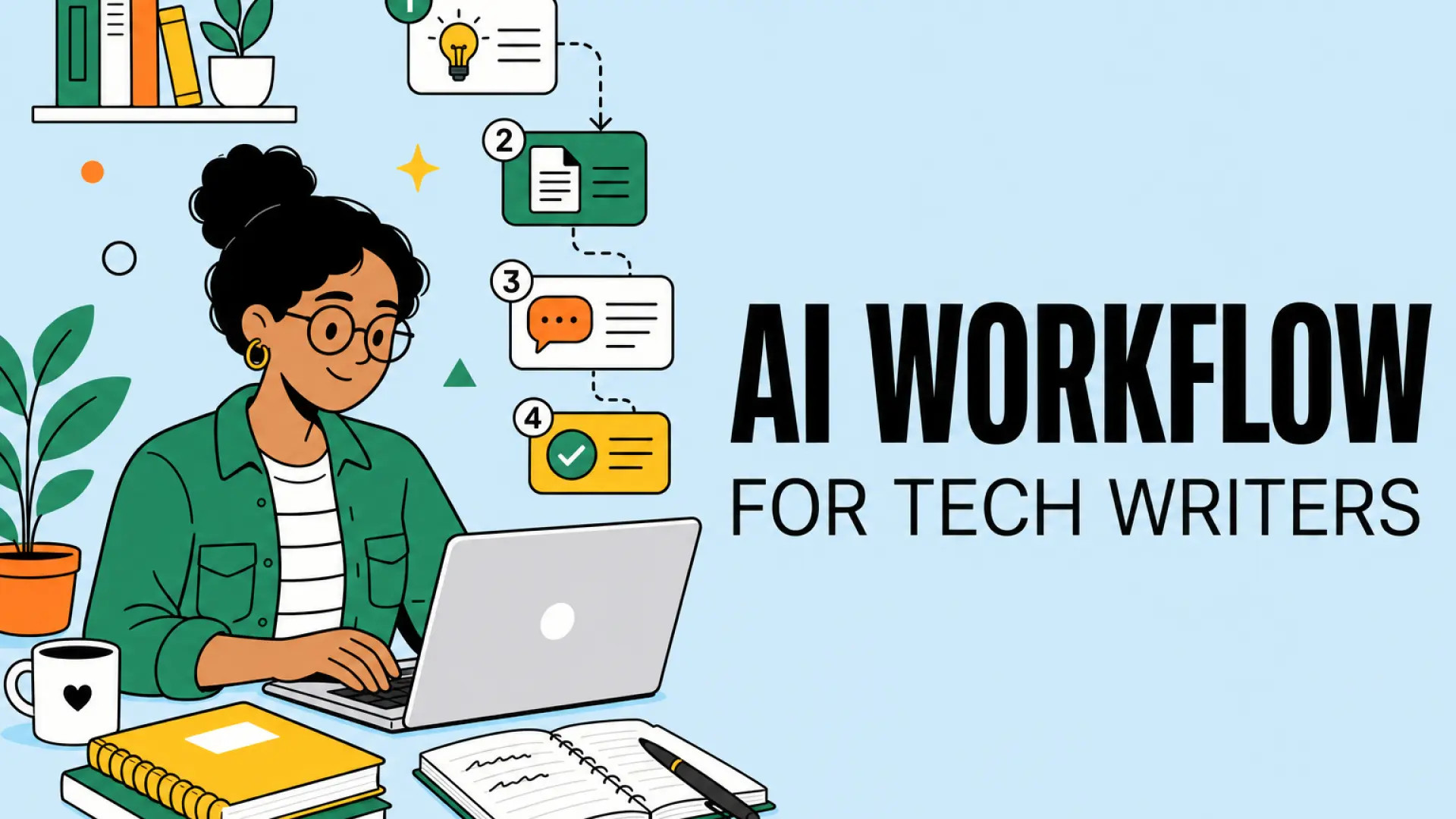
Documentation teams ship release notes, API references, and tutorials on the same cadence engineering ships code. AI workflow technical writers patterns ingest change tickets and OpenAPI diffs, then produce first drafts that still must pass terminology linting and subject matter expert review. The style guide remains authoritative, not the model.
This workflow covers ingestion, templated draft generation, style linting, and the publish pipeline. Connect AI code assistant tools to your docs repo for snippet validation and AI coding tools for CI hooks that flag broken code samples.
Step 1: Ingest API Changes and Tickets
Pull structured change data from Jira, GitHub releases, and OpenAPI spec diffs before prompting any draft. Writers who paste vague "document the new endpoint" requests get vague AI output. Specific inputs produce specific docs.
- Export OpenAPI diff or protobuf changelog with version tags.
- Attach engineering design doc links and breaking change flags.
- Note deprecation timelines and migration paths required for release notes.
- Collect screenshot or diagram assets from design before draft generation.
Step 2: First Draft Generation With Templates
Generate drafts from house templates for API reference pages, how-to guides, and release notes so structure stays consistent across products. AI fills parameters; templates enforce required sections like auth scopes, rate limits, and error codes.
| Doc type | Template sections | AI fill vs human write |
|---|---|---|
| REST endpoint reference | Params, responses, examples, errors | AI from spec; human tests examples |
| Migration guide | Before/after, timeline, rollback | AI outline; eng validates steps |
| Release notes | Features, fixes, known issues | AI from tickets; PM approves tone |
| Conceptual overview | Problem, architecture, limits | Human-led with AI research assist |
| SDK quickstart | Install, auth, first call | AI draft; CI runs code samples |
Step 3: Terminology and Style Linting
Run AI-assisted and rule-based linters against your style guide before SME review catches product name drift, banned terms, and inconsistent UI labels. Technical writer AI documentation quality depends on automated checks, not hope.
- Enforce preferred product names and deprecated term replacements via Vale or custom scripts.
- Flag passive voice density and reading level only where your guide sets targets.
- Validate code blocks match current SDK version pinned in the doc frontmatter.
- Check internal links and anchor IDs against the docs site router.
- Compare AI draft to previous version diff for unintended scope changes.
Step 4: SME Review and Publish Pipeline
Route drafts to named engineering reviewers with explicit checklists; publish only after sign-off and successful docs CI build. SMEs review accuracy, not punctuation. Writers own merge and changelog entries.
- Assign reviewers by component team; set 48-hour SLA for release-blocking docs.
- Track review comments in the same PR as doc source, not parallel email threads.
- Run link checker and sample code executor on every PR merge to main.
- Tag docs with product version so users on older releases find correct content.
AI release notes workflow scales when PMs approve customer-facing wording in the same PR. Separate AI drafts for internal versus external audiences to avoid leaking roadmap hints.
OpenAPI Diff Workflow for API Writers
Pipe OpenAPI spec diffs into your docs pipeline so AI drafts reference added endpoints, deprecated fields, and breaking renames automatically. Writers verify examples compile against the release branch, not main from three weeks ago.
Style Guide as Source of Truth
Encode product names, capitalization, and banned terms in Vale or custom linters before AI sees the draft, not after. Feeding the style guide into the prompt reduces rework but does not replace automated lint on output. Models still drift on hyphenation and UI label casing.
| Pipeline stage | AI role | Quality gate |
|---|---|---|
| Ingest | Summarize ticket and spec changes | Writer confirms scope |
| Draft | Template-based first pass | Style lint pass |
| Review | Highlight diff vs previous version | SME sign-off |
| Publish | Release note aggregation | CI link and code sample tests |
Screenshot and Diagram Pipeline
Capture UI screenshots from pinned staging builds; use AI only for annotation suggestions and alt text drafts. Regenerate screenshots in the same PR as code changes that affect UI. Stale images cause more support tickets than stale prose.
Localization Handoff for Multilingual Docs
Export AI pre-translation strings with glossary locks for product terms translators must not localize. In-country reviewers validate technical accuracy. Legal disclaimers follow a separate approval path from body content in every locale.
Release Notes Coordination Across Products
Aggregate changelog entries from microservices with AI grouping by customer impact area, then writers edit for voice consistency across product lines. Raw ticket titles make terrible release notes. PM and support leads approve customer-facing wording before publish.
SME Review Efficiency
Send SMEs a diff view highlighting only changed paragraphs and new code samples, not the entire doc set. AI-generated change summaries at the top of review PRs cut review time in half. SMEs still own technical accuracy; writers own readability.
Docs CI Pipeline Requirements
Every docs PR should run link checker, Vale lint, spell check, and executable code sample tests against the target release branch. Block merge on broken internal links to deprecated endpoints. AI drafts that introduce banned terminology should fail CI before human review begins.
Terminology Lint Rule Maintenance
Writers update Vale rules when product marketing rebrands features; AI drafts inherit old names without lint. Schedule quarterly style guide reviews. Broken terminology erodes trust faster than typos.
API Example Testing in CI
Run code samples from docs against staging APIs on every release candidate build. AI-generated examples often use deprecated auth headers. Failing samples block release until writers or eng fix them.
Localization Glossary Sync
Sync English glossary locks to translation memory before AI pre-translation runs. Translators review technical terms that must stay English versus localized UI labels. Release notes in twelve locales need parallel legal review for compliance disclaimers.
Docs-as-Code AI Workflow
Store docs in Git beside application code so AI drafts enter the same PR review flow as engineering changes. Writers branch per release. CI validates links and samples on PR open. AI summaries in PR descriptions help reviewers focus on changed sections.
Deprecation Notice Drafting
AI drafts deprecation notices from API changelogs with migration timelines and replacement endpoints. Engineering confirms sunset dates. Support and sales receive advance notice before public publish to avoid surprise customer calls.
Conceptual Versus Reference Doc Strategy
Use AI heavily for reference doc first drafts from specs; use human-led writing for conceptual overviews explaining architecture tradeoffs. Models regurgitate facts well but struggle with nuanced design rationale unless fed engineering design docs.
Screenshot Automation and Accuracy
Automate screenshot capture in CI from staging with version pins; never use AI-generated UI mockups as documentation images. Alt text drafts from AI need writer review for accuracy. Localization teams receive screenshot change notifications when UI strings move.
Technical Writer AI Toolkit Setup
Centralize style guide, Vale config, doc templates, and approved AI prompts in the docs repository README. New writers run a shadow release cycle before owning a component solo. Update toolkit when major product rebrand ships.
Quarterly Documentation Quality Metrics
Track support ticket deflection, docs site search success rate, and time-to-publish per release. AI should improve metrics, not just word count. Writers present quarterly reviews to engineering leadership with concrete examples of reduced confusion.
Identify top ten searched queries with poor results and prioritize doc updates. AI clusters search logs into themes faster than manual review.
Writer and SME Relationship Management
Writers nurture SME relationships with structured review requests, office hours, and recognition when SMEs meet SLAs. AI-generated review packets respect SME time. Burned-out SMEs give sloppy approvals; writers escalate chronic blockers to engineering managers.
API Changelog to Docs Pipeline Automation
Automate detection of undocumented API changes in release branches; AI drafts missing reference pages for writer review. Engineers tag breaking changes in PR titles. Writers prioritize by customer impact score from support and sales input.
Glossary and Acronym Management
Maintain a single glossary synced across docs; AI lint flags undefined acronyms and inconsistent product names. New features require glossary updates in the same PR as first doc publish. Translators depend on authoritative glossary locks.
Writers participate in engineering planning meetings for major releases to ingest context before specs land in Jira. Early context produces better AI first drafts than post-hoc ticket summaries. Engineering values writers who ask clarifying questions in planning, not only at doc review.
Partner and OEM Documentation Obligations
OEM agreements may require specific document formats and review cycles; AI drafts must export to mandated templates before partner submission. Partner-facing docs need legal review on indemnification and warranty language. Keep partner doc sets version-synced with GA releases to avoid field installation errors.
White-label products require separate doc branding configs in the AI pipeline so wrong product names never ship to partner customers.
Documentation Analytics Feedback Loop
Docs analytics showing high bounce rates on specific pages trigger writer investigation; AI summarizes session recordings and support tickets related to those URLs. Prioritize rewrites by revenue impact and support cost. Low-traffic obsolete pages archive rather than AI-refresh indefinitely.
Accessibility Lint in Docs CI
Automated accessibility checks on docs HTML catch missing alt text, heading hierarchy errors, and low contrast code blocks before publish. AI-suggested alt text still fails human review for accuracy. WCAG conformance statements on docs sites require periodic manual audit beyond automation.
Writers maintain a deprecated feature archive so AI does not resurrect sunset APIs when drafting from stale training associations. Deprecation banners on old pages link to migration guides prominently.
Developer relations contributions to docs benefit from the same AI workflow as staff writers with additional review for API stability promises that marketing language must not exaggerate. Devrel maintains sample apps tested in CI alongside narrative docs.
In-app help tooltips and docs site content should share a single terminology source file versioned in Git to prevent UX copy diverging from official API names. Product design and docs sync during major naming changes.
Major version migrations publish parallel doc sets with version switchers so customers on older releases find accurate guidance while AI drafts next-version content from beta branches. Sunset dates communicate clearly on legacy doc banners.
Security-sensitive configuration examples use placeholder credentials and redacted endpoints in all environments including internal drafts to prevent accidental credential commits during AI-assisted bulk example generation. Secret scanning in CI catches leaks writers miss during fast release cycles.
Translation memory updates after each English GA release prevent AI pre-translation from propagating deprecated UI strings into localized docs customers rely on for compliance configurations. Loc teams receive diff reports highlighting terminology changes writers flagged in release notes.
Documentation team leads present release documentation health metrics in engineering all-hands so docs work receives visibility comparable to feature delivery. Visible quality metrics justify writer headcount and AI tooling budget better than anecdotal praise alone during planning cycles.
Frequently Asked Questions
Should AI generate documentation screenshots?
Capture screenshots from staging builds with known version strings; avoid synthetic UI from image models that misrepresent the product. Automate screenshot refresh in CI where possible. Annotate images for accessibility with alt text writers verify, not generic AI placeholders.
How does AI fit localization workflows?
AI translation accelerates string throughput, but in-country reviewers validate technical terms and legal disclaimers. Never auto-publish localized safety or compliance content without human review. Maintain a locale-specific glossary synced with the English style guide.
Can AI enforce consistency across a large doc set?
Yes, for terminology and cross-link suggestions; no, for architectural truth. Batch consistency scans flag pages still referencing retired endpoints. Writers triage fixes by traffic and support ticket volume.
Will AI replace technical writers?
Teams that treat AI as a draft engine need more editorial judgment, not fewer writers. Writers orchestrate templates, linters, SME relationships, and information architecture. Models do not own doc site navigation or user journey design.