Venture capital did not abandon AI in 2026, but the money moved. Mega-rounds for frontier labs and GPU resellers dominated headlines while seed investors asked harder questions about gross margin, customer retention, and safety governance. Founders pitching another thin wrapper on a public API faced a colder room than teams shipping agents with audited controls and signed enterprise contracts.
AI startup funding 2026 favored production-ready agent stacks, inference infrastructure, and vertical software with measurable ROI. This analysis maps the Q1 through Q3 snapshot, which categories heated up or cooled off, how diligence changed around safety, and where investors placed open versus closed model bets. Compare live deal flow against AI chatbot platforms and AI startup tools as you refine your raise narrative.
Q1-Q3 2026 Funding Snapshot for AI Startups
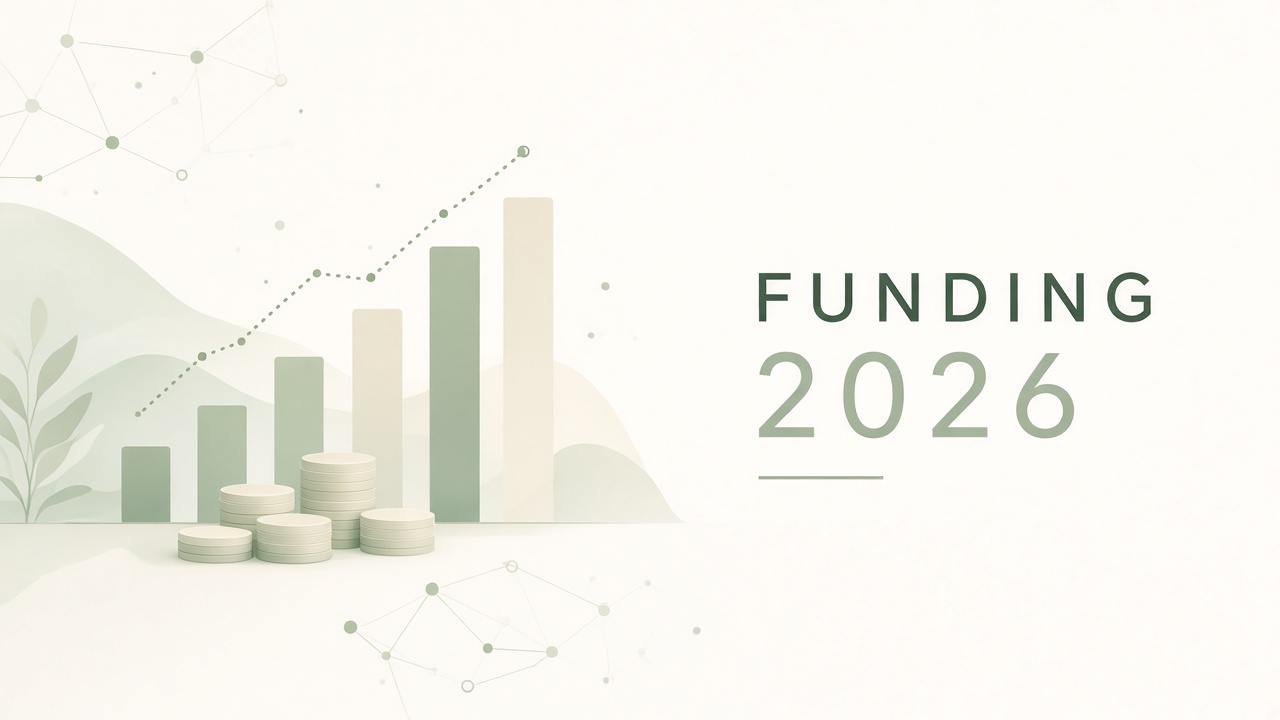
U.S. early-stage venture deployed roughly $86 billion across 4,864 deals through September 2026, with multistage funds capturing a record 37.8% of Series A dollars by value. PitchBook data shows annualized deal value near 2021 peaks even as traditional seed specialists struggled to raise new funds. AI-native companies absorbed a disproportionate share of that capital, but the checks clustered at the top: frontier model labs, compute resellers, and agent infrastructure rather than broad application sprawl.
Agentic AI alone raised about $2.51 billion across 65 disclosed deals in the first half of 2026, roughly triple the comparable 2025 period. AI infrastructure funding hit $9.83 billion by early July, already exceeding full-year 2024 and 2025 totals. Median disclosed round size in infrastructure jumped from $100 million to $210 million year over year, signaling that investors expect capital-intensive scale before liquidity events.
| Segment | 2026 YTD signal | Investor read |
|---|---|---|
| U.S. early-stage VC | ~$86B / ~4,864 deals | Concentration at Series A and beyond |
| Agentic AI | ~$2.51B / 65 deals (H1) | Infrastructure layer outpacing demos |
| AI infrastructure | ~$9.83B by early July | 83% of capital to Series B+ |
| Agent execution infra | ~$504M vs $21M prior year | 24x jump in category spend |
| Multistage Series A share | 37.8% by value (record) | Barbell market: seed quiet, A crowded |
Mega-Rounds and Follow-On Dynamics
Follow-on financings represented 96% of 2026 AI infrastructure deals, meaning new logos were rare and existing winners kept raising. A single week in September saw Crusoe and Fluidstack close combined private capital near $4.8 billion as valuations for compute resellers climbed toward $30 billion. GPs increasingly asked whether those marks resemble utilities with contracted cash flows or leasing businesses priced like software.
Hot Categories Versus Cooling Sectors in 2026
Agent execution infrastructure, vertical workflow agents, inference economics, and regulated vertical SaaS attracted capital, while undifferentiated chat wrappers, pure prompt marketplaces, and thin RAG demos cooled sharply. Investors framed the shift as moving from "agents that can do tasks" to "systems that deploy, secure, govern, and scale agents in production."
| Heating up | Cooling off |
|---|---|
| Identity, authZ, and agent observability | Generic "ChatGPT for X" without data moat |
| Vertical agents in legal, finance, security ops | Prompt-only products with no workflow lock-in |
| GPU cloud, inference chips, power delivery | Consumer social apps with unproven retention |
| Enterprise copilots with signed ARR | Pre-revenue foundation-model fine-tune shops |
Europe's share of agentic AI capital rose to roughly 28.8% in 2026 from 7.7% in 2025, partly driven by sovereignty and compliance narratives. North America still led at 68.4%, but founders with EU data residency stories found receptive growth funds on both sides of the Atlantic.
Vertical SaaS and Revenue Proof
Vertical workflow agents raised about $1.37 billion in the first half of 2026, up from $435 million in the comparable 2025 window, but investors demanded production deployments over pilot logos. McKinsey surveys cited fewer than 10% of enterprises running agents at functional scale even as Gartner projected 40% of enterprise apps would embed task-specific agents by year end. Funds interpreted that gap as opportunity for vendors who own integration, evaluation, and rollback, not another chat surface.
Investor Diligence on Safety and Governance
2026 term sheets increasingly required documented model risk reviews, red-team summaries, data processing agreements, and incident response playbooks before wire transfers closed. Frontier model launches that crossed Preparedness Framework thresholds, including OpenAI's Critical cyber rating for GPT-6 Astra, reminded LPs that capability advances can trigger deployment restrictions. Growth investors asked portfolio companies how they would handle sudden model deprecations, policy refusals, and regional bans.
Diligence checklists expanded beyond SOC 2 Type II into agent-specific controls: tool sandboxing, human approval queues, prompt and output logging, and eval suites tied to customer SLAs. Founders who could show quarterly eval regressions after model upgrades closed rounds faster than teams treating safety as a launch press release only.
Down Rounds and Structure
While headline mega-rounds dominated tech media, a parallel cohort of 2023 and 2024 AI application companies accepted flat or down rounds with stronger covenants on burn and milestone tranches. Investors preferred structured extensions over pretending last year's ARR multiples still applied. Founders who reframed rounds as runway to profitability with clear unit economics fared better than those anchoring on peak 2024 valuations.
Open Versus Closed Model Bets in 2026
Capital split between backing proprietary frontier labs and funding the open-weight ecosystem that powers enterprise fine-tuning, on-prem inference, and sovereign deployments. Closed-model bets concentrated in labs with distribution through ChatGPT, Claude, Gemini, and cloud marketplaces. Open-model bets funded inference optimization, quantization tooling, and vertical packs on DeepSeek, Llama-class, and Mistral-lineage weights.
Application investors increasingly treated model choice as a hedge rather than a religion. Portfolios wanted startups with abstraction layers that could swap `gpt-6-astra` for `claude-fable-5-1` or an open checkpoint without rewriting business logic. Funds backing pure closed-API dependence asked for contractual minimum notice periods and migration budgets in financial models.
Infra as the Picks-and-Shovels Layer
Whether the winning application model is open or closed, investors poured capital into memory layers, eval harnesses, cost observability, and secure agent runtimes that sit above any single provider. Agent execution infrastructure's jump from $21 million to $504 million year over year captured that thesis: the market prices durable plumbing higher than ephemeral UI experiments.
Frequently Asked Questions
Is AI still fundable for new founders in 2026?
Yes, but barbells matter: seed rounds remain available for teams with domain expertise and early revenue, while Series A dollars concentrate in companies with multistage co-leads and clear infrastructure or vertical moats. Generic demos without retention data struggle. Agents with paying design partners in regulated industries still attract term sheets.
What metrics do AI investors prioritize now?
Net revenue retention, gross margin after inference costs, payback period on customer acquisition, and eval stability across model upgrades rank above vanity user counts. Investors also ask for safety incident logs and deprecation runbooks because model churn is now a operating risk, not a theoretical one.
How big should seed rounds be for agent startups?
Seed sizes widened for capital-intensive infra plays but stayed disciplined for application layers that can rent compute. Teams building on frontier APIs should model token burn explicitly and show how gross margin improves with caching, routing to smaller models, and workflow-specific fine-tunes.
Should founders pitch open or closed models to investors?
Pitch the customer outcome and your switching strategy, not a single model religion. Investors reward architectures with provider abstraction, eval gates before rollout, and contractual SLAs that survive model sunsets announced on six-month notice cycles.
Where is European AI funding heading?
Europe captured a growing share of agentic AI dollars in 2026 as sovereignty, privacy, and compliance buyers preferred local vendors with EU hosting options. Founders with GDPR-ready data planes and on-prem inference paths found strategic investors on both sides of the Atlantic willing to co-lead.