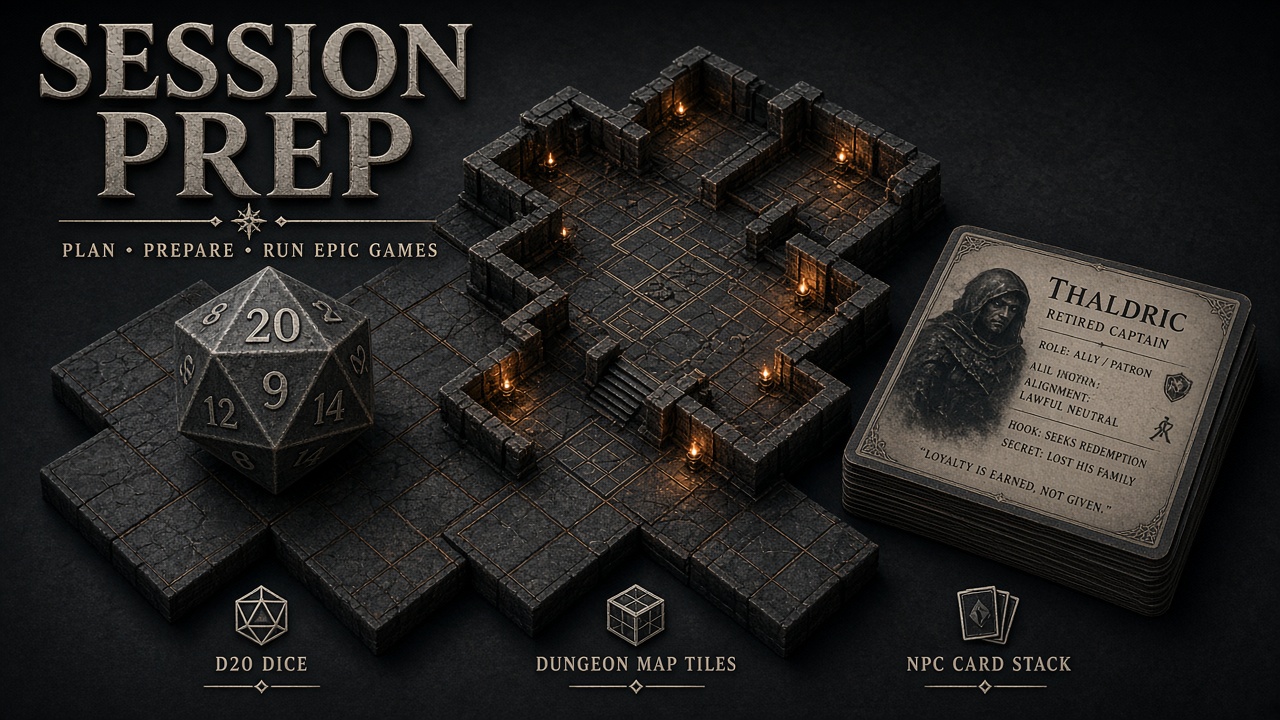
Dungeon Masters for Dungeons & Dragons, Pathfinder, and other tabletop RPGs often prep three to six hours for a single session. An AI TTRPG dungeon master workflow compresses repetitive setup: NPC voice notes, encounter math sketches, loot ideas, and post-session recaps. The live table still belongs to improvisation, player choices, and social contract. Tools under AI writing and AI chatbot categories work best as prep assistants, not replacements for the human DM who reads the room.
What AI TTRPG Prep Should and Should Not Do
AI should accelerate session prep scaffolding: hooks, random tables, stat block drafts, and summaries. AI should not run combat for players, override declared actions, or introduce content that violates table safety agreements without DM review. Published adventure modules remain valuable; AI fills gaps when players veer off-path or when homebrew campaigns need bespoke content fast.
| Prep task | AI assist level | DM responsibility |
|---|---|---|
| Session hook | Generate three options from campaign bible | Pick one aligned with player interests |
| NPC dialogue | Bullet monologue, mannerisms, secrets | Deliver live voice; adapt to player questions |
| Encounter balance | Rough CR / threat math, terrain ideas | Adjust mid-fight for fun and fairness |
| Random tables | Names, quirks, complications | Roll or choose what fits tone |
| Session recap | Summarize notes into campaign log | Confirm accuracy with players |
Prep Stages
Structured prep stages prevent over-generation: campaign context, scene list, flexible nodes, then safety and backup content. Feed the model a campaign summary (party level, active quests, unresolved NPCs, last session cliffhanger). Ask for a scene list with estimated duration, not a 40-page script players will ignore.
Stage One: Campaign Context
Maintain a DM bible: player backstory hooks used, factions, calendars, house rules. Paste relevant sections into each prep session. Without context, AI invents contradictory lore. Update the bible after every game night.
Stage Two: Scenes and Nodes
List scenes as objectives, not railroaded sequences. Example nodes: "Players learn about missing caravan" (info), "Optional side trek in marsh" (exploration), "Confrontation with rival guild" (social or combat). Prepare two reactions per node: if players succeed quickly, what deepens; if they bypass, what consequence propagates.
Stage Three: Flex Content
Pre-generate names, tavern rumors, and a generic combat map feature (bridges, cover, hazards) usable if players surprise you. Flex content is insurance, not the main plot.
Random Tables
Random tables give on-demand texture: NPC quirks, weather, travel complications, dungeon dressing, and loot flavor without halting play. Ask AI for d12 or d20 tables matching your setting tone (grim, cozy, comedic). Print or keep them in a second monitor tab. Mix AI tables with published tables from Kobold Press, MCDM, or system-specific companions to avoid repetitive phrasing across campaigns.
Effective prompts specify genre, technology level, and exclusions ("no sexual content, no harm to children"). Store approved tables in a personal library; reuse beats regenerating every session. For AI chatbot use at the table, prefer pulling from pre-vetted tables rather than live generation that may breach safety lines mid-session.
Sample Table Categories
- Street encounters in the current city district
- Complications during travel (broken wheel, rumor, weather)
- NPC secrets tied to active faction
- Treasure flavor without breaking economy
- Dream or omen hooks foreshadowing main arc
Session Recap
Session recaps distill notes, player decisions, and unresolved threads into a campaign log shared before the next game. After play, paste raw bullet notes into an AI writing tool with instructions: past tense, 300 words, highlight promises NPCs made, list open quests, no invented events. Send recap to players for corrections. Accurate logs prevent "wait, we already killed that guy" confusion six months later.
Recaps also train future prep. If players consistently engage with a B-plot, promote it. If they ignore a hook, retire it gracefully. AI summary makes pattern visibility easier across long campaigns.
Player Agency Principles
Player agency means outcomes follow player choices and system rules, not a predetermined AI story arc. Do not use AI during play to declare what player characters think, feel, or do without consent. Present situations; let players respond. If AI-generated prep assumes betrayal by a PC, scrap that prep unless table discussion supports it.
"Yes, and" and "fail forward" principles still apply. AI prep that reads like a novel may tempt DMs to block creative solutions. Mark optional scenes clearly. When players derail, flex content and random tables beat forcing the original script. System mastery matters: know 5e rules (or your system's) well enough to adjudicate without asking the model mid-turn.
Encounter Balance Notes
AI can estimate encounter difficulty using party level, size, and rest resources. Official CR tables in the Dungeon Master's Guide remain the baseline. Adjust for magic item density, player optimization, and terrain. Lethal encounters deserve telegraphing; trivial stomps deserve shortcuts. Fun beats perfect math.
Table Safety
Table safety tools (session zero boundaries, lines and veils, X-card, open-door policy) apply fully when AI contributes prep content. Never paste player trauma backstory into public models without consent. Review all AI-generated NPC motives, romance hooks, and horror elements against agreed lines before session.
TTRPG safety frameworks from Monte Cook Games (Consent in Gaming), Kienna Shaw and Lauren Bryant-Monk, and community resources on the X-card establish practices AI does not automatically follow. Build a safety appendix in your DM bible; reference it in every generation prompt. If content slips through at the table, pause, rewind, or fade to black per group preference.
Safety Prompt Appendix (Example Lines)
- No sexual violence; romance only if players opt in explicitly
- No harm to children or animals on-screen
- No phobic tropes targeting real-world groups
- Body horror off-screen or veiled per lines list
- Stop if any player invokes X-card without explanation required
Weekly Prep Routine
A repeatable weekly routine limits prep burnout: recap review, player hook poll, one hour AI-assisted drafting, human edit pass, safety check, print/tablet organize.
- Read last recap and player messages for intent signals.
- Update campaign bible with new facts.
- Generate scene nodes and one encounter sketch.
- Human edit: cut 30% of AI ideas, strengthen main hook.
- Safety review against session zero document.
- Prepare maps, minis or tokens, music playlist manually.
NPC Workflows and Voices
Memorable NPCs need goals, voice, and a secret; AI drafts all three from a one-line brief. Example brief: "Dock foreman, nervous about smuggling, secretly owes money to the thieves guild." Request speech patterns (short sentences, nautical slang) separate from biography so you can adjust performance at the table. Avoid over-prepping dialogue trees players will never trigger; bullet beats suffice.
Handouts and Prop Generation
AI formats letters, wanted posters, and quest contracts in AI writing tools with parchment-tone instructions. Verify fantasy dates and names against your calendar bible. Physical props still benefit from human graphic design for immersion; AI text is a starting draft.
Online vs In-Person Tables
Virtual tables on Roll20, Foundry VTT, or Discord add prep for maps, tokens, and macros while removing some improv cues from body language. AI can list Roll20 macro names for complex spells but test macros before session. Export AI-generated map descriptions into dungeon cartography tools manually; automated map layout rarely matches tactical needs without edit. In-person tables may need fewer digital handouts; prioritize printable one-pagers.
Long Campaign Continuity
Campaigns spanning years accumulate NPCs, debts, and unresolved hooks. Quarterly AI summaries of the full campaign bible help DMs re-onboard after breaks. Player-facing wiki pages (with spoiler tiers) reduce "what happened last time" openings. Never auto-publish spoilers; DM approves each wiki entry.
Frequently Asked Questions
Will players know I use AI for prep?
Many groups do not care if NPC names were generated. Disclosure is courteous if your table discusses AI ethics. Never present AI prose as secretly authored player handouts without review; factual errors break immersion.
Should I use AI instead of published modules?
Modules offer professional balance and editing. AI suits homebrew gaps, side quests, and improv fuel. Combining both is common: run a published arc, AI-generate local color.
What AI tools work best for DMs?
General AI chatbot interfaces for brainstorming, plus AI writing tools for formatted handouts and recaps. Dedicated TTRPG apps may bundle map generators; evaluate privacy if campaign lore is sensitive.
Can AI run the game as DM?
Solo play tools exist, but group play needs human facilitation for tone, pacing, and safety. AI lacks social awareness of your specific table's mood on a given night.
Who owns AI-generated campaign content?
Terms vary by tool and jurisdiction. For home games, ownership rarely matters. For streaming or publishing, check platform policies and tool terms. Wizards of the Coast fan content policies apply to D&D branding separately from generic fantasy prep.
How much prep time should AI save?
Aim for 25 to 40 percent reduction on note organization and first drafts, not zero prep. Time saved is best reinvested in player-specific hooks and safety planning.
The best sessions feel inevitable in hindsight because the DM connected player choices to consequences. AI clears clerical overhead so the human DM can listen harder when a player says, "I want to try something stupid."
System-Specific Prep Notes
Different RPG systems stress different prep: D&D 5e needs encounter CR and spell lists; Powered by the Apocalypse needs move triggers and fail-forward stakes; investigative games need clue webs. Tell AI which system and edition you run so stat suggestions match official design. Homebrew rules belong in the campaign bible preamble. For PBTA, generate soft move prompts ("What does the gang do when the heat rises?") rather than grid combat maps unless your hack uses them.
One-Shots vs Campaigns
One-shot prep can lean heavier on AI because continuity risk is low. Generate full location descriptions and three possible endings; pick at table. Campaigns demand stricter bible discipline so AI does not contradict established lore. New DMs running intro one-shots benefit from AI structure templates; veteran DMs running year-five campaigns benefit more from recap and consistency tools than from fresh plot generation.
Player Co-Created Prep
Some tables invite players to submit backstory NPCs or hometown details. AI can format submissions into bible entries but DM approves before canonizing. Players enjoy seeing their contributions referenced; they resent seeing their ideas twisted without consultation. Session zero should clarify how external AI tools may be used at the table.
Burnout Prevention for DMs
Prep automation should reduce burnout, not create pressure to over-produce content players will not see. Set prep time caps. Reuse flex content across sessions. Skip AI generation weeks when you need rest; a lighter improv session beats a cancelled game. Delegate recap duty to rotating players who write bullet notes you merge into the campaign log.
Seasonal campaign arcs benefit from AI-generated "previously on" intros you read aloud at session start. Keep them under two minutes so play begins quickly. Confirm with players that summaries match their memories before relying on them for plot-critical callbacks.