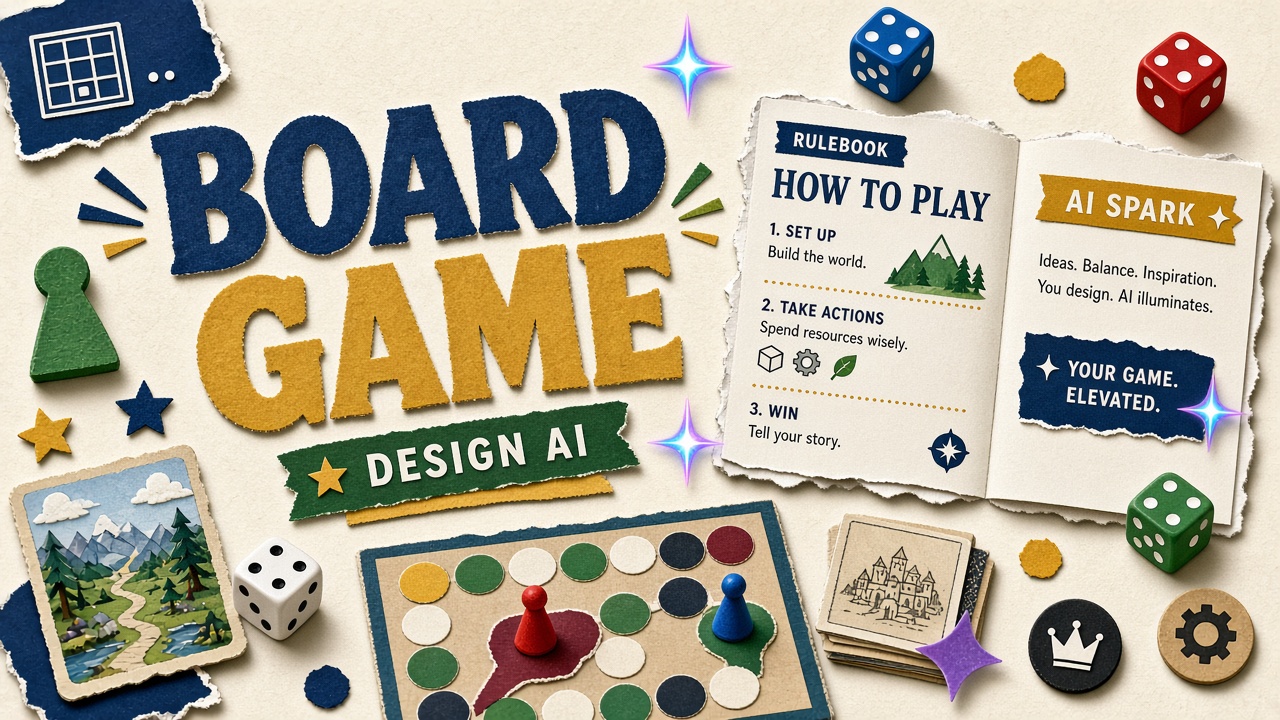
Independent board game designers face a familiar bottleneck: rules that read clearly on paper but collapse under real play, balance that shifts after the tenth session, and playtest notes scattered across Discord threads and index cards. An AI board game design workflow does not replace the designer's vision. It accelerates drafting, surfaces edge cases early, and organizes feedback so the next prototype iteration targets real problems. Teams already using AI writing tools for rulebooks and AI chatbot assistants for brainstorming can extend the same stack into structured playtest loops without surrendering authorship.
What AI Board Game Design Actually Does
AI assists board game design by generating draft rules text, simulating rough balance scenarios, and clustering playtest feedback into actionable themes. The designer retains veto power over every mechanic. Unlike video game balance tools that hook into live telemetry, tabletop design depends on small sample sizes and subjective fun. AI fills gaps in documentation and analysis, not in player experience judgment.
| Task | AI role | Human role |
|---|---|---|
| Rules drafting | First-pass clarity, examples, edge-case prompts | Final wording, tone, teachability |
| Balance heuristics | Monte Carlo sketches, action economy math | Playtest validation, fun overrides |
| Playtest synthesis | Theme clustering, quote extraction | Prioritization, design intent |
| Copyright review | Similarity flags, terminology check | Legal counsel for publication |
Rules Drafting With AI
Start rules drafting by feeding the model a design brief: player count, target length, core loop, and components. Ask for structured sections (setup, turn order, scoring, tiebreakers) before polishing prose. Vague prompts produce generic worker-placement language. Specific prompts name your resource types, win conditions, and known pain points from prior prototypes.
A practical workflow runs three passes. Pass one generates a skeleton rulebook with numbered steps. Pass two asks the model to identify ambiguous phrases and propose clarifying examples ("If a player has zero cards, skip the draw step"). Pass three is human-only: read aloud at the table, mark every moment a tester asks a question, and revise those sentences first. AI excels at consistency (same term for the same mechanic) but cannot judge whether a rule feels fair mid-game.
Prompt Structure for Rules
Include component list, turn structure diagram in text, and explicit constraints ("no player elimination," "max 90 minutes"). Request a FAQ section the model generates from likely confusion points. Export that FAQ to your playtest survey. When using AI writing tools, set style instructions: second person, present tense, short sentences under 25 words. Board game rulebooks punish long paragraphs.
Balance Heuristics and Simulation
Balance heuristics use lightweight simulation or spreadsheet logic to estimate whether strategies dominate before you schedule another playtest night. Full tabletop simulation remains imperfect because hidden information and negotiation resist automation. Heuristics still catch gross errors: a card that always wins, an action that costs less than its expected value, or a starting position with double the income.
Common approaches include action economy accounting (how many effective actions each role gets per round), Monte Carlo combat resolution (dice pools iterated thousands of times), and win-rate tracking from logged playtest results pasted into a chat session. Tools like Python notebooks or Google Sheets integrate well with LLM-generated formulas. Ask the model to write a simple simulation script, run it locally, and treat output as directional, not definitive.
- Define metrics: Win rate by player order, average score spread, game length.
- Set thresholds: Flag if first-player win rate exceeds 55% over 20+ logged games.
- Simulate subsystems: Combat, drafting, or economy in isolation before full-game tests.
- Playtest deltas: Change one variable per prototype version when possible.
- Document overrides: When fun beats math, note why in the design log.
Published design literature from Stonemaier Games, Jamey Stegmaier's balancing essays, and community resources on BoardGameGeek emphasize that balance serves engagement, not equality. AI helps quantify skew; designers decide whether skew creates drama or frustration.
Playtest Synthesis
Playtest synthesis turns raw notes, audio, and survey responses into prioritized issue lists grouped by system (combat, economy, downtime, rules confusion). After each session, paste anonymized feedback into an AI chatbot thread with a fixed rubric: severity (blocks play / annoying / nitpick), frequency (how many testers mentioned it), and proposed fix category (rules change, component change, teaching aid).
Request the model to quote representative tester language without inventing comments. Cross-check summaries against original notes. Clustering reveals when three different phrasings describe the same problem ("I waited too long" and "nothing to do on off turns" may share one root cause). Track clusters across versions to see if patches worked.
Playtest Log Template
Standardize logs with date, player count, duration, winner, player order, and one-sentence strategic arc per player. Feed logs back into balance heuristics. Over time, the dataset becomes more valuable than any single AI session. Designers running public playtests at conventions should separate feedback from strangers from trusted blind testers; weight accordingly in synthesis prompts.
Copyright of Mechanics
Copyright protects expression (art, rulebook text, distinctive phrasing), not abstract game mechanics. AI cannot grant legal clearance, but it can flag terminology overlap with well-known titles. The U.S. Copyright Office and similar bodies treat mechanic ideas as unprotectable; trademark and trade dress may still apply to branding. Before Kickstarter or retail distribution, consult an attorney familiar with tabletop publishing.
Use AI to compare your draft rules against published games you name explicitly ("List similarities in turn structure to Terraforming Mars, if any"). Do not rely on the model to know undisclosed prototypes. Avoid prompting for "games like X but different enough to publish"; that frames risk poorly. Document your independent design lineage: sketches, dated playtest versions, and changelog entries strengthen originality narratives if questions arise later.
Community norms on BoardGameGeek and designer forums stress attribution for inspiration without implying licensable copying. AI-generated art for cards or boards carries separate IP considerations; use licensed or original assets for commercial releases.
Workflow Stages From Idea to Blind Test
A complete AI-assisted board game design workflow moves from concept brief to blind playtest in five stages, with human gates between each. Skipping gates produces pretty rulebooks for broken games.
- Concept lock: One-page pitch: hook, audience, session length, component budget.
- Paper prototype: Play without AI; capture friction manually.
- AI rules pass: Draft, clarify, generate FAQ and teaching script.
- Heuristic balance: Simulate subsystems; adjust costs and incentives.
- Blind playtest: Testers learn from rules alone; synthesize feedback; iterate.
Blind tests reveal whether AI-polished rules actually teach. Many designers discover their polished text still hides implicit knowledge they supply at the table. Video teach-throughs remain complementary; AI can script them from the final rulebook.
Tooling and Documentation Habits
Sustainable board game design teams treat AI output as versioned documents, not disposable chat threads. Export rules drafts to Google Docs or Notion with date stamps. Link playtest logs to prototype version numbers (v0.7, v0.8). When a publisher asks for design history, you can show how feedback drove changes. Spreadsheet templates for action economy and card distribution belong alongside LLM sessions in the same project folder.
Designers publishing on BoardGameGeek or running Kickstarter campaigns should separate internal AI-assisted drafts from backer-facing rulebooks. Backer previews deserve the same blind-test polish as retail copies. AI can generate FAQ entries from actual playtest questions collected via Typeform or Google Forms; verify every answer against the current rule set before posting.
Collaborative Design With AI
Co-designers benefit from shared prompt libraries: tone guides, component naming conventions, and balance thresholds everyone agrees on. When two designers disagree on a mechanic, ask the model to articulate each position neutrally and list playtest experiments that would resolve the dispute. The model does not pick winners; it clarifies tradeoffs (downtime vs depth, luck vs skill expression). Document the chosen experiment before the next session so results map to decisions.
Common Pitfalls
Common pitfalls include over-trusting polished rules text, ignoring solo-testability, and letting AI similarity checks replace legal review. Polished prose hides broken economies. Solo modes or bot players help designers iterate faster between group playtests; AI can draft simple bot heuristics ("always take highest VP action") for smoke testing. Legal review stays with humans when commercial release approaches.
- Shipping AI rules without blind testing at target player count
- Changing multiple mechanics between playtests, making feedback uninterpretable
- Using copyrighted setting names or art in prompts for commercial games
- Treating simulation win rates as fun metrics without table time
- Deleting playtest logs after synthesis; logs are long-term assets
Frequently Asked Questions
Can AI design a complete board game?
AI can propose mechanics, draft rules, and suggest themes. It cannot reliably judge fun, table dynamics, or component feasibility without human playtesting. Treat AI output as raw material for prototypes, not finished designs.
How many playtests before trusting AI balance analysis?
Log at least 15 to 20 full sessions with diverse player counts before treating win-rate trends as meaningful. AI simulation supplements but does not replace this sample. Early prototypes change too fast for statistical confidence.
What AI tools work best for board game designers?
General-purpose LLMs handle rules drafting and feedback synthesis. Spreadsheets or Python support numeric balance. Dedicated AI writing tools help long-form rulebooks and Kickstarter copy. No single tool replaces playtest coordination platforms like Notion or dedicated survey forms.
Is AI-synthesized playtest feedback biased?
Yes, if prompts overweight loud complaints or ignore silent majority satisfaction. Include positive and negative comments in source material. Ask the model to report uncertainty when sample size is small.
Will publishers reject AI-assisted design?
Publishers care about market fit, production cost, and clear IP. Transparent use of AI for drafting and analysis is increasingly normal. Undisclosed copying of existing games or unlicensed AI art creates real risk regardless of tool choice.
How do I keep creative authorship human?
Document design decisions in your own words after every AI pass. Never publish AI output without editing. Reserve final calls on theme, player experience goals, and what makes the game uniquely yours. AI is a staff writer and analyst, not the creative director.
Designers who treat AI chatbot sessions as searchable design journals build institutional memory across prototypes. Tag threads by version number so balance debates from version 0.3 remain findable when version 1.2 ships to reviewers.
Accessibility and Teachability
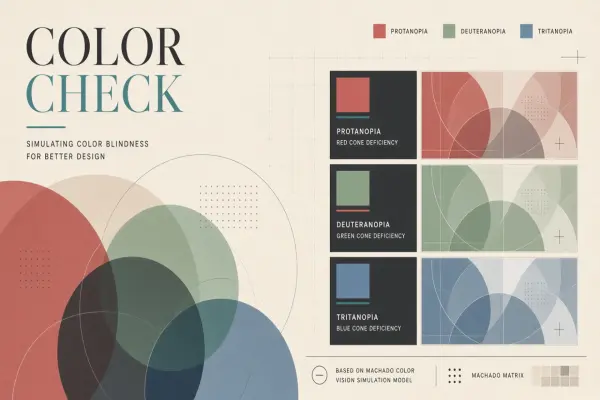
Accessible rulebooks use clear headings, icon references, and plain language; AI can audit reading level and flag jargon-heavy paragraphs. Colorblind-safe component design stays human-led, but AI can suggest alternative icon pairs when playtesters confuse resources. Teachability testing asks: can a new player learn from the rulebook alone in under twenty minutes? Record teach sessions and transcribe confusion points for the next rules pass.
Publisher and Crowdfunding Copy
After rules stabilize, AI drafts Kickstarter page sections, how-to-play scripts, and retailer sell sheets. Human editors inject personality and remove superlatives models love ("revolutionary," "unique"). Playtest quotes from real humans outperform generated testimonials ethically and legally. Link campaign promises only to mechanics validated in late-stage prototypes.