What is TLay?
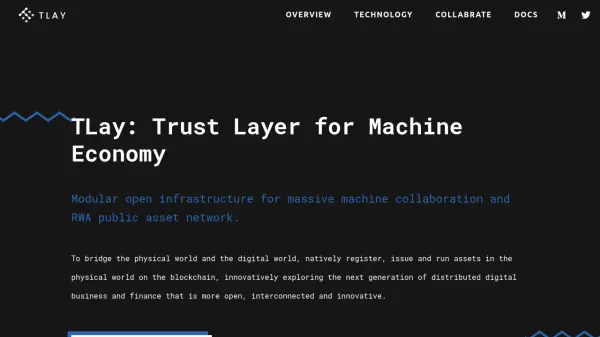
TLay provides a modular fundamental trusted layer designed to simplify the development process for bridging the physical and digital worlds. It includes three core components: Trusted Chipset & Module, BoAT Machine Wallet SDK, and BoAT IoT Oracle Service. This infrastructure natively registers, issues, and runs assets from the physical world on the blockchain, supporting the creation of distributed digital business and finance systems.
The platform innovatively explores next-generation solutions that are more open, interconnected, and innovative. It targets developers and start-up teams, helping them quickly launch projects involving physical AI agents and Real-World Asset (RWA) applications. TLay fosters collaboration through partnerships and developer engagement to build a powerful ecosystem for the future of finance.
Features
- Trusted Chipset & Module: Hardware components for secure integration of physical devices with blockchain networks.
- BoAT Machine Wallet SDK: Software development kit for creating machine wallets to manage blockchain assets on IoT devices.
- BoAT IoT Oracle Service: Oracle service that connects IoT data from the physical world to blockchain smart contracts.
Use Cases
- Developing physical AI agent applications that interact with blockchain networks.
- Creating Real-World Asset (RWA) public asset networks for tokenizing physical assets.
- Building distributed digital business systems that integrate IoT devices with blockchain technology.
- Launching innovative finance projects that leverage machine collaboration and asset management.