What is Principles.design?
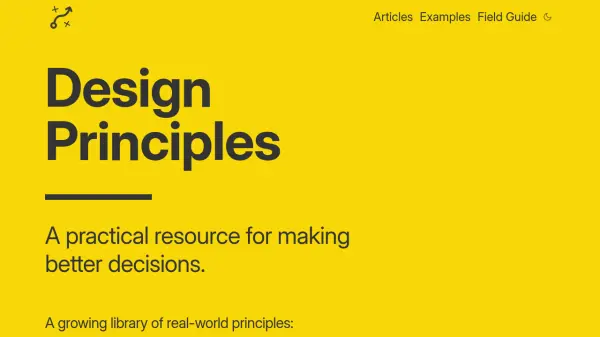
Principles.design is a practical online resource that provides a growing library of real-world design principles. With over 236 examples and 1661 design principles from 200 creators, the platform helps teams articulate what matters most and provides a shared foundation for decision-making. It also offers a field guide for teams who want design principles that navigate trade-offs and drive clearer decisions.
The resource is created and curated by Ben Brignell and includes featured examples from organizations like the NHS, Monzo, and OVO. Users can browse principles, submit examples, and sign up for occasional guidance on using design principles in practice.
Features
- Curated Library: Access to over 236 examples and 1661 design principles from 200 creators
- Field Guide: Practical guidance for teams to create and apply design principles
- Featured Examples: Showcases principles from organizations like NHS, Monzo, and OVO
- Browse and Submit: Users can browse all examples and submit new sets of principles
- Newsletter: Sign up for occasional guidance and updates on design principles
Use Cases
- Developing design principles for product teams
- Establishing consistency in design decisions
- Educating teams on design trade-offs
- Benchmarking principles against industry examples
- Creating shared foundations for design systems
FAQs
-
What are design principles?
Design principles are clear statements that help teams make consistent decisions and trade-offs when designing products, services, or systems. They articulate what matters most and provide a shared foundation for decision-making. -
Why should I use design principles?
Applying design principles fosters a cohesive problem-solving approach, promoting efficiency, consistency and user-centricity. -
Who uses design principles?
Organisations, individuals, design system and product teams have benefited from writing and following their principles. -
Can I submit my own design principles?
Yes, the platform allows users to submit examples of design principles that could be included in the library. -
Is there a field guide for implementing principles?
Yes, Principles.design offers a field guide for teams who want design principles that navigate trade-offs and drive clearer decisions.