JS Syntax favicon

JS Syntax
Master JavaScript syntax with interactive examples

What is JS Syntax?

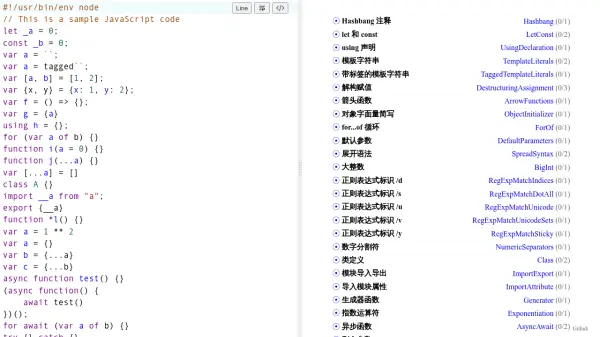
JS Syntax is a comprehensive educational platform designed to help developers master modern JavaScript syntax. It provides interactive examples and detailed explanations for various ES6+ features, making it easier to understand and implement advanced JavaScript concepts.

The tool covers a wide range of topics including template literals, arrow functions, destructuring assignment, async/await, and many other essential JavaScript features. Each topic includes practical examples that users can interact with to deepen their understanding of how these syntax elements work in real-world scenarios.

Features

  • Interactive Examples: Hands-on code demonstrations for each JavaScript feature
  • Comprehensive Coverage: Includes ES6+ features from template literals to async/await
  • Practical Learning: Real-world syntax examples that users can experiment with

Use Cases

  • Learning modern JavaScript syntax
  • Understanding ES6+ features through examples
  • Practicing JavaScript coding concepts interactively
  • Reference for JavaScript developers

Related Tools:

Blogs:

  • Top 6 AI note-taking tools for 2026: in-person, online, and hybrid use cases

    Top 6 AI note-taking tools for 2026: in-person, online, and hybrid use cases

    Most AI note-taking lists are really lists of meeting bots, which join your video call and transcribe it. That's useful, but it's half the picture. Decisions happen in hallway conversations, client dinners, on-site visits, and hybrid rooms where nobody is on a video link. This guide covers different parts of the note-taking workflow: hardware capture for in-person settings, platform-native tools for online calls, and AI layers for organizing and synthesizing what you've captured. It compares six tools by capture context, workflow fit, pricing, and limitations.

  • Best text to speech AI tools

    Best text to speech AI tools

    Text-to-speech (TTS) AI tools are designed to convert written or text-based content into natural-sounding spoken audio. These tools utilize various deep learning and neural network architectures to generate human-like speech from textual input.

Didn't find tool you were looking for?

Be as detailed as possible for better results