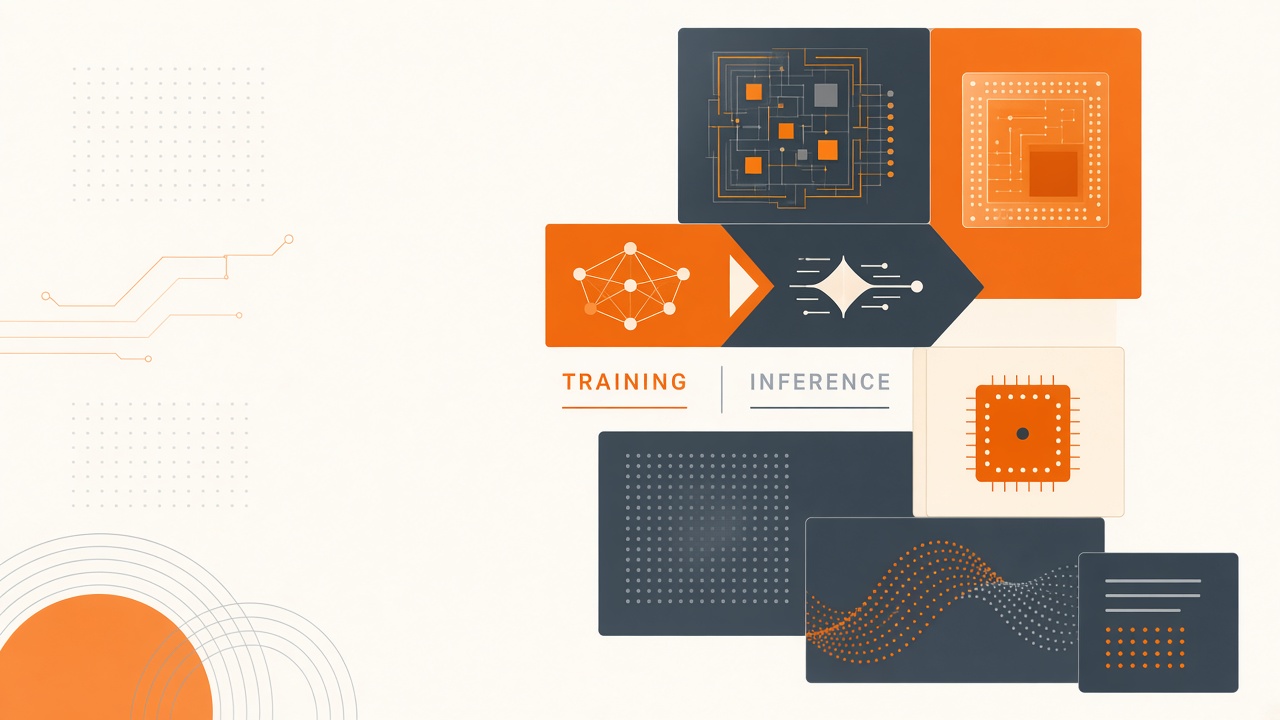
Amazon Web Services shipped Trainium3 in 2026 as its first 3nm AI accelerator, packaged in EC2 Trn3 UltraServers that scale to 144 chips per domain. The aws trainium inferentia news cycle also brought Bedrock production workloads onto Trainium3 and expanded the AWS Neuron SDK for PyTorch, JAX, and vLLM. Inferentia3 has not reached general EC2 availability as of September 2026; Inferentia2 and Inf2 instances remain AWS's primary inference-optimized fleet.
This analysis explains Trainium3 architecture, new instance families, price-performance claims versus NVIDIA GPUs, Bedrock and SageMaker integrations, and migration notes for teams running AI code and model workloads on AWS AI infrastructure.
Trainium3 and Inferentia3 Overview
Trainium3 is AWS's third-generation training and inference chip, built for high-performance deep learning with all-to-all NeuronSwitch interconnect optimized for MoE models and autoregressive serving. Trn3 UltraServers come in Gen1 (64 chips) and Gen2 (144 chips) configurations with up to 362 PetaFLOPS dense MXFP8 compute and 706 TB/s HBM bandwidth on Gen2.
AWS positions Trainium3 for both training and inference, claiming up to 4.4x higher performance, 3.9x higher memory bandwidth, and 4x better performance per watt versus Trn2 UltraServers. On Amazon Bedrock, AWS reports Trainium3 as the fastest accelerator with up to 3x faster performance than Trainium2 for production model serving.
Inferentia lineage: Inferentia1 powers Inf1 instances; Inferentia2 powers Inf2 instances with up to 4x higher throughput and 10x lower latency than Inf1. AWS marketing references next-generation Inferentia development, but public EC2 instance pages as of September 2026 list Inf2 as the current inference-optimized family. Plan migrations around confirmed instance types, not roadmap speculation.
| Chip generation | Primary role | EC2 family | Status (Sep 2026) |
|---|---|---|---|
| Trainium3 | Training and inference at scale | Trn3 UltraServers | GA, Bedrock production use |
| Trainium2 | Prior training generation | Trn2 UltraServers | Available, superseded by Trn3 claims |
| Inferentia2 | Cost-optimized inference | Inf2 (inf2.xlarge to inf2.48xlarge) | GA, primary inference fleet |
| Inferentia3 | Next inference generation (expected) | Not publicly listed | Roadmap, no GA EC2 SKUs yet |
New EC2 Instance Families
EC2 Trn3 UltraServers are the flagship Trainium3 offering, with NeuronLink-v4 and NeuronSwitch-v1 enabling all-to-all chip connectivity for MoE training and low-latency inference collectives. Gen1 delivers 161 PetaFLOPS and 31 TB/s HBM bandwidth across 64 Trainium3 devices. Gen2 doubles compute density with 144 chips per UltraServer.
Inf2 instances scale from inf2.xlarge (1 chip) to inf2.48xlarge (12 Inferentia2 chips) with inter-chip interconnect on larger sizes for distributed inference of hundred-billion-parameter models. AWS Neuron SDK compiles PyTorch and JAX models for both Trainium and Inferentia without requiring application code rewrites in most cases.
Neuron Kernel Interface (NKI) provides low-level access for performance engineers who need custom kernels beyond standard framework support. Neuron Explorer offers unified profiling from framework code down to hardware operations.
Price-Performance vs GPUs
AWS claims customers including Anthropic, Ricoh, and Splash Music reduced training costs up to 50% versus GPU alternatives on Trainium, while Decart reported 4x faster inference at half GPU cost for real-time video workloads. Independent validation is essential: benchmark results vary by model architecture, batch size, and precision.
Inf2 on-demand pricing ranges from roughly $0.76 per hour for inf2.xlarge to $12.98 per hour for inf2.48xlarge in U.S. regions, with reserved instance discounts up to 60% on three-year terms. GPU instances (p5, p4d) still dominate for workloads needing CUDA-specific libraries or third-party tools without Neuron support. Many teams run hybrid fleets: Trainium or Inf2 for supported models, GPUs for everything else.
Token economics on Bedrock abstract chip choice from customers. AWS selects Trainium3 for certain production Bedrock workloads internally, but buyers pay per model token, not per chip hour. For self-managed inference, Inf2 and Trn3 hour costs are the relevant comparison metric.
Bedrock and SageMaker Tie-Ins
Amazon Bedrock already serves production workloads on Trainium3, while SageMaker and SageMaker HyperPod integrate Neuron for training and deployment on Trainium and Inferentia instances. Hugging Face Optimum Neuron, PyTorch Lightning, TorchTitan, EKS, ECS, Batch, and ParallelCluster all support Neuron-backed instances.
SageMaker JumpStart offers fine-tune and deploy recipes for Llama and other open models on Inferentia2 and Trainium, lowering the ops burden for teams without dedicated compiler expertise. Bedrock customers benefit indirectly from Trainium efficiency through AWS's internal cost structure, though list Bedrock prices are model-specific and region-specific.
Teams building AI code assistants on AWS should test Neuron compilation early in the development cycle. Unsupported ops force fallback to GPU instances and can erase projected savings.
Customer Migration Notes
Migrating from GPU to Trainium or Inf2 requires Neuron SDK compatibility testing, instance quota requests, and updated CI pipelines for compiled model artifacts. Start with inference workloads on Inf2 before attempting large-scale training migrations to Trn3 UltraServers.
- Run Neuron compatibility checker on your model architecture and precision requirements.
- Request Trn3 or Inf2 capacity in target regions; UltraServer quotas may require AWS support cases.
- Benchmark latency and throughput at production batch sizes, not just peak FLOPS claims.
- Update monitoring for Neuron-specific metrics in CloudWatch and Neuron Explorer.
- Retain GPU fallback paths until Neuron compilation covers 100% of your model graph.
Browse AWS AI tools for complementary services (Bedrock, SageMaker, vector stores) when designing a full stack on custom silicon.
Frequently Asked Questions
Is Inferentia3 available on EC2?
As of September 2026, AWS has not listed Inferentia3 EC2 instance types publicly. Inferentia2 Inf2 instances remain the current inference-optimized fleet. Monitor AWS announcements for Inf3 SKUs.
What are Trn3 UltraServers?
Trn3 UltraServers are EC2 scale-up instances powered by Trainium3 chips. Gen1 packs 64 chips; Gen2 packs 144 chips with all-to-all NeuronSwitch connectivity for MoE and inference workloads.
Can I run PyTorch on Trainium3 without code changes?
AWS Neuron SDK targets minimal code changes for PyTorch and JAX, but some operations require compilation and may not be supported on day one. Test your model graph before committing to migration.
Does Bedrock let me choose Trainium3?
No. Bedrock customers select models and regions, not underlying accelerators. AWS routes internally; Trainium3 benefits appear as service-level performance and pricing, not direct chip selection.
How do Inf2 costs compare to GPUs?
AWS positions Inf2 as up to 70% lower cost per inference than comparable GPU instances for supported models. Actual savings depend on model size, latency targets, and Neuron compilation success. Run side-by-side benchmarks before switching production traffic.