Campaign calendars compress review windows. Agency drafts arrive Friday night; legal needs Monday; brand voice inconsistencies surface after ads go live when fixing them costs media spend and trust.
An ai workflow brand voice guide encodes voice rules as testable checks, scans agency and internal drafts, loops feedback to creative partners, and versions the guide quarterly. AI lints copy; brand managers approve what ships. Integrate checks with AI chatbot customer-facing scripts and AI API product copy when voice spans marketing and product surfaces.
Encode Voice Guide as Testable Rules
Translate brand voice principles into machine-checkable rules: banned phrases, required terminology, tone dimensions, and reading level targets. Vague guidance like "be friendly" fails linting; specific rules produce actionable flags.
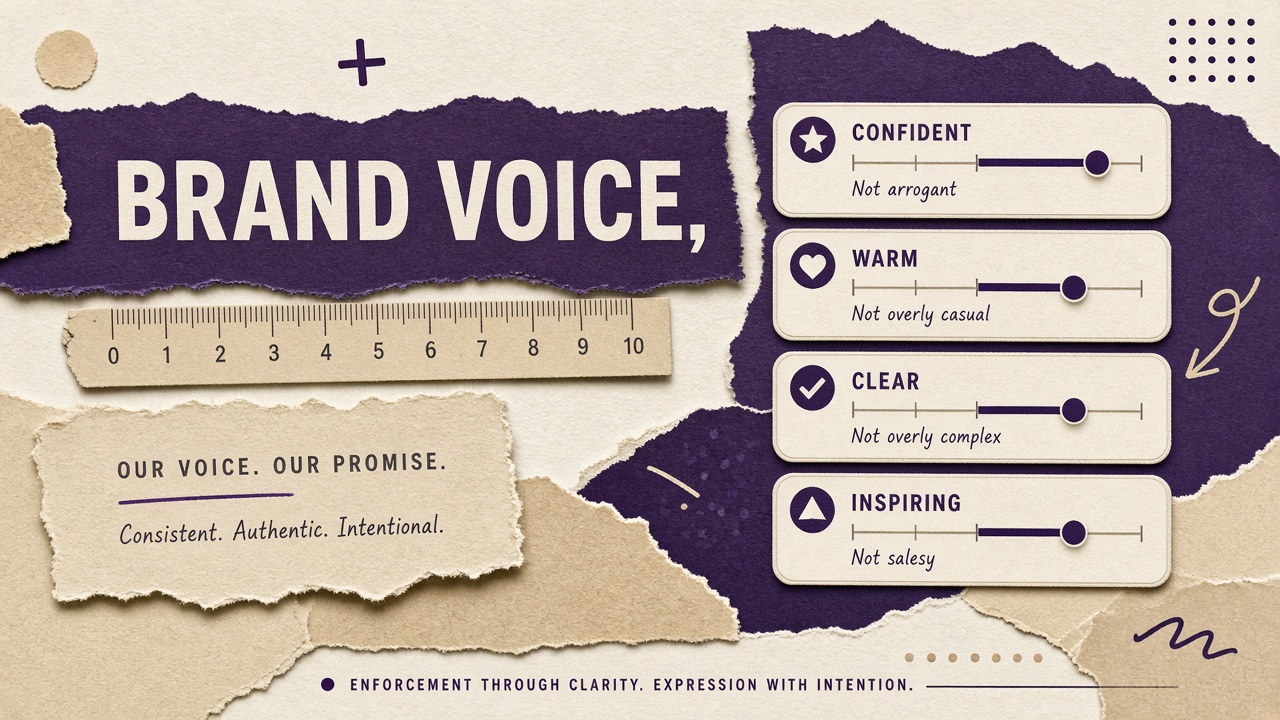
Start from your published voice guide PDF or Notion doc. Extract must-use terms (product names, trademark formatting), must-avoid terms (competitor names, unapproved superlatives), and tone sliders (formal vs casual, technical vs plain language).
- Lexicon: Approved product names, capitalization, acronym expansions on first use
- Forbidden list: Off-brand jargon, unverified claims, regulated phrases without legal approval
- Tone rules: Second person vs third person, contraction policy, humor boundaries
- Structure: Headline max length, CTA verb list, disclaimer placement for offers
- Accessibility: Plain language score target, alt text patterns for campaign assets
| Rule type | Example rule | Severity |
|---|---|---|
| Trademark | Product name always Title Case, never verbified | Blocker |
| Claim | No "best" or "#1" without legal footnote ID | Blocker |
| Tone | Avoid fear-based urgency in nurture emails | Warning |
| Style | Oxford comma per house style | Suggestion |
| Reading level | Consumer copy below grade 10 Flesch-Kincaid | Warning |
Rule governance
- Assign rule owners in brand ops; stale rules erode trust in the linter
- Version rules with semantic IDs referenced in scan reports
- Separate blocker rules (cannot launch) from suggestions (brand manager discretion)
Product renaming mid-quarter is a common failure mode. Encode rename cutover dates in rules so old product names flag as errors only after the public launch window. Coordinate with chatbot and in-app string updates so customer-facing surfaces lint against the same rule version as paid media.
Scan Drafts From Agencies and Internal
Run every external and internal draft through the voice linter before legal and before media booking; brand managers review flagged lines, not entire documents line by line when rules are clean. Scan inputs include email copy, ad headlines, landing pages, social posts, and sales one-pagers.
Accept formats your partners actually send: Google Doc export, Word, Figma text layers, or CMS preview URLs. Normalize to plain text with section labels preserved so flags cite "Hero headline" not paragraph offset 847.
- Upload or link: Campaign ID, channel, locale, agency name
- Scan: AI applies rule set version; outputs flagged spans with rule ID and fix suggestion
- Brand review: Accept fix, edit fix, or waive with reason code
- Re-scan: Required after material edits; waivers logged
- Export certificate: PDF or ticket comment listing rule version and waiver summary for audit
Internal drafts need the same rigor as agency work. Sales and product marketing often ship fastest and skip informal Slack copy. Provide a lightweight submit form so scanning is easier than bypassing it.
Executive bylines and founder social posts warrant a fast-track scan queue with same-day turnaround. Blocker rules still apply; waivers need C-level approver when claim or regulated language is involved. Speed without rules creates the highest-visibility brand incidents. Log fast-track scans in the same audit trail as campaign work.
Scan scope boundaries
- Legal-approved disclaimers stored as locked snippets bypass re-lint of boilerplate text
- Quoted customer testimonials still checked for trademark and claim rules
- Localized copy runs locale-specific rule packs, not English rules only
Performance marketing teams often test dozens of headline variants. Batch-scan variants against the same campaign ID so waivers apply consistently across the set. Without batching, one variant may ship clean while a sibling violates trademark rules on the same placement.
Feedback Loops to Creative Partners
Return structured feedback with rule citations and before-after examples so agencies learn the voice guide, not just fix one campaign. One-off "make it punchier" notes without rule IDs recreate the same errors next quarter.
Monthly partner scorecards track repeat violations by rule ID. Training sessions cover top three offenders. Celebrate partners who submit clean first drafts; positive reinforcement beats punitive-only feedback.
Internal design and product teams benefit from the same scorecards as agencies. Brand drift often starts in release notes and error messages that bypass marketing review. Extend scan triggers to CMS publish hooks and API developer portal pages when those surfaces carry customer-facing copy.
| Feedback element | Purpose |
|---|---|
| Rule ID and name | Links fix to documented standard |
| Flagged excerpt | Shows exact violation in context |
| Suggested rewrite | Accelerates revision without dictating creative |
| Voice guide link | Deep link to section for self-serve learning |
| Waiver rationale | Documents intentional exceptions for future reference |
Version Voice Guide Quarterly
Review and publish a new voice guide version each quarter with changelog, rule migration notes, and re-scan requirements for in-flight campaigns. Products rename, regulations shift, and tone evolves; static PDFs from two years ago silently contradict live linter rules.
- Collect change requests from brand, legal, product, and top agency partners
- Draft changelog: added rules, deprecated rules, severity changes
- Update linter rule pack in staging; run regression on sample corpus of past campaigns
- Train internal teams and send partner bulletin with effective date
- Re-scan campaigns launching within 30 days of version bump
Archive prior versions with read-only access. Appeals about last quarter's ad copy may reference old rules; auditors need historical rule text, not memory.
Run a regression corpus of twenty historically problematic campaigns through each new rule pack before go-live. If false positive rate jumps on known-good copy, tune severity or add exceptions before partners see the new linter in production. False positives erode compliance faster than occasional misses.
Quarterly review participants
- Brand manager (owner), legal counsel (claims and regulated industries), localization lead (global markets)
- Product marketing (naming alignment), customer support (voice drift from frontline language)
- Optional: agency lead for friction points in feedback loops
Publish a one-page "voice delta" summary with the new version: what changed, why, and three before-after examples from real flagged copy (anonymized). Training attendance is optional; reading the delta is required before the next campaign submission deadline.
Frequently Asked Questions
How do sub-brands use the same linter without homogenizing voice?
Maintain a parent rule pack for legal and trademark standards plus sub-brand overlays for tone and lexicon. Scans select pack by campaign metadata. Sub-brand managers own overlay rules; parent brand ops owns blockers that apply everywhere.
What changes for global markets and translation?
Lint source language first, then locale-specific packs after professional translation. Do not machine-translate voice rules blindly; idioms fail. Localization lead approves locale rule additions. Reading level targets may differ by market literacy norms and regulatory copy length limits.
Can creative directors override linter blockers?
Waivers require named approver, reason code, and expiry where appropriate. Repeated waivers on the same rule trigger guide review, not automatic override rights. Document waivers in campaign records for consistency audits.
Should AI-generated campaign copy skip linting?
No. Generated copy often violates trademark and claim rules confidently. Run generation and linting in sequence; brand manager sign-off remains mandatory before publish.
How do real-time social replies fit voice enforcement?
Pre-approve response templates for common support and community scenarios. Real-time replies lint against a smaller template library, not the full campaign rule pack. Escalate novel situations to brand review rather than improvising in the thread. Log template version on each sent reply for consistency audits.
Voice Consistency at Campaign Speed
Brand managers enforce voice guides at scale by encoding testable rules, scanning every draft, and closing feedback loops with partners. Quarterly versioning keeps rules aligned with product and market reality. AI accelerates linting; humans own waivers, creative judgment, and what ultimately reaches customers.