AI sports media production workflows compress time from live action to published highlights, social clips, and data-driven narratives. Speed gains mean little if automated outputs violate league media policies, athlete likeness agreements, or accuracy standards fans expect from trusted broadcasters.
This guide covers live clip selection and metadata tagging, athlete likeness and league rights, bias in automated stats narratives, archive search and resurfacing, and production FAQ topics. Screen tools in AI research and AI video categories against your rights clearance workflow before live deployment.
Live Clip Selection and Metadata Tagging
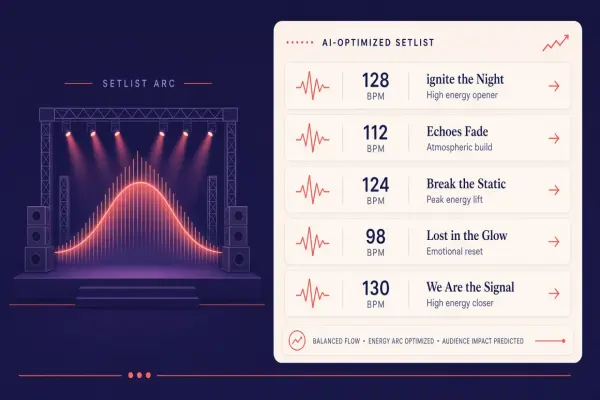
Computer vision and audio cue models can flag goals, fouls, and crowd reactions seconds after they happen, but editors still approve what airs. Live production tolerates false positives poorly; tune sensitivity per sport and broadcast partner requirements.
- Tag clips with player ID, game clock, camera angle, and rights tier at ingest.
- Separate near-live social cuts from broadcast master feeds with different clearance rules.
- Human producer veto remains mandatory during playoff and crisis coverage.
- Log model version when automated tags feed downstream graphics systems.
- Test latency budgets against your CDN and editorial desk turnaround targets.
| Production phase | Common AI role | Human gate |
|---|---|---|
| Live game | Event detection, auto-mark in | Producer selects air-ready clips |
| Post-game | Highlight reels, stat overlays | Editor verifies sequence and context |
| Archive | Semantic search, resurfacing | Rights check before republication |
| Social | Vertical crop, caption drafts | Brand and league policy review |
Athlete Likeness and League Rights
League, union, and athlete NIL agreements define where AI-generated or AI-enhanced content may appear. Synthetic voice, deepfake-style likeness, or unauthorized training on broadcast footage creates legal exposure beyond ordinary fair use debates.
- Inventory every AI vendor that processes game footage or player biometric data.
- Require contractual clarity on model training and derivative works.
- Block AI upscaling or face swap on minors without guardian and league approval.
- Align sponsor integrations with exclusivity clauses before automated ad insertion.
- Document clearance chain from raw feed to published AI-assisted clip.
Bias in Automated Stats Narratives
Natural language game summaries trained on historical commentary can amplify stereotypes about players, teams, or regions. Automated narratives also misstate stats when OCR or feed parsing errors slip through without verification.
- Cross-check every numeric claim against official league stat feeds before publish.
- Review narrative tone guidelines for equitable player descriptions.
- Flag AI drafts that attribute intent or character without sourced quotes.
- Keep human stat editors accountable for corrections on air.
- Monitor complaint patterns after deploying automated recap bots.
Archive Search and Resurfacing
Semantic search across decades of footage unlocks anniversary packages and documentary research faster than manual log browsing. Resurfacing old clips still requires fresh rights review when contracts, roster status, or cultural context changed since original air date.
- Index transcripts, graphics metadata, and visual embeddings with consistent IDs.
- Tag sensitive incidents for elevated editorial approval before reuse.
- Separate internal research access from public social automation pipelines.
- Retire clips tied to active legal disputes from AI recommendation pools.
- Measure search precision on landmark games before trusting broad auto-suggest.
Live vs Post-Production Rights Workflow
Rights clearance differs sharply between near-live social publishing and archive documentary reuse. Build separate AI pipelines with distinct metadata schemas so a clip cleared for Twitter is never auto-promoted to broadcast packages without secondary review.
- Tag every asset at ingest with league tier, sponsor exclusions, and talent releases.
- Run automated highlight models only on feeds pre-cleared for that distribution channel.
- Hold post-production AI upscaling and generative B-roll for non-live teams with legal review.
- Audit monthly for clips that crossed from social to linear without updated clearance.
Frequently Asked Questions
Can AI produce betting-related sports content?
Many leagues and broadcasters restrict gambling integrations; AI-generated odds talk needs compliance review against partner policies and local advertising law. Separate betting affiliate workflows from newsroom AI tools to avoid accidental cross-promotion.
What extra rules apply when covering minor athletes?
Youth leagues often limit facial recognition, persistent tracking, and commercial reuse of footage. Configure AI systems to exclude minor-identified clips from public recommendation feeds unless parents and governing bodies granted explicit consent.
Should AI run the same way live and in post-production?
Live workflows prioritize speed with conservative automation; post-production allows heavier AI assist with more review time. Use different model thresholds and approval chains for each mode.
Is synthetic AI commentary allowed?
Union contracts and audience trust expectations increasingly require disclosure when voices or scripts are AI-generated. Consult guild agreements before replacing human talent with synthetic narration on licensed broadcasts.